Introduction
The Southwestern Barred Bandicoot (Perameles myosuros) is a small, nocturnal marsupial native to Australia. It belongs to the family Peramelidae and is known for its distinct barred pattern on its hindquarters. This elusive species plays a vital role in its ecosystem as a soil engineer, contributing to soil turnover and nutrient cycling. Understanding the biology, ecology, and conservation needs of the Southwestern Barred Bandicoot is essential for its preservation and the health of its habitat.
Physical Description
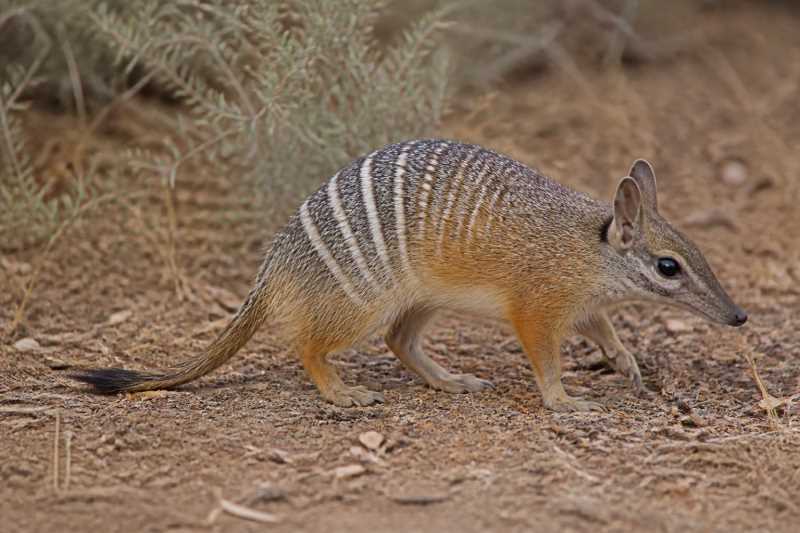
The Southwestern Barred Bandicoot is a medium-sized bandicoot, typically weighing between 200 to 300 grams and measuring approximately 30 to 40 centimeters in length, including its tail. Its fur is a blend of grey and brown tones, providing effective camouflage against the forest floor. The most distinctive feature of this species is the series of dark, horizontal bars across its hindquarters, which give it its name. These bars are more pronounced in males than in females. The bandicoot has a pointed snout, large, erect ears, and a short, tapered tail, which it uses for balance as it forages. Its hind legs are longer than its forelimbs, adapted for hopping and digging.
Range and Habitat
The Southwestern Barred Bandicoot is endemic to the southwestern regions of Western Australia. It inhabits a variety of environments, including eucalyptus woodlands, heathlands, and shrublands. These areas typically feature sandy soils, which are ideal for the bandicoot’s burrowing habits. The presence of dense undergrowth is crucial for providing cover from predators and harsh weather conditions. Despite its historical range being much larger, habitat loss and fragmentation have significantly reduced the areas where these bandicoots can thrive.
Behavior and Diet
The Southwestern Barred Bandicoot is primarily nocturnal, spending daylight hours in shallow nests made of leaves and grasses. These nests are hidden under dense vegetation or fallen logs to avoid detection by predators. At night, the bandicoot emerges to forage, using its keen sense of smell to locate food. Its diet is omnivorous, consisting of insects, larvae, seeds, fruits, and tubers. The bandicoot uses its sharp claws to dig into the soil, unearthing its prey and contributing to soil aeration and seed dispersal in the process.
Identification Tips (Field Recognition Cues)
Identifying the Southwestern Barred Bandicoot in the wild can be challenging due to its nocturnal habits and elusive nature. Key identification cues include:
- Size and Shape: A small, compact body with long hind legs and a short tail.
- Coloration: Grey-brown fur with distinct dark bars across the hindquarters.
- Behavior: Nocturnal activity patterns and characteristic hopping motion.
- Tracks and Signs: Look for small diggings or scratch marks in sandy soils, indicative of foraging behavior.
Conservation Status (with Threats and Protections)
The Southwestern Barred Bandicoot is listed as near threatened due to a combination of habitat loss, predation by introduced species, and environmental changes. Urbanization and agricultural expansion have led to significant habitat fragmentation, while introduced predators such as foxes and feral cats pose a constant threat. Conservation efforts focus on habitat restoration, predator control, and raising public awareness. Protected areas and reserves have been established to safeguard remaining populations, and ongoing research aims to improve our understanding of the species’ ecology and needs.
Frequently Asked Questions
1. What is the main diet of the Southwestern Barred Bandicoot? The Southwestern Barred Bandicoot is omnivorous, primarily feeding on insects, larvae, seeds, fruits, and tubers. Its diet is diverse and opportunistic, varying with seasonal availability.
2. Where can I find the Southwestern Barred Bandicoot in the wild? This species is found in the southwestern regions of Western Australia, particularly in eucalyptus woodlands, heathlands, and shrublands with sandy soils and dense undergrowth.
3. How can I help in the conservation of the Southwestern Barred Bandicoot? Supporting local conservation initiatives, advocating for predator control, and promoting habitat restoration are effective ways to contribute to the preservation of this species.
4. What are the main threats to the Southwestern Barred Bandicoot? The primary threats include habitat loss and fragmentation, predation by introduced species such as foxes and cats, and environmental changes.
5. What are the identifying features of the Southwestern Barred Bandicoot? Identifying features include its grey-brown fur with distinct dark bars on the hindquarters, small size, long hind legs, and nocturnal behavior.
Related posts