Southern Short-tailed Shrew (Blarina carolinensis): A Comprehensive Guide
Introduction
The Southern Short-tailed Shrew, scientifically known as Blarina carolinensis, is a fascinating mammal species native to the southeastern United States. This small but mighty creature is a part of the Soricidae family, known for their small size, sharp senses, and high metabolism. Despite its diminutive stature, the Southern Short-tailed Shrew plays a significant role in its ecosystem, serving as both predator and prey. In this comprehensive guide, we will explore the various aspects of this intriguing species, from its physical characteristics and habitat to its behavior and conservation status.
Physical Description
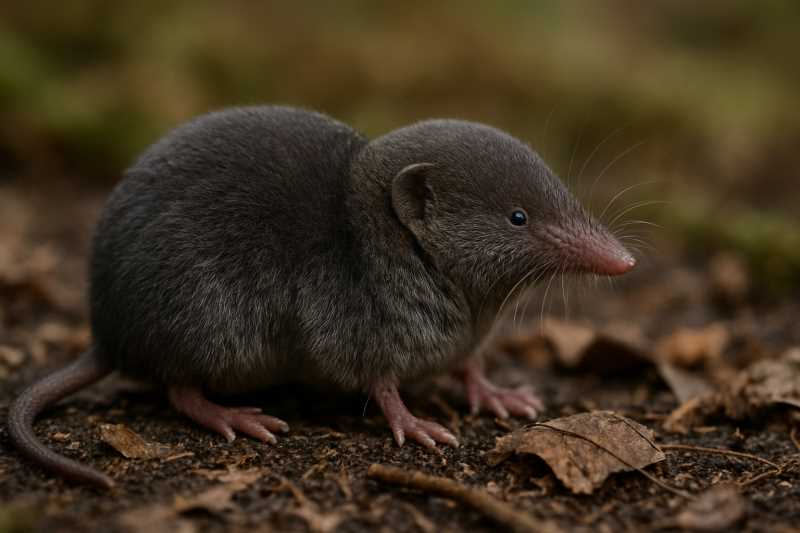
The Southern Short-tailed Shrew is a diminutive mammal, typically measuring between 3 to 4 inches in length, with a tail that is notably short, accounting for only about a third of its total body length. This species is characterized by its dense, velvety fur, which ranges in color from slate gray to black. The fur serves as an excellent insulator, helping the shrew maintain its body temperature in various environmental conditions.
One of the most remarkable features of the Southern Short-tailed Shrew is its pointed snout, which is equipped with sensitive whiskers that aid in navigation and foraging. Despite having poor eyesight, this shrew compensates with its highly developed sense of hearing and smell, allowing it to detect prey and predators effectively. The shrew’s sharp, pointed teeth are adapted for a carnivorous diet, enabling it to efficiently process its prey.
Range and Habitat
The Southern Short-tailed Shrew is predominantly found in the southeastern United States, with its range extending from Maryland and Virginia in the north, down to Florida, and as far west as eastern Texas and Oklahoma. This species thrives in a variety of habitats, including forests, grasslands, and wetlands. It prefers areas with abundant ground cover, such as leaf litter or dense vegetation, which provides shelter from predators and harsh weather conditions.
Within these habitats, the Southern Short-tailed Shrew constructs extensive tunnel systems and burrows, which serve as both nesting sites and foraging grounds. These subterranean structures protect the shrew from predators and offer a humid microenvironment that supports its high metabolic rate.
Behavior and Diet
The Southern Short-tailed Shrew is primarily nocturnal, with a lifestyle that is heavily influenced by its need to consume large quantities of food to sustain its rapid metabolism. This species is known for its voracious appetite, feeding on a diverse diet that includes insects, earthworms, small mammals, and even plant material. The shrew’s diet varies seasonally, with a higher intake of insects during warmer months and a greater reliance on plant material and small vertebrates during colder periods.
Socially, the Southern Short-tailed Shrew is generally solitary, except during the breeding season, which occurs from late winter to early summer. During this time, males and females come together briefly to mate. Females are responsible for raising the young, which are born in litters of up to seven offspring. The young shrews are weaned after about three weeks and reach sexual maturity by the following breeding season.
Identification Tips
Identifying the Southern Short-tailed Shrew in the field can be challenging due to its elusive nature and small size. However, several key characteristics can aid in its recognition:
- Size and Shape: Look for a small, compact body with a very short tail.
- Fur Color: Note the dense, velvety fur that is typically slate gray to black.
- Snout: Observe the long, pointed snout, which is a distinctive feature of shrews.
- Behavior: Pay attention to its rapid, scurrying movements and preference for staying close to ground cover.
Listening for the high-pitched squeaks and rustling sounds the shrew makes while foraging can also help in locating this elusive mammal.
Conservation Status
The Southern Short-tailed Shrew is currently classified as a species of Least Concern by the International Union for Conservation of Nature (IUCN). However, like many small mammals, it faces several threats that could impact its population in the future. Habitat destruction due to urbanization, agriculture, and deforestation poses a significant risk to the shrew’s natural habitats.
In addition to habitat loss, the Southern Short-tailed Shrew is also vulnerable to pollution and pesticide use, which can reduce the availability of prey species and contaminate their environment. Despite these threats, the shrew’s adaptability and wide distribution have helped maintain stable population levels for now.
Efforts to conserve this species include protecting natural habitats, promoting sustainable land use practices, and minimizing pesticide application in areas where the shrew is known to occur.
Frequently Asked Questions
How does the Southern Short-tailed Shrew hunt for its food?
The Southern Short-tailed Shrew uses its highly developed sense of smell and hearing to locate prey. It hunts primarily at night, using its sharp teeth to capture and consume insects, earthworms, and small vertebrates.
What adaptations help the Southern Short-tailed Shrew survive in its environment?
Key adaptations include its dense fur for insulation, a high metabolic rate for energy, and sensitive whiskers for navigating and foraging in low-light conditions. Its sharp teeth and strong jaw muscles enable it to process various types of prey efficiently.
Are Southern Short-tailed Shrews aggressive?
While not typically aggressive towards humans, Southern Short-tailed Shrews can be territorial and may exhibit aggressive behavior towards other shrews, especially during the breeding season or when defending their burrows.
What is the lifespan of a Southern Short-tailed Shrew?
The average lifespan of a Southern Short-tailed Shrew is about 1 to 2 years in the wild, although some individuals may live longer under optimal conditions.
How can I help protect Southern Short-tailed Shrews?
Supporting conservation efforts, such as habitat preservation and sustainable land management practices, can help protect the Southern Short-tailed Shrew. Reducing pesticide use and promoting biodiversity in local environments can also benefit this species.
Related posts