Southern Four-eyed Opossum (Philander quica)
Introduction
The Southern Four-eyed Opossum, scientifically known as Philander quica, is a fascinating marsupial endemic to South America. This opossum is renowned for its distinctive facial markings that resemble a second pair of eyes, hence its name. Not only does this intriguing creature contribute significantly to the biodiversity of its habitat, but it also plays a crucial role in its ecological niche. Understanding the biology, behavior, and conservation status of the Southern Four-eyed Opossum is essential for appreciating its role in the ecosystems it inhabits and for the development of effective conservation strategies.
Physical Description
The Southern Four-eyed Opossum is a medium-sized marsupial, with adults typically measuring between 25 to 30 centimeters in body length, excluding the tail, which can add an additional 25 to 40 centimeters. This species weighs around 200 to 300 grams, with males generally being larger than females.
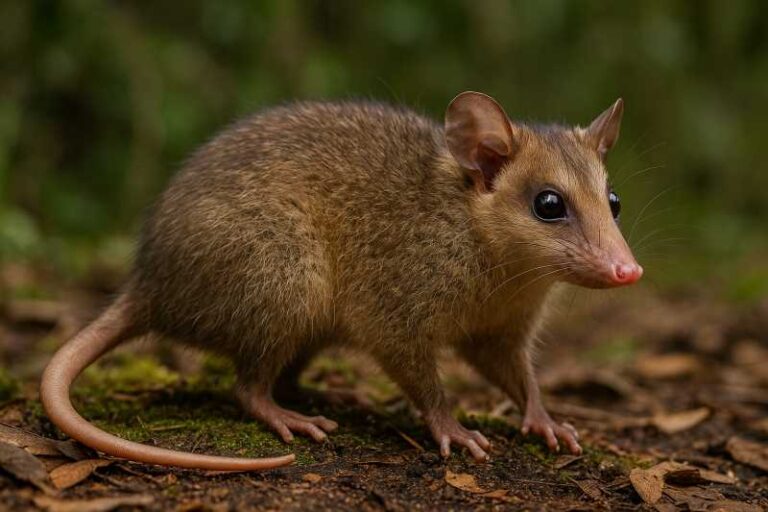
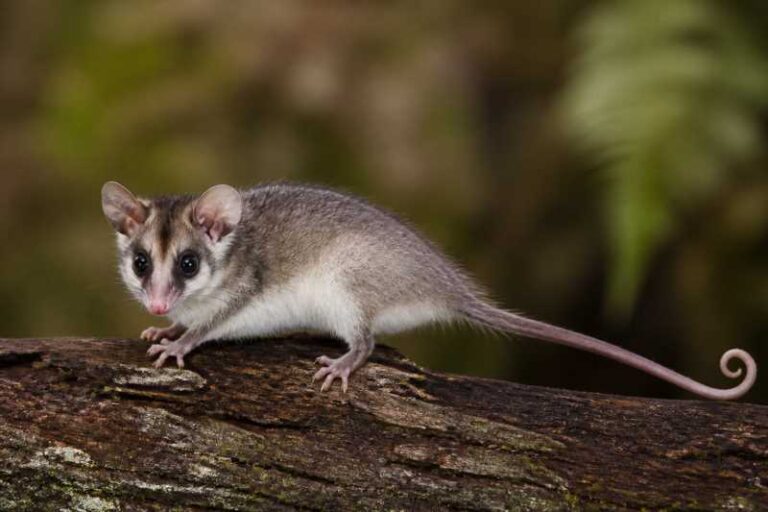
One of the most distinctive features of the Southern Four-eyed Opossum is its facial markings. It has conspicuous white or cream-colored spots above each eye, giving the illusion of having four eyes. This adaptation is thought to help deter predators. The opossum’s fur is generally short, dense, and varies from gray to brown, providing effective camouflage in the forest undergrowth. Their prehensile tail is covered with fur at the base but is mostly naked towards the tip, aiding in climbing and balancing.
Range and Habitat
The Southern Four-eyed Opossum is found primarily in the Atlantic Forest region of Brazil, ranging from the northeastern state of Bahia to the southern state of Santa Catarina. It inhabits a variety of environments, including primary and secondary forests, as well as more disturbed areas such as plantations and agricultural lands.
This opossum is highly adaptable and capable of living in both lowland and mountainous regions up to altitudes of 1,500 meters. Their presence in both pristine and human-altered landscapes indicates a level of resilience, although their preference tends to lean towards dense, humid forest areas where food and shelter are abundant.
Behavior and Diet
Southern Four-eyed Opossums are primarily nocturnal and solitary creatures. They are known for their arboreal habits, spending much of their time in trees where they forage for food. However, they are also capable of terrestrial movement and often descend to the ground in search of additional resources.
Their diet is omnivorous and highly varied, consisting of fruits, insects, small vertebrates, and carrion. This opportunistic feeding behavior allows them to adapt to the availability of food in their environment, which is a significant factor in their success across diverse habitats.
During the breeding season, females construct nests using leaves and twigs, where they rear their young. After a gestation period of approximately 12 to 14 days, they give birth to underdeveloped young that continue to develop in the mother’s pouch for several weeks.
Identification Tips
When attempting to identify the Southern Four-eyed Opossum in the field, there are several key characteristics to consider:
- Facial Markings: Look for the distinctive white spots above each eye, which are a hallmark of the species.
- Tail: Note the prehensile tail, which is hairless towards the end and is often used for grasping branches.
- Size and Shape: The opossum has a medium-sized, slender body with a pointed snout and large, rounded ears.
- Behavior: Observe their nocturnal activity and arboreal habits, often seen climbing or balancing in trees.
Conservation Status
The Southern Four-eyed Opossum is currently classified as Least Concern by the International Union for Conservation of Nature (IUCN). Despite this classification, the species faces several threats that could impact its population in the future.
Threats
- Habitat Destruction: Deforestation for agriculture and urban development poses the most significant threat to their natural habitat.
- Climate Change: Alterations in climate patterns could affect the availability of food and suitable habitats.
- Human-Wildlife Conflict: As human populations expand, these opossums are increasingly at risk from road traffic and domestic pets.
Protections
Conservation efforts focus on protecting the Atlantic Forest ecosystem and promoting sustainable land-use practices. Establishing protected areas and forest corridors can help preserve the habitat and biodiversity of this region. Additionally, public education and awareness campaigns are essential to reduce human-wildlife conflicts and promote coexistence.
Frequently Asked Questions
What does the Southern Four-eyed Opossum eat?
Southern Four-eyed Opossums have an omnivorous diet, feeding on fruits, insects, small vertebrates, and carrion, adapting their diet based on available resources.
How can I identify a Southern Four-eyed Opossum?
Look for white spots above the eyes, a prehensile tail, a slender body with a pointed snout, and nocturnal, arboreal behavior.
Where is the Southern Four-eyed Opossum found?
This species is found in the Atlantic Forest of Brazil, from Bahia to Santa Catarina, inhabiting both forests and human-altered landscapes.
Are Southern Four-eyed Opossums endangered?
Currently classified as Least Concern, they face threats from habitat destruction and climate change, necessitating ongoing conservation efforts.
How does the Southern Four-eyed Opossum reproduce?
Females give birth to underdeveloped young after a short gestation, which continue developing in the mother’s pouch for several weeks.
Related posts