Southern Aardwolf (Proteles cristatus): A Comprehensive Guide
Introduction
The Southern Aardwolf (Proteles cristatus) is a fascinating and unique member of the hyena family, Hyaenidae. Unlike its carnivorous relatives, the aardwolf primarily feeds on insects, making it an ecological oddity among mammals. This nocturnal species, known for its termite diet, inhabits the southern regions of Africa and plays a crucial role in maintaining the balance of its ecosystem. Understanding the Southern Aardwolf’s behavior, habitat, and conservation status is essential for appreciating this remarkable animal.
Physical Description
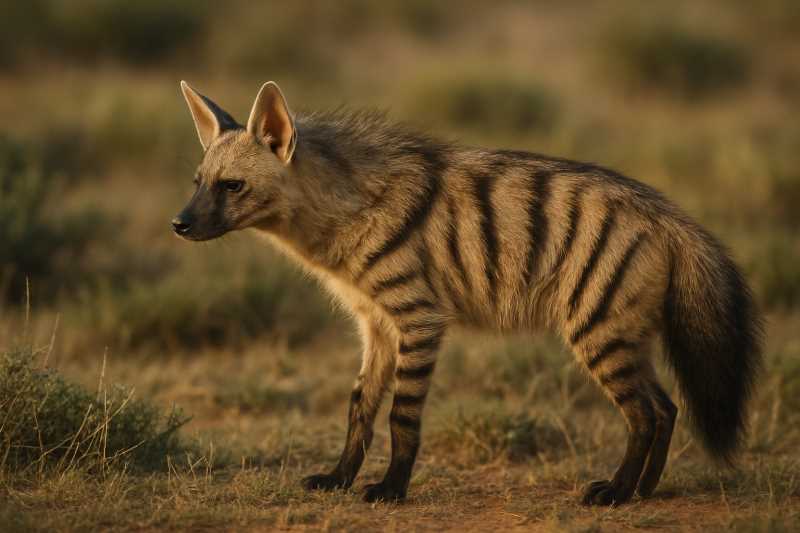
The Southern Aardwolf is a small, slender mammal, with a body length ranging from 55 to 80 cm (22 to 31 inches) and a weight between 8 to 14 kg (17 to 31 pounds). It has a striking appearance, characterized by its long, narrow muzzle, large pointed ears, and a distinctive mane of long hair running along its back, which it erects when threatened to appear larger to predators.
The coat of the Southern Aardwolf is typically a pale yellow or light brown, adorned with vertical black stripes along its sides and back, offering effective camouflage in the grasslands and savannas it inhabits. Its legs have black horizontal bands, and the bushy tail is tipped with black, adding to its unique appearance.
Range and Habitat
The Southern Aardwolf is primarily found in the southern part of Africa, with its range extending across countries such as South Africa, Namibia, Botswana, Zimbabwe, and Angola. It prefers open, dry plains and savannas, where it can easily access its main food source: termites.
These nocturnal creatures are adept at navigating their habitat under the cover of darkness, seeking out termite mounds as they forage. The aardwolf’s distribution is closely tied to the availability of its prey, making it a key indicator species for the health of its ecosystem.
Behavior and Diet
Unlike its carnivorous hyena cousins, the Southern Aardwolf is primarily insectivorous, with a diet that consists almost exclusively of termites. It has a long, sticky tongue, perfectly adapted for lapping up these insects from the ground or directly from termite mounds. A single aardwolf can consume thousands of termites in one night.
Aardwolves are solitary animals, coming together only during the mating season or when raising young. They are territorial, using scent markings to delineate their domain and ward off intruders. During the day, they rest in burrows, which may be self-dug or appropriated from other animals.
Identification Tips (Field Recognition Cues)
Identifying the Southern Aardwolf in the field requires attention to several distinct features:
- Mane: Look for the prominent mane of long hair along its back, which can be raised when the aardwolf feels threatened.
- Stripes: Note the vertical black stripes on its pale coat, a distinguishing feature from other hyenas.
- Ears and Tail: The large, pointed ears and bushy tail with a black tip are also characteristic.
- Size: Smaller and more slender than other hyena species, with a less robust appearance.
- Nocturnal Behavior: Aardwolves are most active at night, so sightings during daylight are rare.
Conservation Status (with Threats and Protections)
The Southern Aardwolf is currently listed as Least Concern on the IUCN Red List. However, it faces several threats that could impact its population if not addressed. Habitat loss due to agricultural expansion and urban development poses a significant risk, while pesticide use can deplete termite populations, indirectly affecting aardwolf food sources.
Conservation efforts focus on habitat preservation and promoting sustainable agricultural practices to ensure the survival of both the aardwolf and its prey. Protected areas and wildlife reserves play a crucial role in providing safe havens for this species.
Frequently Asked Questions
What do Southern Aardwolves eat?
Southern Aardwolves are insectivores, primarily feeding on termites. They use their long, sticky tongues to consume thousands of termites in a single night.
Where do Southern Aardwolves live?
Southern Aardwolves inhabit the savannas and open plains of southern Africa, including countries like South Africa, Namibia, and Botswana.
How do Southern Aardwolves defend themselves?
When threatened, Southern Aardwolves raise their mane to appear larger and more intimidating. They also rely on their keen sense of hearing to detect predators.
Are Southern Aardwolves endangered?
Currently, the Southern Aardwolf is classified as Least Concern by the IUCN. However, habitat loss and pesticide use pose potential threats to their population.
How can you identify a Southern Aardwolf?
Look for their distinctive mane, black stripes, large ears, and bushy tail. They are smaller and more slender than other hyena species and are active at night.
Related posts