Introduction
Soini’s Slender Opossum (Marmosops soinii) is a captivating member of the Didelphidae family, a group of small to medium-sized marsupials native to the diverse ecosystems of South America. This elusive species, first described in detail in the late 20th century, is named after biologist Pekka Soini, who contributed extensively to the understanding of Neotropical wildlife. While not as widely recognized as its North American cousin, the Virginia opossum, Marmosops soinii plays a crucial role in the ecological balance of its native habitats.
In this comprehensive article, we explore the various aspects of Soini’s Slender Opossum’s life, including its physical characteristics, habitat preferences, behavior, diet, and conservation status. We also offer practical identification tips for field researchers and enthusiasts, along with answers to frequently asked questions about this fascinating mammal.
Physical Description
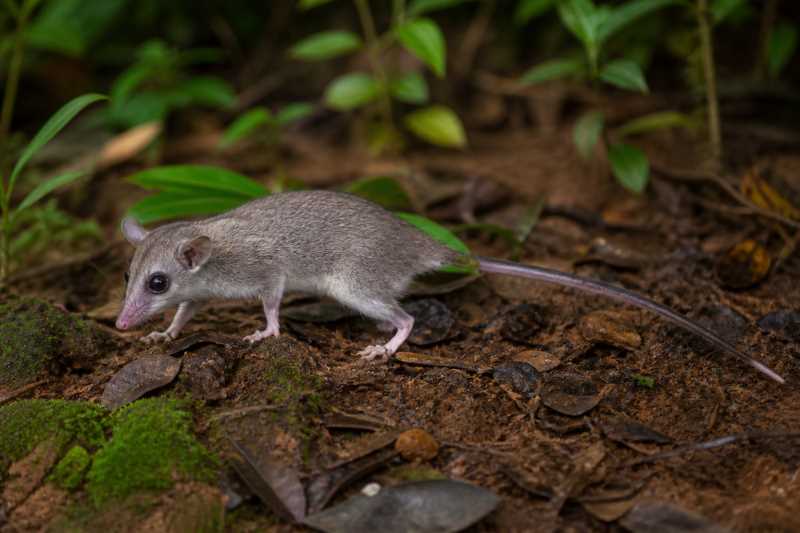
Soini’s Slender Opossum is a small marsupial distinguished by its sleek and elongated physique. Adult opossums typically weigh between 30 to 50 grams and measure about 15 to 20 centimeters in body length, with a tail that can extend an additional 15 to 25 centimeters. The tail is prehensile, assisting the opossum in maintaining balance and navigating through its arboreal environment.
The fur of Marmosops soinii is soft and dense, providing essential insulation against the variable temperatures of its habitat. The dorsal side exhibits a brownish-gray coloration, while the ventral side is notably lighter, often appearing whitish or cream-colored. This coloration provides effective camouflage, allowing the opossum to blend seamlessly into the leaf litter and forest understory.
One of the most distinctive features of Soini’s Slender Opossum is its pointed snout and large, dark eyes, adapted for nocturnal activity. These features, combined with its large, rounded ears, enable the opossum to detect and capture prey efficiently in low-light conditions.
Range and Habitat
The geographical range of Soini’s Slender Opossum is primarily confined to the Amazonian rainforests of Peru and adjacent areas in Brazil. It is predominantly found in lowland tropical forests, thriving in both primary and secondary growth forests. This opossum is arboreal, spending much of its life in the trees, although it occasionally descends to the forest floor in search of food or during dispersal.
These forests provide a rich tapestry of biodiversity and complex ecological interactions, making them ideal habitats for Marmosops soinii. The dense canopy and abundant foliage offer ample shelter and sustenance, while the opossum’s adaptability allows it to exploit a variety of ecological niches.
Behavior and Diet
Soini’s Slender Opossum is primarily nocturnal, using the cover of darkness to forage and avoid predators. Its arboreal lifestyle means that it spends much of its time navigating tree branches, relying on its prehensile tail and sharp claws for stability and movement.
The diet of Marmosops soinii is omnivorous and opportunistic, consisting of insects, small vertebrates, fruits, and nectar. This varied diet allows the opossum to adapt to seasonal changes in food availability, making it a resilient species in the face of environmental fluctuations.
Social behavior in Soini’s Slender Opossum is relatively solitary, with individuals typically coming together only for mating. The breeding season varies depending on geographic location, but it generally aligns with periods of food abundance to ensure the survival of the young.
Identification Tips (Field Recognition Cues)
Identifying Soini’s Slender Opossum in the field requires careful observation of several key characteristics. Here are some tips for researchers and enthusiasts:
- Size and Shape: Look for a small, slender-bodied marsupial with a long, prehensile tail. The overall body length, excluding the tail, should be around 15 to 20 centimeters.
- Coloration: Note the brownish-gray dorsal fur contrasting with the lighter, whitish ventral side.
- Facial Features: Pay attention to the pointed snout, large dark eyes, and rounded ears, which are indicative of its nocturnal nature.
- Behavior: Observe for nocturnal activity and arboreal movements, as these are typical of Marmosops soinii.
- Habitat: Check for presence in lowland tropical forests with dense canopy cover.
Conservation Status (with Threats and Protections)
Currently, Soini’s Slender Opossum is listed as "Data Deficient" by the International Union for Conservation of Nature (IUCN) due to limited information on its population trends and ecological requirements. However, like many species in the Amazon, it faces potential threats from habitat destruction, deforestation, and the impacts of climate change.
Deforestation for agriculture, logging, and infrastructure development poses significant risks to its habitat. Additionally, climate change can alter the delicate balance of rainforest ecosystems, potentially affecting food availability and habitat suitability.
Conservation efforts for Marmosops soinii include habitat protection through the establishment of protected areas and sustainable land-use practices. Research initiatives aimed at understanding its ecology and population dynamics are crucial for informing conservation strategies and mitigating threats.
Frequently Asked Questions
What is the typical lifespan of Soini’s Slender Opossum?
The lifespan of Marmosops soinii in the wild is not well-documented, but similar species generally live for about 2 to 4 years. Factors such as predation, habitat quality, and food availability can influence longevity.
How does Soini’s Slender Opossum contribute to its ecosystem?
As an omnivorous marsupial, Soini’s Slender Opossum plays a role in controlling insect populations and dispersing seeds throughout the forest. Its presence supports the ecological balance and biodiversity of its habitat.
Are there any significant predators of Soini’s Slender Opossum?
Predators of Marmosops soinii likely include birds of prey, snakes, and larger mammals. Its nocturnal habits and arboreal lifestyle help reduce predation risks.
How can we help protect Soini’s Slender Opossum?
Supporting conservation organizations, advocating for rainforest protection, and promoting sustainable practices can all contribute to the preservation of Marmosops soinii and its habitat.
Is Soini’s Slender Opossum a common sighting in its range?
Due to its elusive nature and nocturnal habits, Soini’s Slender Opossum is not commonly seen. Field researchers and naturalists are more likely to encounter it during targeted nocturnal surveys.
Related posts