Introduction
The Senegal Striped Grass Mouse, scientifically known as Lemniscomys linulus, is a fascinating rodent species that inhabits the diverse landscapes of West Africa. This small mammal is an integral part of the ecosystem, contributing to seed dispersal and serving as prey for various predators. Despite its crucial role, the Senegal Striped Grass Mouse remains relatively understudied compared to other African rodents. This article delves into the physical characteristics, habitat, behavior, and conservation status of this intriguing species.
Physical Description
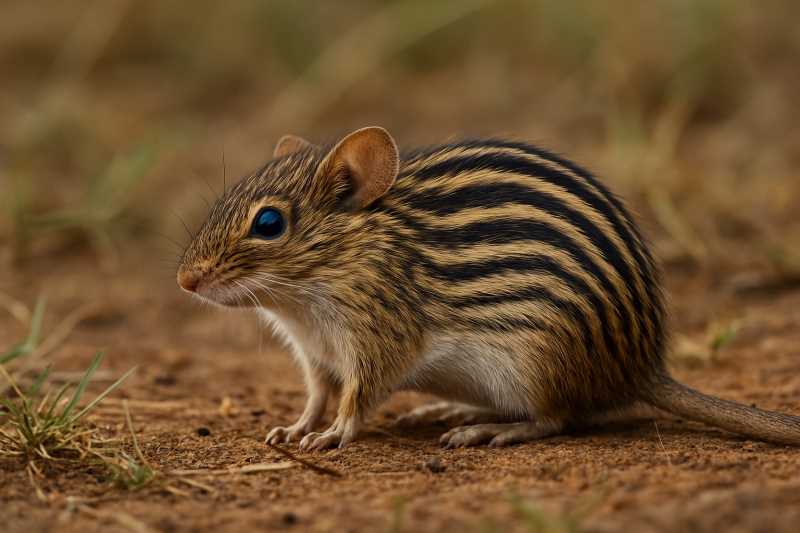
The Senegal Striped Grass Mouse is a small rodent characterized by its striking striped pattern. Adult mice typically measure between 10 to 15 centimeters in body length, with a tail that adds an additional 8 to 12 centimeters. The fur of the Lemniscomys linulus is soft and dense, providing excellent camouflage in its grassy habitat. The dorsal side displays a series of black or dark brown stripes running longitudinally from the head to the tail, which contrast sharply against a lighter background that can range from tan to reddish-brown. The ventral side is generally a pale cream or white color.
Their large, prominent eyes are well-adapted for nocturnal activity, while their rounded ears are sensitive to the faintest sounds, aiding in predator detection. The Senegal Striped Grass Mouse also possesses strong, sharp claws and sturdy limbs, which facilitate digging and climbing.
Range and Habitat
The Senegal Striped Grass Mouse is native to the savannas and grasslands of West Africa, with its range extending from Senegal to Nigeria. It thrives in open habitats, particularly favoring areas with dense grasses and scattered shrubs. These environments provide ample cover from predators and abundant food resources.
This species is highly adaptable and can also be found in agricultural fields and near human settlements, where it often benefits from the additional food sources. However, its preference for natural grasslands is evident, as these areas offer the optimal conditions for its survival and reproduction.
Behavior and Diet
Primarily nocturnal, the Senegal Striped Grass Mouse emerges at dusk to forage for food. Its diet consists mainly of seeds, grains, and grasses, although it occasionally supplements this with insects and other small invertebrates. This opportunistic feeding behavior ensures a balanced diet, catering to its nutritional requirements.
Socially, these mice are generally solitary or found in small family groups. They communicate through a series of high-pitched squeaks and rely on scent markings to establish territory and recognize individuals. Although primarily ground-dwelling, they are agile climbers and often seek refuge in trees or shrubs when threatened.
Breeding occurs throughout the year, with peaks during the rainy season when food is plentiful. Females typically give birth to litters of three to six young after a gestation period of approximately three weeks. The young are born altricial, meaning they are blind and helpless at birth, relying entirely on their mother for nourishment and protection until they mature.
Identification Tips (Field Recognition Cues)
Identifying the Senegal Striped Grass Mouse in the field involves noting several key characteristics:
- Striped Pattern: Look for the distinctive longitudinal stripes on the dorsal side that are dark brown or black against a lighter background.
- Body Size and Tail: These mice are small, with a body length of 10 to 15 centimeters and a tail that nearly equals or exceeds this length.
- Eye and Ear Size: They have large, round eyes adapted for nocturnal vision and rounded ears that are relatively large compared to the head size.
- Habitat: They are typically found in grassy or shrubby areas, particularly in savannas and open fields.
- Behavior: Look for nocturnal activity patterns, as these mice are most active after dusk when foraging.
Conservation Status (With Threats and Protections)
The Senegal Striped Grass Mouse is currently classified as Least Concern by the International Union for Conservation of Nature (IUCN). This status reflects its wide distribution and presumed large population. However, like many species, it faces threats from habitat destruction, primarily due to agricultural expansion and urban development.
The conversion of natural grasslands into farmland reduces available habitat and increases the risk of encounters with humans, often resulting in the mice being viewed as pests. Additionally, the use of pesticides poses a significant threat, as these chemicals can harm non-target species like the Senegal Striped Grass Mouse.
Conservation efforts focus on preserving natural habitats and promoting sustainable agricultural practices that minimize environmental impact. Protected areas and wildlife reserves play a crucial role in safeguarding the remaining populations and ensuring the species’ long-term survival.
Frequently Asked Questions
What do Senegal Striped Grass Mice eat?
Senegal Striped Grass Mice primarily consume seeds, grains, and grasses. They occasionally eat insects and other small invertebrates, making them omnivorous.
Where can Senegal Striped Grass Mice be found?
These mice are native to the savannas and grasslands of West Africa, with a range extending from Senegal to Nigeria. They prefer open habitats with dense grasses.
How can I identify a Senegal Striped Grass Mouse?
Look for the distinctive dark stripes on the back, the small body size (10-15 cm), large eyes, and rounded ears. They inhabit grassy areas and are nocturnal.
Are Senegal Striped Grass Mice endangered?
Currently, the Senegal Striped Grass Mouse is classified as Least Concern by the IUCN. However, habitat destruction due to agriculture and urbanization poses threats.
Do Senegal Striped Grass Mice live in groups?
These mice are generally solitary or found in small family groups. They communicate using high-pitched squeaks and rely on scent markings for territory definition.
Related posts