Introduction
The Pig-tailed Langur, scientifically known as Simias concolor, is a fascinating primate species endemic to the Mentawai Islands in Indonesia. This unique monkey is part of the Cercopithecidae family and has garnered significant attention due to its limited range and distinctive features. As a species that is often overshadowed by more widely recognized primates, the Pig-tailed Langur deserves a closer look, not only for its intriguing biology but also for the conservation challenges it faces.
Physical Description
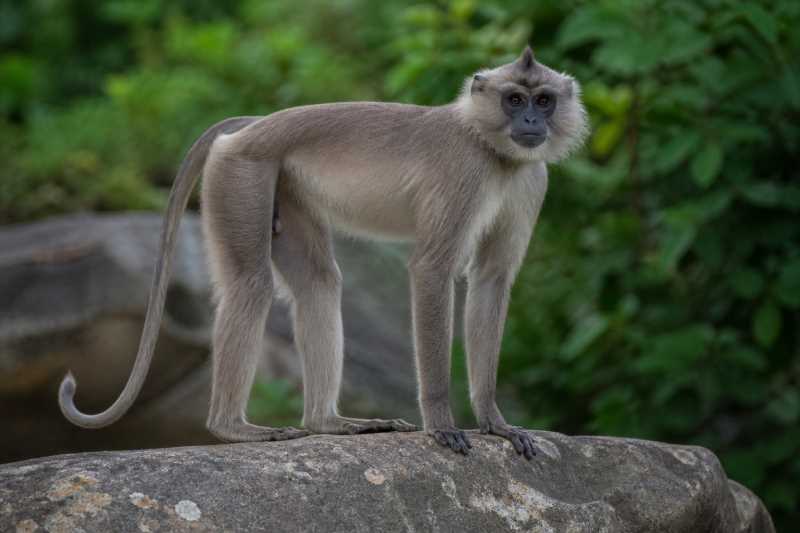
The Pig-tailed Langur is characterized by its robust body, short limbs, and a distinctive tail resembling that of a pig, from which it derives its name. Adult Pig-tailed Langurs typically measure about 50 to 55 centimeters in body length, with a tail length of approximately 15 centimeters. Their weight ranges between 7 to 9 kilograms, with males generally being larger than females.
Fur coloration is predominantly dark brown to black, with a lighter underside. The face is hairless, and the skin can appear a pale pink or grayish color. One of the most striking features of this langur is its expressive eyes, which are large and forward-facing, providing excellent vision for navigation through dense forest canopies.
Range and Habitat
The Pig-tailed Langur is found exclusively on the Mentawai Islands, an archipelago off the west coast of Sumatra, Indonesia. The islands of Siberut, Sipora, North Pagai, and South Pagai serve as their primary habitat. These islands are characterized by a tropical rainforest climate, with high humidity and abundant rainfall throughout the year.
Their preferred habitats are lowland rainforests, swamp forests, and mangrove areas. The dense canopy of these forests provides both food and protection from predators. The langurs are arboreal, spending most of their lives in the trees, where they can forage and move around safely.
Behavior and Diet
Pig-tailed Langurs are social animals, typically living in small groups consisting of a dominant male, several females, and their offspring. Group sizes can vary but usually consist of about 3 to 9 individuals. These langurs are diurnal, meaning they are active during the day and rest at night.
Their diet is primarily folivorous, consisting mainly of leaves, though they also consume fruits, seeds, and flowers when available. Their digestive system is specially adapted to break down fibrous plant material, allowing them to extract necessary nutrients efficiently.
Communication among Pig-tailed Langurs involves a variety of vocalizations, body postures, and facial expressions. These behaviors help maintain group cohesion and coordinate activities such as foraging and defense against predators.
Identification Tips (Field Recognition Cues)
Identifying Pig-tailed Langurs in the field involves observing several key features:
- Tail Shape and Size: The short, pig-like tail is a distinguishing characteristic not shared by other langurs in the region.
- Fur Coloration: Look for their dark brown or black fur with lighter underparts.
- Facial Features: Note the bare face with a pale complexion and large, expressive eyes.
- Group Behavior: Observing their social dynamics can be a clue, as they often move in groups with a dominant male leading.
- Habitat: They are found only in the forests of the Mentawai Islands, which is a significant geographical indicator.
Conservation Status (With Threats and Protections)
The Pig-tailed Langur is currently listed as Critically Endangered by the International Union for Conservation of Nature (IUCN). Several factors contribute to their precarious status:
- Habitat Destruction: Deforestation for agriculture, logging, and human settlement is the most significant threat to their habitat.
- Hunting: They are sometimes hunted for food by local communities, further reducing their numbers.
- Limited Range: Their confinement to a small geographic area makes them particularly vulnerable to environmental changes and human activities.
Conservation efforts are underway to protect the Pig-tailed Langur. These include habitat preservation initiatives, legal protections against hunting, and environmental education programs to raise awareness among local communities. Protected areas have been established on the Mentawai Islands, but enforcement of conservation laws remains a challenge.
Frequently Asked Questions
1. What is the Pig-tailed Langur’s primary diet?
The Pig-tailed Langur primarily feeds on leaves, but its diet also includes fruits, seeds, and flowers. Their digestive system is adapted to process fibrous plant material efficiently.
2. Why is the Pig-tailed Langur considered critically endangered?
The species is critically endangered due to habitat destruction from deforestation, hunting pressures, and its limited geographic range, which heightens its vulnerability to environmental changes.
3. Where can the Pig-tailed Langur be found?
The Pig-tailed Langur is endemic to the Mentawai Islands in Indonesia, particularly on the islands of Siberut, Sipora, North Pagai, and South Pagai.
4. How do Pig-tailed Langurs communicate?
They communicate through a combination of vocalizations, body postures, and facial expressions, which help maintain group cohesion and coordinate activities.
5. What conservation measures are in place for the Pig-tailed Langur?
Conservation measures include habitat protection, legal restrictions against hunting, and awareness programs aimed at local communities to promote the langur’s conservation.
Related posts