Introduction
The Palawan stink badger, scientifically known as Mydaus marchei, is an intriguing mammal that belongs to the family Mephitidae. It is also commonly referred to as the "Calamanian stink badger," named after the Calamian Islands, part of its native range. Found exclusively in the Philippines, this distinctive species is lesser-known compared to other members of the Mephitidae family, which includes skunks and other stink badgers. This article delves into the various aspects of the Palawan stink badger, providing insights into its physical characteristics, habitat, behavior, and conservation status to offer a comprehensive understanding of this unique creature.
Physical Description
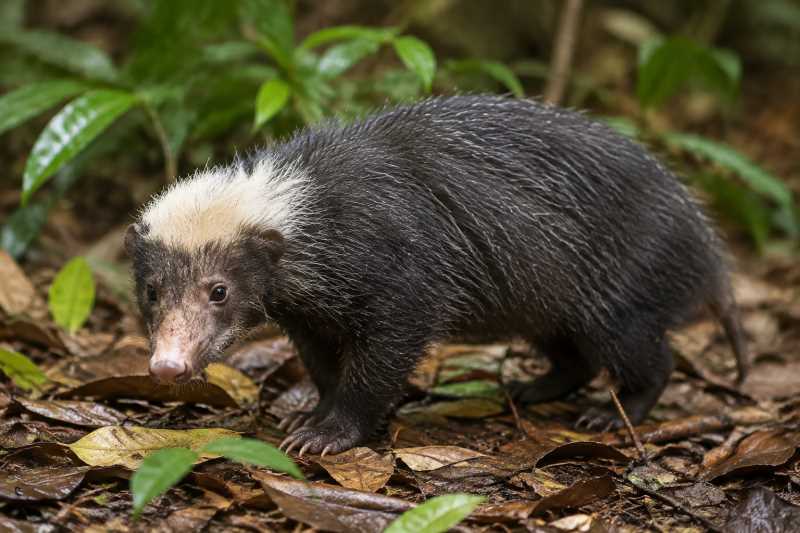
The Palawan stink badger is a small, stout mammal characterized by its robust build and distinctive coloration. Adults typically weigh between 1.5 to 3 kilograms and measure about 32 to 46 centimeters in length, excluding the tail, which adds an additional 2 to 7 centimeters. Their fur is predominantly dark brown to black, with a noticeable pale stripe running from the top of the head down to the tail. This stripe can vary in width and brightness among individuals, but it serves as a recognizable field mark.
The body of the Palawan stink badger is compact and muscular, adapted for digging and foraging. It has short, sturdy limbs with strong claws, which are essential for excavating burrows and unearthing insects. The head is relatively small, with a pointed snout that aids in rooting through soil and leaf litter. Its eyes and ears are small, reflecting its primarily nocturnal lifestyle.
One of the most distinctive features of the Palawan stink badger is its ability to emit a foul-smelling secretion from its anal glands, a characteristic it shares with other members of the Mephitidae family. This secretion serves as a potent defense mechanism against predators.
Range and Habitat
The Palawan stink badger is endemic to the Philippines, specifically found in the Palawan and Calamian Islands. Its distribution is limited to these islands, where it inhabits a variety of environments ranging from lowland forests to grasslands. These mammals are highly adaptable and can also be found in agricultural areas and near human settlements, although they prefer dense undergrowth where they can easily forage and hide from predators.
Within its range, the Palawan stink badger occupies burrows, which it either digs itself or takes over from other animals. These burrows provide shelter and protection, especially during the day when the stink badger is inactive. At night, they emerge to forage, making use of their keen sense of smell to locate food.
Behavior and Diet
The Palawan stink badger is primarily nocturnal, spending the daylight hours hidden in its burrow or dense vegetation. Its nocturnal habits help it avoid predation and competition for food. These mammals are solitary creatures, coming together only for mating.
The diet of the Palawan stink badger is omnivorous, consisting of a variety of food sources. It primarily feeds on invertebrates such as insects and worms, which it digs out of the ground with its powerful claws. Additionally, it consumes small vertebrates, fruits, and plant material. Its opportunistic feeding habits allow it to adapt to the availability of food resources in its habitat.
When threatened, the Palawan stink badger relies on its ability to spray a foul-smelling secretion as a primary defense mechanism. This spray can deter predators and give the stink badger a chance to escape. It may also emit warning growls or hiss to ward off potential threats.
Identification Tips (Field Recognition Cues)
Identifying the Palawan stink badger in the field requires attention to several key characteristics:
- Coloration: Look for the dark brown to black fur with a pale dorsal stripe running from the head to the tail.
- Size: Note the small size, with a body length of 32 to 46 centimeters, excluding the tail.
- Habitat: Search in dense undergrowth or near burrows, especially in lowland forests or grasslands on the Palawan and Calamian Islands.
- Behavior: Observe nocturnal activity and listen for warning growls or hissing sounds.
Conservation Status (With Threats and Protections)
The conservation status of the Palawan stink badger is currently listed as "Least Concern" by the International Union for Conservation of Nature (IUCN). However, this does not imply that the species faces no threats. The primary threats to its survival include habitat destruction due to logging, agriculture, and urban development. These activities reduce the available habitat and resources for the stink badger, forcing it into smaller, fragmented areas.
Additionally, road construction and increased traffic pose a significant threat, as these animals are at risk of being killed by vehicles. Hunting and trapping for local consumption or the pet trade, although not widespread, also contribute to population decline.
Conservation efforts for the Palawan stink badger focus on preserving its natural habitat and enforcing wildlife protection laws. The establishment of protected areas and wildlife reserves in the Palawan region helps safeguard this species and its ecosystem. Environmental education and awareness campaigns are crucial in promoting coexistence between humans and wildlife in the region.
Frequently Asked Questions
What is the primary defense mechanism of the Palawan stink badger?
The primary defense mechanism of the Palawan stink badger is its ability to spray a foul-smelling secretion from its anal glands. This potent spray deters predators and provides the stink badger with an opportunity to escape.
Where can the Palawan stink badger be found?
The Palawan stink badger is endemic to the Philippines and is found on the Palawan and Calamian Islands. It inhabits a range of environments, including lowland forests, grasslands, and even agricultural areas with dense undergrowth.
Is the Palawan stink badger endangered?
Currently, the Palawan stink badger is listed as "Least Concern" by the IUCN. However, it faces threats from habitat destruction, road traffic, and hunting, which necessitate ongoing conservation efforts.
How does the Palawan stink badger find its food?
The Palawan stink badger primarily uses its keen sense of smell to locate food. It digs in the ground with its strong claws to uncover invertebrates such as insects and worms, which make up a significant portion of its diet.
What are the main threats to the Palawan stink badger?
The main threats to the Palawan stink badger include habitat destruction due to logging and agriculture, road traffic accidents, and hunting. Conservation measures are essential to mitigate these threats and protect the species.
Related posts