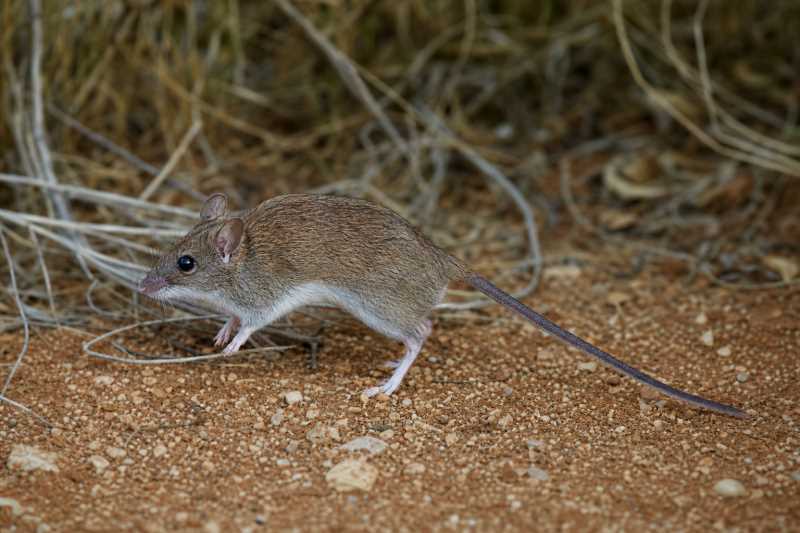
Long-tailed Hopping Mouse (Notomys longicaudatus)
Introduction
The Long-tailed Hopping Mouse, scientifically known as Notomys longicaudatus, was a remarkable species of rodent native to Australia. Unfortunately, this fascinating creature is now believed to be extinct. Historically part of the Notomys genus, which includes several unique hopping mouse species, the Long-tailed Hopping Mouse was distinctive for its long tail and agile movements. This article delves into various aspects of this species, including its physical characteristics, habitat, behavior, and conservation status, to provide a comprehensive overview of what made this species unique in the animal kingdom.
Physical Description
The Long-tailed Hopping Mouse was a small rodent characterized by its long, slender tail, which often exceeded the length of its body. This tail was not only a defining feature but also a critical component of its balance and agility. The mouse’s body was covered in a dense coat of fur, typically ranging from light brown to gray, providing camouflage within its natural habitat. Its large hind legs were adapted for hopping, allowing it to cover significant distances in search of food and shelter. The ears were relatively large, contributing to its acute sense of hearing, a common trait among nocturnal animals.
Range and Habitat
Historically, the Long-tailed Hopping Mouse was found in arid and semi-arid regions of central Australia. This range encompassed parts of Western Australia, South Australia, and the Northern Territory. The species favored sandy and stony deserts, where it could utilize its remarkable hopping ability to navigate the challenging terrain. These areas were characterized by sparse vegetation, including shrubs and grasses, which provided both food and cover from predators.
The habitat of the Long-tailed Hopping Mouse was primarily influenced by the availability of food and water sources. As a result, its population distribution was patchy, with individuals and colonies spread out across suitable environments within its range.
Behavior and Diet
The Long-tailed Hopping Mouse was primarily nocturnal, spending daylight hours in burrows to avoid the harsh desert sun. These burrows were complex, with multiple entrances and chambers, serving as protection from predators and extreme temperatures. The species was known for its social behavior, often living in small groups.
In terms of diet, the Long-tailed Hopping Mouse was omnivorous, feeding on a variety of seeds, fruits, and insects. Its diet was largely dictated by availability, with the mouse consuming what was most accessible within its arid habitat. This adaptability in diet helped it to survive in the challenging conditions of the Australian desert.
Identification Tips (Field Recognition Cues)
Identifying the Long-tailed Hopping Mouse in the wild would have involved several key characteristics:
- Tail Length: The tail was significantly longer than the body, a key differentiator from other hopping mouse species.
- Hind Legs: The large, powerful hind legs were adapted for jumping, similar to those of a kangaroo.
- Fur Color: The coat color ranged from light brown to gray, providing effective camouflage in desert environments.
- Ear Size: Large ears were a notable feature, aiding in detecting predators and prey.
Conservation Status (with threats and protections)
The Long-tailed Hopping Mouse is classified as extinct. The precise reasons for its extinction are not entirely clear, but several factors likely contributed:
- Habitat Destruction: Agricultural expansion and land clearing reduced the available habitat for the species.
- Predation: Introduced species such as cats and foxes increased predation pressures.
- Climate: Changes in climate patterns may have further stressed the population by altering their habitat and food availability.
Despite its extinction, the story of the Long-tailed Hopping Mouse serves as a poignant reminder of the fragility of ecosystems and the importance of conservation efforts for existing species.
Frequently Asked Questions
What did the Long-tailed Hopping Mouse eat?
The Long-tailed Hopping Mouse was omnivorous, primarily feeding on seeds, fruits, and insects available in its arid habitat.
Where was the Long-tailed Hopping Mouse found?
This species was native to the arid and semi-arid regions of central Australia, including parts of Western Australia, South Australia, and the Northern Territory.
Why did the Long-tailed Hopping Mouse become extinct?
The extinction of the Long-tailed Hopping Mouse is attributed to habitat destruction, introduced predators, and possibly climate changes that affected its survival.
How did the Long-tailed Hopping Mouse move?
The Long-tailed Hopping Mouse used its powerful hind legs for a distinctive hopping movement, enabling it to navigate the desert terrain effectively.
Is there any chance the Long-tailed Hopping Mouse still exists?
While it is classified as extinct, there is always a slim possibility that undiscovered populations could exist, though this is considered unlikely by scientists.
Related posts