Introduction
The Least Chipmunk (Neotamias minimus) stands as one of the most captivating small mammals native to North America. Known for their energetic nature and distinctive markings, these tiny rodents are a key component of their ecosystems, serving roles in seed dispersion and as prey for larger animals. This article delves deep into the life of the Least Chipmunk, exploring its physical characteristics, habitat, behaviors, and conservation status.
Physical Description
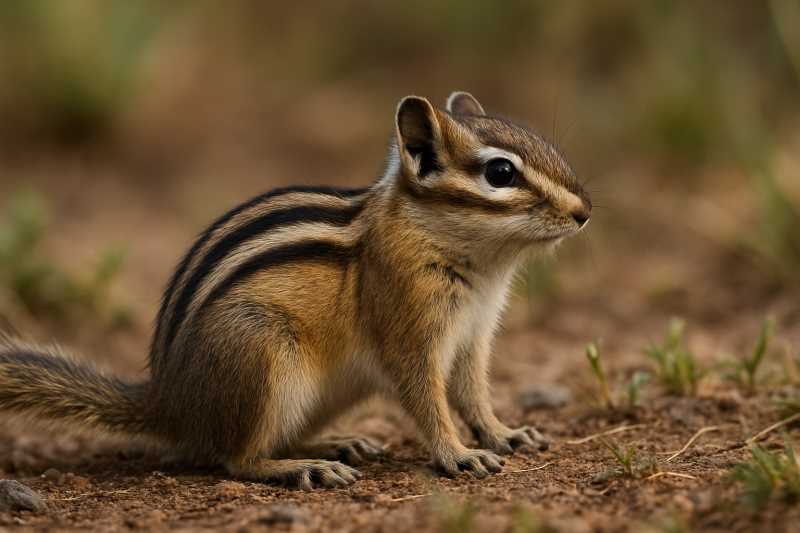
The Least Chipmunk is the smallest member of the chipmunk family, with adults typically measuring between 18 to 22 centimeters in length, including their bushy tails which can be half of their body length. Weighing in at only 32 to 50 grams, these chipmunks are lightweight yet agile.
Their fur is a mix of gray to reddish-brown with prominent white and black stripes running from the nose to the base of the tail. The distinctive stripes are one of their most defining features, with three dark stripes separated by lighter ones on their backs and two pale stripes on their faces. These patterns not only aid in camouflage but also help in identifying individuals from afar.
Range and Habitat
The Least Chipmunk is widely distributed across North America, predominantly found in Canada and the western United States. Their range extends from southern Alaska and Canada, through the Rocky Mountains, and into the arid regions of the southwestern United States.
These chipmunks thrive in a variety of habitats including coniferous forests, mixed woodlands, open plains, and even arid deserts. They are most commonly associated with areas that provide ample cover and food resources. Rock piles, fallen logs, and dense shrubbery offer perfect hiding spots from predators while enabling them to forage efficiently.
Behavior and Diet
Least Chipmunks are diurnal and highly active creatures, especially during the warmer months. They are solitary animals, each maintaining a home range that they defend vigorously against intruders. Their burrows, which serve as both nesting and storage sites, are typically complex networks of tunnels and chambers.
The diet of the Least Chipmunk is omnivorous, primarily consisting of seeds, nuts, fruits, and insects. They exhibit food caching behavior, storing surplus food in their cheek pouches and transporting it to their burrows for later consumption. This habit is crucial as it ensures their survival during winter months when food is scarce.
Identification Tips (Field Recognition Cues)
For those keen on identifying the Least Chipmunk in the wild, several key characteristics can aid in their recognition:
- Size and Shape: As the smallest chipmunk species, their petite size and slender build are immediate indicators.
- Distinctive Stripes: Look for the pattern of five dark stripes alternating with four lighter stripes on their backs and the two pale stripes on their faces.
- Tail: Their tails are notably bushy and often held upright or straightened when running.
- Behavior: Observe their quick, darting movements and tendency to pause and stand on their hind legs to survey their surroundings.
Conservation Status (with Threats and Protections)
According to the International Union for Conservation of Nature (IUCN), the Least Chipmunk is currently classified as a species of Least Concern. This assessment is due to their wide distribution and presumably large population size.
However, they do face threats from habitat destruction due to logging, agricultural expansion, and urban development. Climate change also poses a long-term threat by altering the habitats and food resources they rely on.
Conservation efforts focus on preserving natural habitats and mitigating the impacts of human activities. Protected areas and national parks play a significant role in safeguarding their populations by providing stable environments free from industrial encroachment.
Frequently Asked Questions
What is the lifespan of a Least Chipmunk?
Least Chipmunks typically live for about 2 to 3 years in the wild. However, they can live longer in captivity, reaching up to 6 years under optimal conditions. Their lifespan is influenced by factors such as predation, food availability, and environmental conditions.
How do Least Chipmunks survive the winter?
Least Chipmunks do not hibernate per se but enter a state of torpor, reducing their metabolic rate and conserving energy. They rely on food caches accumulated during the warmer months to sustain themselves through the colder periods.
Are Least Chipmunks social animals?
No, Least Chipmunks are generally solitary except during mating season. They maintain and defend their territories vigorously, and each individual has its own burrow system.
How can I attract Least Chipmunks to my garden?
To attract Least Chipmunks, provide a habitat that mimics their natural environment. This can include planting native shrubs, ensuring the availability of food sources like seeds and nuts, and minimizing the use of pesticides.
Do Least Chipmunks have any natural predators?
Yes, Least Chipmunks are preyed upon by a variety of predators including hawks, owls, weasels, foxes, and snakes. Their keen senses and agility help them evade capture, but predation remains a significant factor in their life cycle.
Related posts