Introduction
The Iranian Pika, scientifically known as Ochotona vizier, is a small mammal belonging to the family Ochotonidae. This elusive creature is a member of the pika genus, which is closely related to rabbits and hares but distinguishes itself with unique characteristics. Found predominantly in the mountainous regions of Iran, the Iranian Pika plays an essential role in its ecosystem, contributing to the biodiversity of the areas it inhabits. This article delves into the physical characteristics, habitat preferences, behaviors, diet, and conservation status of this fascinating species.
Physical Description
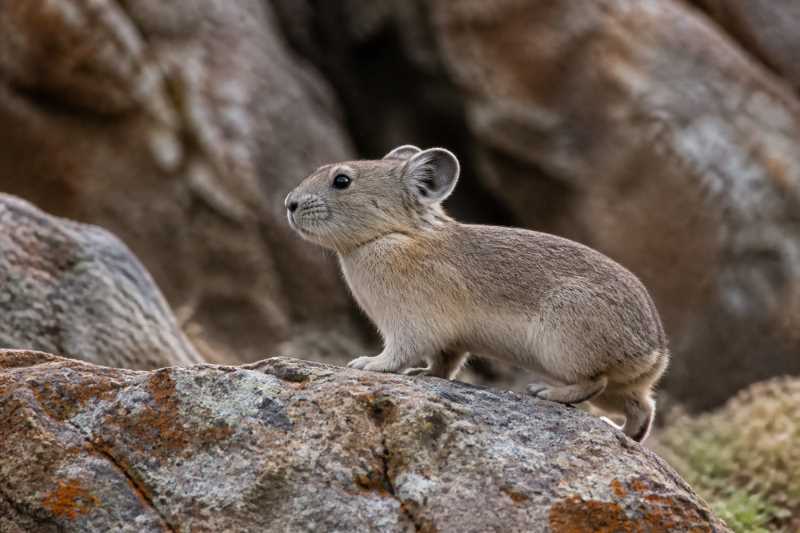
The Iranian Pika is a small, compact mammal with a body length typically ranging from 15 to 20 centimeters (5.9 to 7.9 inches) and a weight between 100 and 150 grams (3.5 to 5.3 ounces). It has rounded ears, short limbs, and a lack of a visible tail, which are characteristic features of pikas. Its fur is dense and soft, providing insulation against harsh climatic conditions. The coloration of the Iranian Pika’s fur varies seasonally; it usually exhibits a grayish-brown hue during the summer, transitioning to a lighter, grayish-white in winter. This seasonal fur change aids in camouflage against predators and the changing environment.
Range and Habitat
The Iranian Pika is endemic to the mountainous regions of Iran, particularly the Alborz and Zagros mountain ranges. It thrives in rocky outcrops, talus slopes, and alpine meadows, where it finds shelter and abundant food sources. These areas provide the necessary microhabitats that the Iranian Pika needs for nesting and foraging. The elevation range for this species typically spans from 2,000 to over 4,000 meters (6,561 to 13,123 feet) above sea level. The pika’s preference for high-altitude environments is due to its adaptation to cooler temperatures and its need for specific vegetation types that grow in these regions.
Behavior and Diet
The Iranian Pika is primarily diurnal, being most active during the early morning and late afternoon, which helps it avoid the midday heat. Pikas are known for their vocalizations, which they use to communicate with each other and to alert conspecifics of potential threats. These vocalizations can vary from short calls to more complex sounds, depending on the context.
In terms of diet, the Iranian Pika is herbivorous, feeding on a variety of grasses, herbs, and shrubs. It exhibits a behavior known as "haymaking," where it collects vegetation during the warmer months and stores it in caches to consume during the winter when food is scarce. This behavior is crucial for survival in its harsh, mountainous habitat, where snow cover can limit access to fresh vegetation.
Identification Tips (field recognition cues)
Identifying the Iranian Pika in the field can be challenging due to its elusive nature and preference for rocky habitats. However, certain cues can aid in recognition:
- Ears and Tail: Look for rounded ears and the absence of a visible tail, which are distinguishing features of pikas.
- Size and Shape: Note the small, compact body and short limbs that are characteristic of pikas.
- Coloration: Observe the fur color, which changes seasonally from grayish-brown in summer to grayish-white in winter.
- Behavior: Listen for vocalizations, as pikas are known for their distinct calls used for communication and alerting others of predators.
- Habitat: Focus on rocky outcrops and talus slopes in high-altitude areas, where pikas are likely to be found.
Conservation Status (with threats and protections)
The Iranian Pika is currently classified as a species of "Least Concern" by the International Union for Conservation of Nature (IUCN). However, it faces several threats that could impact its population in the future. Habitat destruction due to human activities such as mining, road construction, and agricultural expansion poses a significant risk to the pika’s natural environment. Climate change is another potential threat, as rising temperatures and altered precipitation patterns could affect the availability of suitable habitats and food sources.
To mitigate these threats, conservation efforts are focused on protecting the Iranian Pika’s natural habitats through the establishment of protected areas and the implementation of sustainable land-use practices. Additionally, research is ongoing to better understand the species’ ecology and population dynamics, which can inform future conservation strategies.
Frequently Asked Questions
Q1: What does the Iranian Pika eat? A1: The Iranian Pika is herbivorous, feeding primarily on grasses, herbs, and shrubs. It practices "haymaking," storing collected vegetation for winter consumption.
Q2: Where can the Iranian Pika be found? A2: It is endemic to the mountainous regions of Iran, particularly the Alborz and Zagros mountain ranges, thriving in rocky outcrops and alpine meadows.
Q3: How does the Iranian Pika survive winter? A3: The Iranian Pika survives winter by storing food in caches during the summer and fall, a behavior known as "haymaking," to ensure a food supply when vegetation is scarce.
Q4: Are Iranian Pikas endangered? A4: Currently, the Iranian Pika is classified as "Least Concern" by the IUCN, but it faces threats from habitat destruction and climate change, which could affect its future status.
Q5: How can I identify an Iranian Pika in the wild? A5: Look for small, compact mammals with rounded ears, no visible tail, seasonal fur color changes, and vocalizations, often found in rocky, high-altitude habitats.
Related posts