Introduction
Harrison’s Giant Mastiff Bat, scientifically known as Otomops harrisoni, is an intriguing mammalian species that captures the interest of bat enthusiasts and researchers alike. This elusive creature belongs to the Molossidae family, recognized for their characteristic free-tailed bats. Named in honor of the renowned mammologist David Harrison, this bat species has captured the fascination of the scientific community since its discovery. Known for its size and unique features, Harrison’s Giant Mastiff Bat continues to be a subject of study, particularly in its native habitats.
Understanding the intricacies of Harrison’s Giant Mastiff Bat, from its physical attributes to its behavioral patterns, is essential for appreciating its role in the ecosystem. This article aims to provide a comprehensive overview of this remarkable species, delving into its physical description, range and habitat, behavior and diet, identification tips, conservation status, and answering some frequently asked questions.
Physical Description
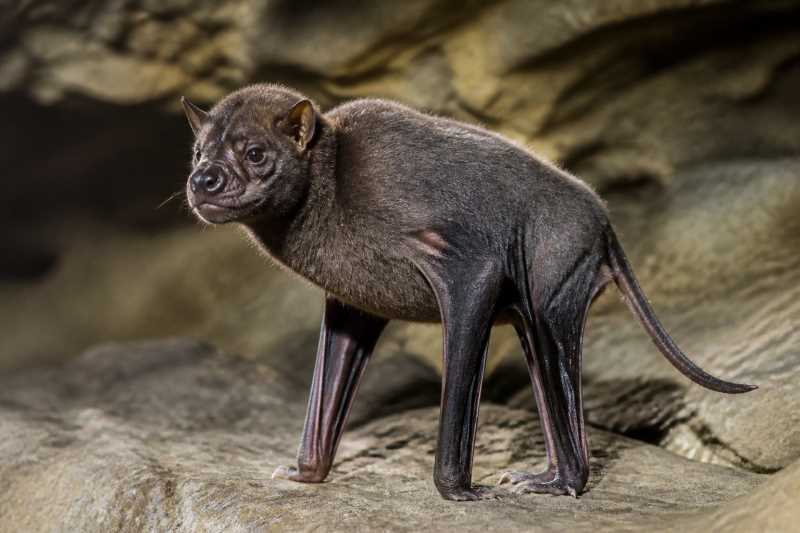
Harrison’s Giant Mastiff Bat stands out due to its substantial size relative to other bat species. Adult individuals exhibit a wingspan ranging between 56 to 64 centimeters, making them one of the larger bat species within their geographical range. The body length of these bats typically falls between 14 to 18 centimeters, with a notable tail that adds another 4 to 5 centimeters.
The fur of Otomops harrisoni is characterized by a dark, rich brown color, providing excellent camouflage against the backdrop of their natural rocky and cavernous habitats. Their fur is denser around the neck and shoulders, giving them a robust appearance. One of the distinctive features of this species is its pronounced, slightly wrinkled face with large, rounded ears that are instrumental in echolocation, a crucial adaptation for nocturnal hunting.
Their forelimbs are adapted for flight, with elongated fingers supporting the wing membrane. The hind limbs are relatively short, equipped with strong claws that aid in roosting on vertical surfaces. The tail of the Giant Mastiff Bat is free from the membrane for a portion of its length, a characteristic feature of the Molossidae family.
Range and Habitat
Harrison’s Giant Mastiff Bat is primarily found in the eastern regions of Africa. Its range extends through countries such as Ethiopia, Kenya, and Somalia. The species is known to inhabit a variety of environments, from dry savannas to forested areas, although it shows a preference for rocky terrains and caves, which provide ideal roosting sites.
These bats are often found in areas with abundant insect populations, which constitute their primary food source. The selection of habitat is closely linked to the availability of suitable roosting sites and food resources, essential for their survival and reproduction.
Behavior and Diet
The nocturnal nature of Harrison’s Giant Mastiff Bat dictates much of its behavior. These bats emerge from their roosts at dusk to forage for food, primarily feeding on a diet of insects. Their diet mainly consists of beetles, moths, and other flying insects, which they skillfully capture in flight using echolocation to detect and track their prey.
Socially, Otomops harrisoni tends to form small colonies, often roosting together in crevices or caves. This social structure provides protection against predators and aids in thermoregulation. Their vocalizations, which serve both as echolocation calls and communication signals, play a crucial role in maintaining group cohesion and coordinating foraging activities.
Identification Tips (field recognition cues)
Identifying Harrison’s Giant Mastiff Bat in the field requires attention to several distinctive features:
- Size: Look for a large bat with a wingspan exceeding half a meter.
- Ears and Face: Note the large, rounded ears and slightly wrinkled face.
- Fur Color: Observe the dark brown fur, denser around the neck and shoulders.
- Tail: Identify the free-tailed characteristic, where part of the tail extends beyond the membrane.
- Flight Pattern: Watch for their agile, high-speed flight typical of Molossidae bats.
Conservation Status (with threats and protections)
Currently, Harrison’s Giant Mastiff Bat is classified as Near Threatened on the IUCN Red List. The primary threats to this species include habitat destruction, particularly the loss of roosting sites due to human activities such as mining and urban development. Agricultural expansion also poses a threat by reducing insect prey availability.
Conservation efforts for Otomops harrisoni focus on habitat protection and management. Establishing protected areas and engaging local communities in conservation activities are crucial steps toward ensuring the survival of this species. Additionally, further research is needed to monitor population trends and understand the ecological needs of this bat.
Frequently Asked Questions
1. What is the diet of Harrison’s Giant Mastiff Bat?
Harrison’s Giant Mastiff Bat primarily feeds on insects, including beetles and moths. They use echolocation to detect and capture prey in flight during their nocturnal foraging activities.
2. Where can Harrison’s Giant Mastiff Bat be found?
This species is found in eastern Africa, particularly in countries like Ethiopia, Kenya, and Somalia. They prefer rocky terrains and caves for roosting.
3. How does Harrison’s Giant Mastiff Bat use echolocation?
These bats emit high-frequency calls that bounce off objects, allowing them to detect and locate prey while navigating their environment in the dark.
4. What are the major threats to Harrison’s Giant Mastiff Bat?
The main threats include habitat destruction due to human activities such as mining and urbanization, which lead to the loss of roosting sites and reduced prey availability.
5. How can we help conserve Harrison’s Giant Mastiff Bat?
Supporting habitat protection efforts, engaging in community-based conservation initiatives, and promoting research on their ecology and population trends can help conserve this species.
Related posts