Introduction
The Golden Bandicoot (Isoodon auratus) is a fascinating marsupial species native to Australia. Known for its striking golden fur, this small creature is a vital part of its ecosystem. Despite its resilience, the Golden Bandicoot faces numerous challenges in its natural habitat, making it an important species for conservation efforts. In this article, we will delve into the various aspects of the Golden Bandicoot’s life, including its physical characteristics, habitat, behavior, diet, identification tips, and conservation status.
Physical Description
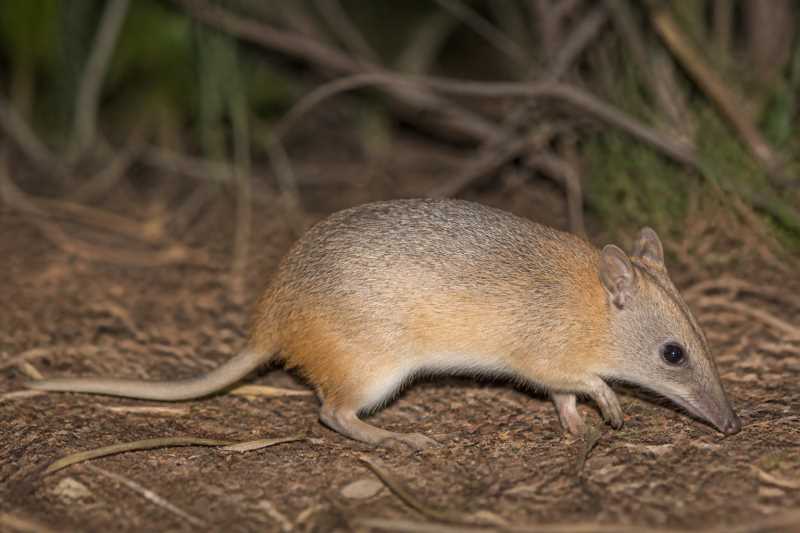
The Golden Bandicoot is a small marsupial, with individuals typically weighing between 250 to 650 grams. They have a compact body structure, characterized by short limbs and a short, pointed snout. The most striking feature of the Golden Bandicoot is its fur, which is a rich golden color, giving the species its name. This golden hue is particularly prominent on the upper parts of the body, while the underparts are a lighter, creamy color.
The bandicoot’s fur is dense and coarse, providing insulation and protection against the elements. Its tail, approximately 10 to 15 centimeters long, is covered in sparse hair and tapers to a point. The ears are short and rounded, well-suited for its burrowing lifestyle. The eyes are small, but provide adequate vision for nocturnal activity.
Range and Habitat
Historically, the Golden Bandicoot was widespread across mainland Australia, particularly in arid and semi-arid regions. However, its range has drastically reduced, and it is now primarily found on islands off the coast of Western Australia, including Barrow Island, the Montebello Islands, and a few other smaller islands.
The Golden Bandicoot thrives in a variety of habitats, including spinifex grasslands, shrublands, and woodlands. On these islands, they inhabit areas with dense ground cover, which provides shelter from predators and harsh weather conditions. The species is adaptable to different environmental conditions but is most commonly found in regions that offer a mix of sandy soils and dense vegetation.
Behavior and Diet
Golden Bandicoots are primarily nocturnal creatures, spending their nights foraging for food and their days resting in nests made from grass and leaves. These nests are typically located in sheltered areas, such as under rocks or thick vegetation, to protect them from predators and the elements.
Their diet is omnivorous, consisting of a variety of insects, seeds, fruits, and small vertebrates. They use their strong forelimbs and claws to dig for insects and other invertebrates in the soil. The bandicoot’s diet is opportunistic and varies depending on seasonal availability, making them a flexible and resilient species.
Identification Tips (Field Recognition Cues)
Identifying a Golden Bandicoot in the wild can be challenging due to its elusive nature and nocturnal habits. However, there are several key features to look for:
- Size and Shape: Look for a small, compact marsupial with a short, pointed snout and rounded ears.
- Fur Color: The golden coloration of the upper body is a distinctive feature.
- Tail: A relatively short, sparsely-haired tail that tapers to a point.
- Foraging Signs: Evidence of digging or small holes in the ground can indicate the presence of bandicoots.
Conservation Status (With Threats and Protections)
The Golden Bandicoot is currently listed as vulnerable by the International Union for Conservation of Nature (IUCN). The main threats to the species include habitat loss, predation by introduced species such as cats and foxes, and competition with other animals for food and resources.
Conservation efforts are focused on protecting the remaining populations on islands, where they are relatively safe from introduced predators. Efforts include habitat restoration, predator control programs, and translocation projects to establish new populations on predator-free islands. Public awareness campaigns and research into the species’ ecology and behavior are also essential components of conservation strategies.
Frequently Asked Questions
1. What do Golden Bandicoots eat? Golden Bandicoots have an omnivorous diet that includes insects, seeds, fruits, and small vertebrates. They are opportunistic feeders and adapt their diet based on food availability.
2. Where can Golden Bandicoots be found in the wild? Golden Bandicoots are mainly found on islands off the coast of Western Australia, including Barrow Island and the Montebello Islands. They prefer habitats with dense ground cover.
3. Why is the Golden Bandicoot considered vulnerable? The species is considered vulnerable due to habitat loss, predation by introduced species like cats and foxes, and competition for food. Conservation efforts are ongoing to protect their populations.
4. How do Golden Bandicoots contribute to their ecosystem? Golden Bandicoots play a vital role in their ecosystem by aiding in soil aeration through their digging activities and contributing to seed dispersal through their diet.
5. What are the main threats to the Golden Bandicoot? The main threats include habitat destruction, introduced predators such as cats and foxes, and competition with other species for food and habitat resources. Conservation efforts focus on addressing these threats.
Related posts