Introduction
Finlayson’s Squirrel, scientifically known as Callosciurus finlaysonii, is a captivating species of tree squirrel native to Southeast Asia. Known for its agility and unique coloration, this species is among the most intriguing of the family Sciuridae. Finlayson’s Squirrel has become a subject of interest not only for its ecological role but also for its adaptability to various environments. This article delves into the detailed aspects of Finlayson’s Squirrel, covering its physical characteristics, habitat preferences, behavior, and more.
Physical Description
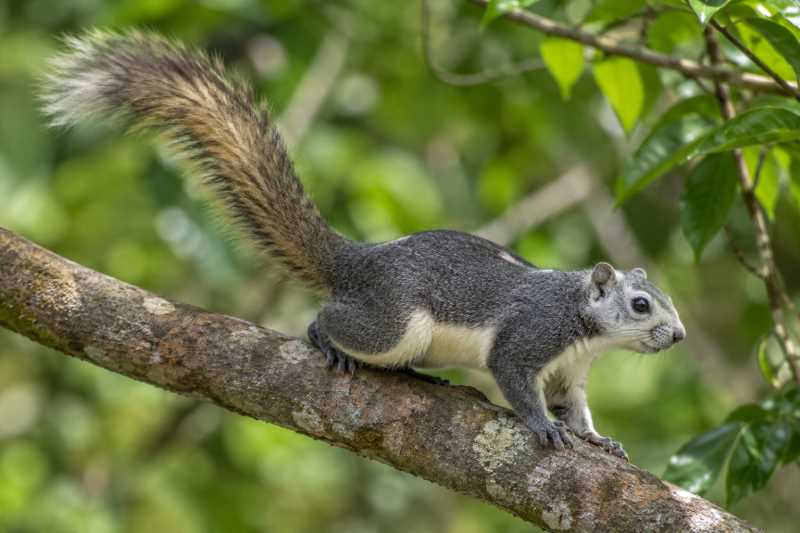
Finlayson’s Squirrel is a medium-sized tree squirrel characterized by its vibrant and varied coloration, which can range from pure white to reddish-brown or even black, depending on the geographical location. This species typically measures between 20 to 30 cm in body length, with a tail that often matches or exceeds the body length, adding another 20 to 30 cm. The tail is bushy and serves as a balance aid when navigating tree canopies.
The fur of Finlayson’s Squirrel is soft and dense, providing insulation and protection. Notably, the species exhibits a significant degree of color polymorphism, with three primary forms: the common form with a reddish-brown body and a black tail, an all-white form, and a tri-colored form with white, black, and brown patches.
Range and Habitat
Finlayson’s Squirrel is predominantly found in the forests of Southeast Asia, including Thailand, Laos, Cambodia, and Vietnam. They inhabit a variety of forest types, from dense tropical rainforests to deciduous and secondary forests. The species is highly adaptable and is known to thrive in urban areas, parks, and gardens, where they often become accustomed to human presence.
Their ability to adapt to different environments allows Finlayson’s Squirrel to exploit a wide range of habitats, although they show a preference for areas with abundant fruiting trees and dense canopy cover. This adaptability is crucial for their survival, especially in regions where natural habitats are increasingly fragmented.
Behavior and Diet
Finlayson’s Squirrel is primarily diurnal, meaning it is active during the day. These squirrels are arboreal, spending most of their time in trees where they exhibit remarkable agility. They are known for their rapid and graceful movements, leaping between branches with ease.
The diet of Finlayson’s Squirrel is omnivorous, although they predominantly feed on fruits, nuts, and seeds. They are also known to consume insects and bird eggs occasionally. Their feeding habits play a significant role in seed dispersal, contributing to forest regeneration.
Socially, Finlayson’s Squirrel is relatively solitary, although it may be seen foraging in pairs or small groups. Communication among individuals is facilitated through vocalizations and tail movements.
Identification Tips
Identifying Finlayson’s Squirrel in the wild can be facilitated by several key characteristics:
- Coloration: Look for the distinctive coloration patterns, which can vary significantly but often include a combination of white, black, and reddish-brown fur.
- Tail: Observe the long, bushy tail, which is often held upright or flicked when the squirrel is alert.
- Habitat: Spot them in tree canopies, especially in areas with abundant fruiting trees.
- Behavior: Watch for their agile movements and listen for their high-pitched calls, which are a common mode of communication.
Conservation Status
The conservation status of Finlayson’s Squirrel varies across its range. In some areas, populations are stable, while in others, they face threats from habitat loss and fragmentation due to urbanization and agricultural expansion. Despite these challenges, the species is not currently listed as threatened on a global scale, thanks to its adaptability and wide distribution.
However, local threats include hunting for the pet trade and habitat destruction. Conservation efforts focus on habitat preservation and educating local communities about the ecological role of these squirrels. Protected areas and wildlife reserves play a crucial role in safeguarding their habitats.
Frequently Asked Questions
1. What is the natural habitat of Finlayson’s Squirrel?
Finlayson’s Squirrel naturally inhabits tropical rainforests, deciduous forests, and secondary growth forests across Southeast Asia. They are adaptable and can also be found in urban parks and gardens.
2. How can you distinguish Finlayson’s Squirrel from other squirrel species?
Distinctive features include their varied coloration, ranging from pure white to reddish-brown, and their long, bushy tails. Their behavior, such as agile tree movements and specific vocalizations, also helps in identification.
3. Are Finlayson’s Squirrels social animals?
Finlayson’s Squirrels are generally solitary but may be seen in pairs or small groups while foraging. Communication is achieved through vocalizations and tail signals.
4. What do Finlayson’s Squirrels eat?
Their diet primarily consists of fruits, nuts, and seeds, although they may also consume insects and bird eggs. They play a critical role in seed dispersal within their ecosystems.
5. What are the main threats to Finlayson’s Squirrel?
The main threats include habitat loss due to deforestation and urbanization, as well as illegal hunting for the pet trade. Conservation efforts focus on habitat protection and community education.
Related posts