Introduction
Emilie’s Opossum, scientifically known as Gracilinanus emiliae, is a fascinating marsupial species belonging to the family Didelphidae. These small, nocturnal creatures are native to South America and are often recognized for their distinct physical features and elusive nature. Despite their lesser-known status compared to other marsupial species, Emilie’s Opossums play a vital role in their ecosystem. This article explores the various aspects of Emilie’s Opossum, including their physical description, habitat, behavior, and conservation status.
Physical Description
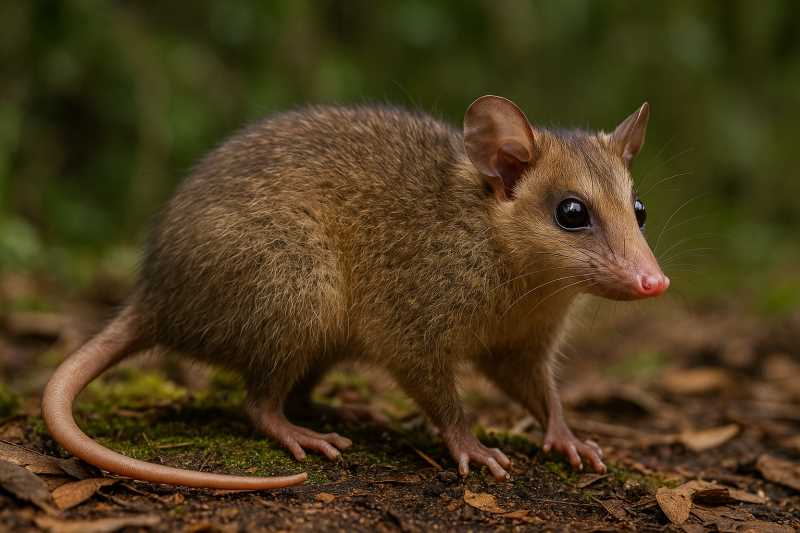
Emilie’s Opossum is a small marsupial characterized by its slender build and distinctive tail. Adults typically measure between 12 to 18 centimeters in body length, with an additional tail length of approximately 15 to 22 centimeters. Their fur is predominantly a soft, grayish-brown, providing excellent camouflage in their natural habitat. A noticeable feature is their pointed snout, which, combined with their large, rounded ears and bright, beady eyes, gives them an alert and inquisitive appearance.
The tail of Emilie’s Opossum is prehensile, aiding them in balancing and grasping branches as they navigate their arboreal environment. Unlike some other opossum species, their tails lack a furry covering, appearing scaly and well-adapted for climbing. Their limbs are equipped with sharp claws, further enhancing their climbing abilities.
Range and Habitat
Emilie’s Opossum is primarily found in the tropical rainforests of South America. Their range extends across several countries, including Brazil, Peru, and Bolivia. These opossums prefer dense, humid forests, where they inhabit the understory and lower canopy levels. Their arboreal lifestyle means they are seldom seen on the ground, spending most of their time in trees.
The availability of dense vegetation is crucial for their survival as it provides both food and protection from predators. Emilie’s Opossums are also known to occupy secondary forests and disturbed habitats, showcasing some adaptability to changes in their environment. However, pristine forests remain their preferred habitat, emphasizing the importance of rainforest conservation for their continued survival.
Behavior and Diet
Emilie’s Opossum is a nocturnal and solitary creature, coming out primarily at night to forage for food. Their diet is omnivorous, consisting of a variety of fruits, insects, small vertebrates, and sometimes carrion. This varied diet helps them thrive in their forested habitat, where they act as both predator and prey within the food chain.
These opossums are known for their arboreal skills, using their prehensile tails and sharp claws to maneuver through the trees with agility. They are generally solitary outside of the breeding season, which contributes to their elusive nature. Communication among Emilie’s Opossums is likely limited, with scent marking and occasional vocalizations being the primary methods of interaction.
Identification Tips (Field Recognition Cues)
Identifying Emilie’s Opossum in the wild can be challenging due to their nocturnal habits and arboreal lifestyle. However, there are several key features to look for:
- Size and Build: Look for a small, slender marsupial with a body length of 12 to 18 centimeters and a long, prehensile tail.
- Coloration: Their grayish-brown fur blends well with the forest environment, but their lighter underbelly may be visible.
- Facial Features: A pointed snout, large rounded ears, and bright eyes are characteristic of Emilie’s Opossum.
- Tail: Note the scaly, hairless tail, which is often used for balance and grasping.
- Behavior: Spotting them in trees at night is more likely due to their nocturnal and arboreal nature.
Conservation Status (With Threats and Protections)
The conservation status of Emilie’s Opossum is currently listed as Data Deficient by the International Union for Conservation of Nature (IUCN). This classification indicates a lack of sufficient data to make a direct assessment of their population trends and threats. However, several general threats can be identified based on their habitat preferences.
Threats
- Habitat Loss: Deforestation due to logging, agriculture, and urban expansion poses a significant threat to Emilie’s Opossum, as it reduces the availability of their natural habitat.
- Climate Change: Alterations in climate patterns can affect the delicate balance of rainforest ecosystems, impacting food availability and habitat conditions.
- Predation: As small mammals, they are vulnerable to predation by larger arboreal predators such as birds of prey and snakes.
Protections
- Protected Areas: Some of their habitats fall within protected national parks and reserves, offering a degree of safety from habitat destruction.
- Conservation Initiatives: Efforts to conserve tropical rainforests indirectly benefit Emilie’s Opossum by preserving their natural environment.
- Research and Monitoring: Increased research and monitoring are essential to gather data on their populations and inform conservation actions.
Frequently Asked Questions
What are the main threats to Emilie’s Opossum?
The primary threats to Emilie’s Opossum include habitat loss due to deforestation, climate change, and predation by larger animals. Conservation efforts focusing on rainforest protection are crucial for mitigating these threats.
How can Emilie’s Opossum be identified in the wild?
To identify Emilie’s Opossum, look for a small, grayish-brown marsupial with a slender build, a pointed snout, large ears, and a long, prehensile tail. They are mostly active at night and are found in trees.
What do Emilie’s Opossums eat?
The diet of Emilie’s Opossum is omnivorous, including fruits, insects, small vertebrates, and carrion. Their varied diet helps them adapt to the resources available in their rainforest habitat.
Are Emilie’s Opossums endangered?
Currently, Emilie’s Opossum is listed as Data Deficient by the IUCN, indicating a lack of sufficient data to assess their population status accurately. However, habitat loss remains a significant concern.
Where can Emilie’s Opossum be found?
Emilie’s Opossum is native to the tropical rainforests of South America, primarily found in Brazil, Peru, and Bolivia. They prefer dense, humid forests and are often seen in the understory and lower canopy levels.
Related posts