Introduction
The Eastern Black Crested Gibbon, scientifically known as Nomascus nasutus, is a fascinating primate species that captivates researchers and nature enthusiasts alike. This endangered species is part of the gibbon family, Hylobatidae, and is known for its melodic calls and acrobatic abilities. Despite its elusive nature and the challenges faced in observing these gibbons in the wild, they remain a critical focus of conservation efforts due to their dwindling numbers and unique ecological role.
The Eastern Black Crested Gibbon is distinguished by its remarkable adaptations and behaviors, making it an intriguing subject for anyone interested in primate biology and conservation. This article delves into the various aspects of the Eastern Black Crested Gibbon, from its physical characteristics to its habitat, behavior, and conservation status.
Physical Description
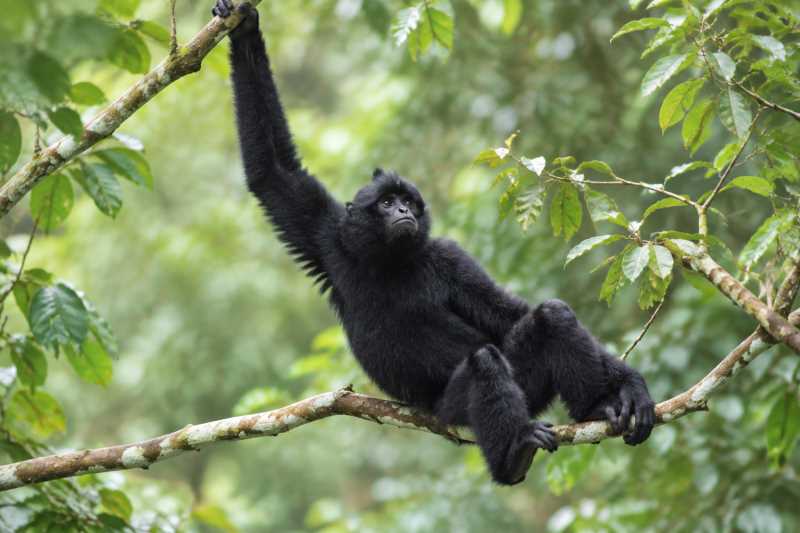
The Eastern Black Crested Gibbon is a small to medium-sized primate, characterized by its distinctive crested hair and sexual dimorphism. Adult males and females exhibit different colorations, which is a common trait among gibbons. Males typically have a jet-black coat with a prominent crest of hair on their heads, while females are lighter, often sporting a golden or buff-colored coat with a less pronounced crest.
These gibbons are agile and slender, with long arms that facilitate their brachiation through the forest canopy. On average, they weigh between 7 to 11 kilograms (15 to 24 pounds) and have a body length of approximately 45 to 64 centimeters (18 to 25 inches). Their limbs are disproportionately long compared to their bodies, a feature that enhances their ability to swing from branch to branch with ease.
Range and Habitat
The Eastern Black Crested Gibbon is native to Southeast Asia, specifically in the northern regions of Vietnam and parts of China. Historically, their range included southern China and northern Vietnam, but habitat destruction and human encroachment have significantly reduced their distribution.
These gibbons inhabit subtropical and tropical forests, preferably in areas with dense canopy cover. They are arboreal creatures, spending most of their lives in the trees, which provides them with safety from ground predators and access to their preferred diet of fruits and leaves. Their habitats are characterized by high biodiversity, offering a variety of food sources and shelter.
Behavior and Diet
Eastern Black Crested Gibbons are diurnal and primarily arboreal, rarely descending to the ground. They are social animals, typically living in small family groups consisting of a monogamous pair and their offspring. These groups maintain territories and communicate through complex vocalizations, which serve as both bonding rituals and territorial warnings.
Their diet primarily consists of fruit, which provides essential nutrients and energy. They are frugivorous but also consume leaves, flowers, and occasionally insects, which supplement their diet with proteins and other nutrients. The availability of fruit influences their movement patterns and territorial ranges.
Identification Tips (Field Recognition Cues)
Identifying the Eastern Black Crested Gibbon in the field requires attention to several key characteristics:
- Coloration: Males are black with a distinctive crest, while females are lighter with a golden hue.
- Calls: Listen for their unique vocalizations, which are often used for communication and can be heard over long distances.
- Movement: Observe their brachiation, a swinging movement through the trees, which is a hallmark of gibbons.
- Size and Shape: Note their slender bodies and long limbs, which differentiate them from other primates in the region.
Conservation Status (with Threats and Protections)
The Eastern Black Crested Gibbon is classified as Critically Endangered on the IUCN Red List. Their population has declined due to several factors, including habitat loss, hunting, and the illegal pet trade. Deforestation for agriculture and infrastructure development continues to threaten their natural habitats.
Conservation efforts are underway to protect these gibbons, focusing on habitat preservation and restoration, anti-poaching measures, and public awareness campaigns. Protected areas have been established in Vietnam and China to secure their remaining habitats, and international cooperation is essential to ensure their survival.
Frequently Asked Questions
What is the lifespan of the Eastern Black Crested Gibbon?
The Eastern Black Crested Gibbon can live up to 30 years in the wild, though their lifespan can be longer in captivity due to the absence of predators and consistent food supply.
How do Eastern Black Crested Gibbons communicate?
These gibbons communicate through a series of calls and vocalizations. Their songs are complex and can convey information about territory, mating, and social bonding.
Are Eastern Black Crested Gibbons endangered?
Yes, they are classified as Critically Endangered due to habitat loss, hunting, and the illegal pet trade. Conservation efforts are crucial to their survival.
What do Eastern Black Crested Gibbons eat?
Their diet is primarily frugivorous, consisting mainly of fruits. They also eat leaves, flowers, and occasionally insects.
Where can Eastern Black Crested Gibbons be found?
They are found in the northern regions of Vietnam and parts of China, inhabiting subtropical and tropical forests with dense canopy cover.
Related posts