
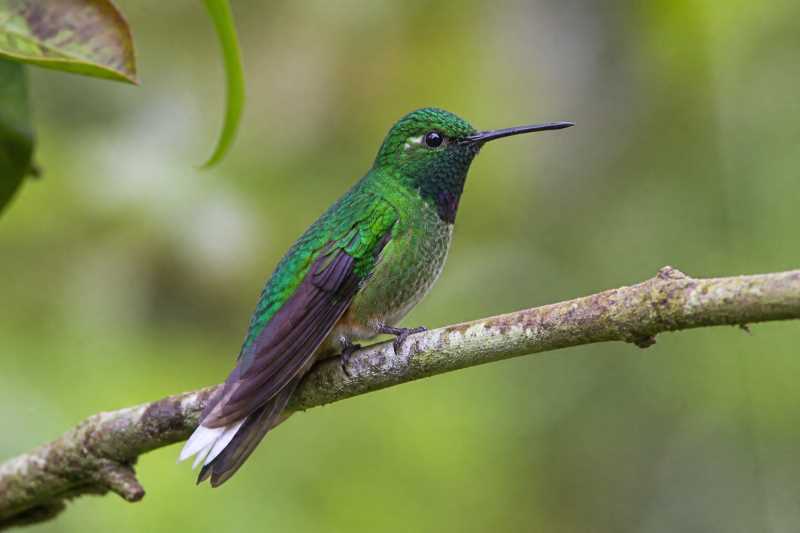
The Enchanting Rufous-vented Whitetip: A Jewel of the Andes
In the lush, verdant landscapes of the Andean cloud forests, a tiny avian gem flits through the canopy with iridescent splendor—the Rufous-vented Whitetip (Urosticte ruficrissa). This captivating hummingbird, known for its striking appearance and agile flight, is a testament to the rich biodiversity that thrives in South America’s mountainous regions.
Taxonomy and Classification
The Rufous-vented Whitetip belongs to the family Trochilidae, a diverse group of hummingbirds. It shares its genus, Urosticte, with only one other species, the Purple-bibbed Whitetip (Urosticte benjamini). This genus is notable for its members’ distinctive tail morphology and vibrant plumage, which play significant roles in mating displays and territorial defense.
Physical Characteristics
The Rufous-vented Whitetip is a small hummingbird, measuring approximately 9 to 10 centimeters in length. Its most distinguishing feature is the brilliant white tips of its tail feathers, which contrast sharply with its otherwise dark plumage. The bird’s vent area is a warm rufous color, lending the species its common name. Males and females exhibit slight differences in coloration; males typically display a more vivid green on their dorsum, while females have a subtler, more muted hue.
In addition to their striking tails, these hummingbirds possess a slender, slightly curved bill adapted for nectar feeding. Their wings are specialized for rapid, hovering flight, enabling them to maneuver deftly among flowers and foliage.
Habitat and Distribution
The Rufous-vented Whitetip is endemic to the humid montane forests of the Andes, primarily found in Colombia, Ecuador, and northern Peru. These birds inhabit elevations ranging from 1,200 to 2,400 meters, where they thrive in the cool, mist-laden environment of the cloud forests.
Their preferred habitats are characterized by dense vegetation and an abundance of flowering plants, which provide the nectar that constitutes the bulk of their diet. These regions are also rich in insects, offering a supplementary protein source, especially crucial during the breeding season.
Feeding Behavior and Ecology
As with other hummingbirds, the Rufous-vented Whitetip plays a critical role in its ecosystem as a pollinator. By visiting a variety of flowering plants, it facilitates cross-pollination, contributing to the health and diversity of the forest flora. Its favored flowers are often tubular, perfectly matched to its bill shape and size.
In addition to nectar, these birds consume small insects and spiders, which provide essential nutrients such as proteins and lipids. Their diet is facilitated by their remarkable flight capabilities, allowing them to hover precisely while extracting nectar and capturing prey.
Breeding and Reproduction
The breeding habits of the Rufous-vented Whitetip are closely tied to the availability of food resources. During the breeding season, which varies regionally but often coincides with periods of high flower availability, males engage in elaborate courtship displays to attract females. These displays often involve aerial acrobatics, showcasing their agility and the brilliance of their plumage.
Females are solely responsible for nest construction and chick rearing. Nests are typically built on slender branches or leaves, camouflaged with moss and lichen to protect against predators. Clutch sizes are small, usually consisting of two eggs, which are incubated for about two weeks. After hatching, chicks are fed a diet rich in nectar and insects until they are ready to fledge.
Conservation Status and Threats
Currently, the Rufous-vented Whitetip is classified as Least Concern by the International Union for Conservation of Nature (IUCN). However, like many species reliant on specific habitats, it faces threats from habitat destruction and climate change. Deforestation for agriculture and urban development poses a significant risk to the cloud forests in which these birds reside.
Conservation efforts directed at preserving these unique forest ecosystems are crucial for the continued survival of the Rufous-vented Whitetip and countless other species. Initiatives such as protected area designations, sustainable land management, and reforestation projects are vital to safeguarding their habitats.
Conclusion
The Rufous-vented Whitetip is more than just a visual marvel; it is an integral part of the Andean cloud forest ecosystem. Its existence highlights the intricate connections between species and their environments, emphasizing the importance of conservation efforts. As we continue to explore and understand the natural world, this tiny hummingbird serves as a reminder of the wonders found in nature’s tiniest details.
Related posts


