Introduction
The Common Golden-mantled Ground Squirrel, scientifically known as Callospermophilus lateralis, is a captivating small mammal that inhabits various regions across North America. Revered for its striking appearance and energetic behavior, this species holds a special place in the hearts of nature enthusiasts and researchers alike. This article delves into the intricate details of the Common Golden-mantled Ground Squirrel, including its physical characteristics, habitat preferences, behavior, diet, and conservation status.
Physical Description
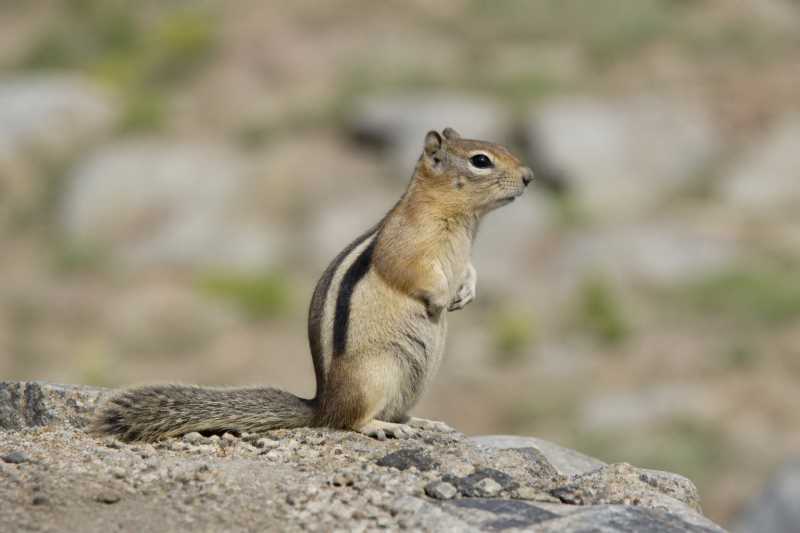
The Common Golden-mantled Ground Squirrel is easily recognized by its distinctive golden-brown fur, which adorns its mantle and gives the species its name. The body is generally covered in a grayish-brown coat with a characteristic white stripe bordered by black lines running from the shoulder to the hip on each side. This visual feature distinguishes it from similar species such as the chipmunk. Adult squirrels typically measure between 23 to 29 centimeters in length, including a bushy tail that adds an additional 6 to 9 centimeters. They weigh approximately 120 to 300 grams, with males generally larger than females. Their rounded ears, large eyes, and adapted limbs make them well-suited for their terrestrial lifestyle.
Range and Habitat
The Common Golden-mantled Ground Squirrel is predominantly found in the western regions of North America. Its range extends from southern British Columbia and Alberta in Canada, through the western United States, reaching as far south as New Mexico and Arizona. This species thrives in a wide array of habitats, including montane forests, open meadows, and rocky outcrops. They are particularly abundant in areas of coniferous and mixed woodlands, where they can take advantage of the cover and food resources these environments provide. The elevation within their range can vary significantly, with populations found from low-lying areas to alpine zones exceeding 3,000 meters.
Behavior and Diet
The behavior of the Common Golden-mantled Ground Squirrel is a fascinating study of adaptation and survival. These squirrels are diurnal, meaning they are most active during daylight hours. They are solitary creatures, except during the breeding season or when mothers are raising their young. Communication is primarily through vocalizations, body postures, and scent marking.
Their diet is omnivorous, consisting mainly of seeds, nuts, fruits, and insects. They play a crucial role in their ecosystems by aiding in seed dispersal and soil aeration. During the warmer months, they engage in food hoarding, storing supplies in their burrows for the winter when they enter a state of hibernation. This hibernation period can last for several months, with the squirrel relying on its cached food stores and body fat reserves to survive.
Identification Tips (field recognition cues)
Identifying the Common Golden-mantled Ground Squirrel in the field involves several key recognition cues:
- Distinctive Stripes: Look for the white stripes bordered by black along the sides of the body, which are unique compared to other ground squirrels.
- Golden Mantle: The golden-brown fur on the mantle is a noticeable feature.
- Lack of Facial Stripes: Unlike chipmunks, these squirrels lack stripes on the face, making them easier to differentiate.
- Size and Shape: Note their robust body size and bushy tail.
- Behavior: Observe their foraging behavior and the way they sit up to survey their surroundings.
Conservation Status (with threats and protections)
The International Union for Conservation of Nature (IUCN) currently lists the Common Golden-mantled Ground Squirrel as a species of Least Concern. This status reflects their wide distribution and stable populations across most of their range. However, they face certain threats that could impact local populations.
Habitat destruction due to logging, agricultural expansion, and urban development poses significant challenges. Climate change also presents a long-term threat, potentially affecting the availability of food resources and suitable habitats.
Conservation efforts for these squirrels focus on habitat protection and mitigating human-wildlife conflict. Protected areas such as national parks and wildlife reserves provide crucial refuges for these animals, ensuring their continued survival in the wild.
Frequently Asked Questions
What is the lifespan of the Common Golden-mantled Ground Squirrel?
The average lifespan of a Common Golden-mantled Ground Squirrel in the wild is typically around 3 to 4 years. However, some individuals may live longer, especially in environments with fewer predators and abundant resources.
How do Common Golden-mantled Ground Squirrels communicate?
These squirrels communicate through a series of vocalizations, body language, and scent marking. They use different calls to warn of predators, establish territories, and communicate with offspring.
Are Common Golden-mantled Ground Squirrels social animals?
Common Golden-mantled Ground Squirrels are generally solitary animals, except during the breeding season or when females are raising their young. They do not form large social groups like some other squirrel species.
What adaptations help the Common Golden-mantled Ground Squirrel survive in its environment?
Key adaptations include their ability to hibernate during winter, strong limbs for digging and climbing, acute vision for detecting predators, and a varied diet that allows them to exploit different food sources.
How can I help protect the Common Golden-mantled Ground Squirrel?
You can help by supporting conservation initiatives that protect natural habitats, reducing pesticide use that harms their food sources, and promoting awareness about the ecological importance of ground squirrels.
Related posts