Introduction
The cheetah, scientifically known as Acinonyx jubatus, is the fastest land animal on Earth, renowned for its incredible speed and agility. Its unique adaptations not only make it an extraordinary hunter but also a fascinating subject of study. This magnificent species is not only a symbol of grace and speed but also of the challenges faced by wildlife in an ever-changing world. As we delve into the world of the cheetah, we explore its physical characteristics, habitat, behavior, and the conservation efforts crucial for its survival.
Physical Description
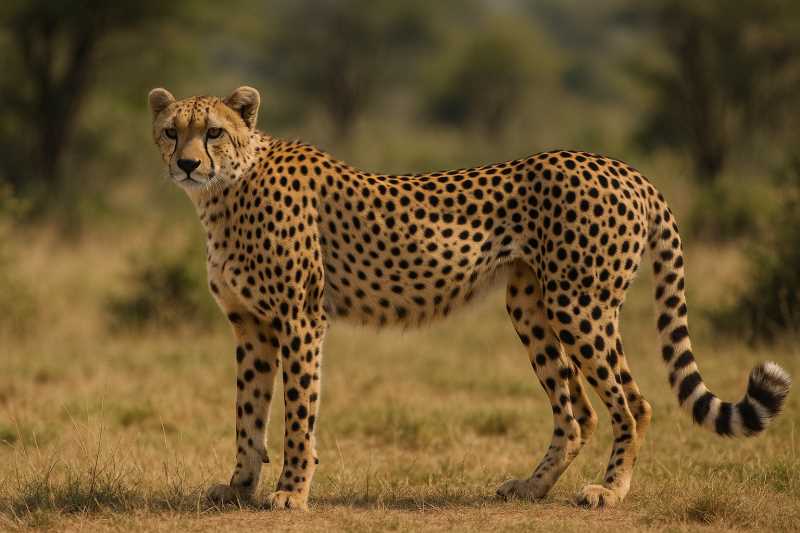
Cheetahs are easily recognizable by their slender bodies, deep chest, and distinctive black tear-like streaks on their faces, which help reflect the sun’s glare and focus better on their prey. Adult cheetahs typically weigh between 77 to 143 pounds (35 to 65 kilograms) and measure about 3.5 to 4.5 feet (1.1 to 1.4 meters) in body length, with a tail length of 2 to 2.7 feet (0.6 to 0.8 meters).
Their coat is a tawny color with black spots, providing excellent camouflage in their natural habitat. Unlike other big cats, cheetahs have semi-retractable claws that provide them with enhanced grip during their high-speed pursuits. Their large nasal passages and lungs facilitate quick oxygen intake, while their lightweight bones and lean muscles are perfectly adapted for speed.
Range and Habitat
Historically, cheetahs roamed vast regions of Africa, the Middle East, and parts of Asia. However, their range has significantly contracted due to habitat loss and human encroachment. Today, cheetahs primarily inhabit the open grasslands and savannas of Sub-Saharan Africa, with a small population still found in Iran.
Cheetahs thrive in environments where their speed can be maximized – open plains and grasslands that provide both sufficient prey and space to chase it. The presence of water and shade is also crucial for their survival, especially in the hot climates they often inhabit.
Behavior and Diet
Cheetahs are diurnal predators, hunting mainly during the day to avoid competition with larger nocturnal predators such as lions and hyenas. Their hunting strategy relies on stealth, speed, and agility rather than brute strength. Cheetahs stalk their prey to within 100–300 feet before launching a high-speed chase, reaching speeds of up to 60 to 70 mph within seconds.
Their diet primarily consists of small to medium-sized ungulates, such as gazelles, impalas, and springboks. Cheetahs may also hunt smaller mammals and birds when larger prey is scarce. After a successful hunt, cheetahs must eat quickly to avoid kleptoparasitism by larger predators who can easily chase them away from their kill.
Identification Tips (Field Recognition Cues)
When identifying cheetahs in the field, look for the following key characteristics:
- Facial Markings: Distinctive black "tear" markings running from the inner corners of their eyes down to the sides of their mouths.
- Body Shape: A lean, lightweight body with long legs and a deep chest.
- Tail: Long and muscular with black rings and a white tuft at the end.
- Spots: Small, solid black spots evenly distributed across their tan coat.
- Behavior: Diurnal activity patterns and solitary or small group behaviors, often seen resting under trees or in tall grass.
Conservation Status (with Threats and Protections)
The cheetah is currently listed as Vulnerable on the IUCN Red List, with an estimated population of fewer than 7,000 individuals in the wild. Several factors contribute to their declining numbers, including habitat loss, human-wildlife conflict, illegal wildlife trade, and reduced genetic diversity.
Habitat fragmentation due to agricultural expansion and infrastructure development significantly impacts their hunting grounds and breeding territories. Human-wildlife conflict arises when cheetahs prey on livestock, leading to retaliatory killings by farmers.
Conservation efforts are underway to address these challenges. Organizations are working on habitat restoration, community-based conservation programs, and anti-poaching initiatives. Additionally, breeding programs in captivity aim to maintain genetic diversity and potentially reintroduce cheetahs into areas where they have been extirpated.
Frequently Asked Questions
1. How fast can a cheetah run?
Cheetahs can run at speeds of 60 to 70 miles per hour, making them the fastest land animals. They can accelerate from 0 to 60 mph in just a few seconds, thanks to their lightweight frame, powerful leg muscles, and specialized adaptations for speed.
2. What is the lifespan of a cheetah in the wild?
In the wild, cheetahs typically live for about 10 to 12 years. However, in captivity, they can live up to 17 years due to better healthcare and the absence of predators and other threats.
3. Why are cheetahs endangered?
Cheetahs face numerous threats, including habitat loss, human-wildlife conflict, and poaching. Their natural habitat is being reduced due to agricultural expansion and urban development, while conflicts with farmers and illegal trade further threaten their survival.
4. How do cheetahs communicate?
Cheetahs communicate through a variety of vocalizations such as purring, chirping, and hissing. They also use body language and scent markings to convey messages to other cheetahs.
5. What is the difference between a cheetah and a leopard?
Cheetahs and leopards are often confused due to their similar appearances. However, cheetahs have solid black spots and distinctive tear marks on their faces, whereas leopards have rosette-shaped spots without tear marks. Cheetahs are also built for speed, while leopards are more muscular and adapted for climbing.
Related posts