Introduction
The Central Cordillera Brush Mouse, scientifically known as Coccymys shawmayeri, is a fascinating rodent species endemic to the lush montane forests of New Guinea. This elusive creature is a member of the Muridae family, which encompasses a diverse group of rodents. Despite its limited range, the Central Cordillera Brush Mouse plays a crucial role in the ecosystem, contributing to the complex web of life in its high-altitude habitat. This article delves into the various aspects of Coccymys shawmayeri, from its physical characteristics and habitat preferences to its behavior and conservation status.
Physical Description
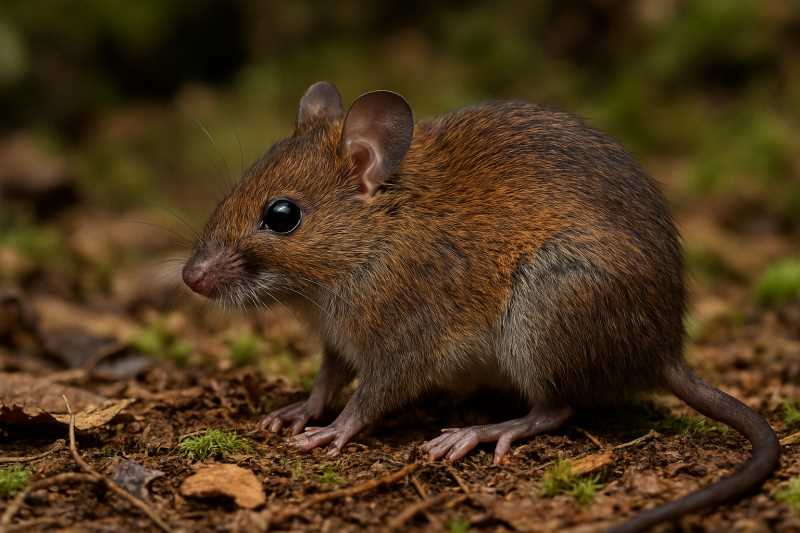
Coccymys shawmayeri is a small, agile rodent characterized by its distinct morphological features. The mouse has a body length ranging from 7 to 10 centimeters, with a tail that nearly doubles its total length, measuring between 15 and 18 centimeters. This elongated tail is not only an adaptation for balance but also aids in maneuvering through the dense underbrush of its forest environment.
The fur of the Central Cordillera Brush Mouse is soft and dense, providing essential insulation against the cold temperatures of its high-altitude habitat. The dorsal side of the mouse is typically a rich brown color, which seamlessly blends with the forest floor, providing effective camouflage against predators. The ventral side, in contrast, is a lighter shade of gray or white, which may help in thermal regulation.
One of the most distinctive features of Coccymys shawmayeri is its large, rounded ears, which are highly sensitive and play a vital role in detecting predators and communicating with other mice. The eyes are relatively large as well, adapted for low-light vision, which is beneficial for a nocturnal lifestyle.
Range and Habitat
The Central Cordillera Brush Mouse is confined to the Central Highlands of New Guinea, an area known for its rugged terrain and rich biodiversity. These mice inhabit montane forests, typically found at elevations ranging from 1,500 to 3,000 meters above sea level. These forests are characterized by a dense canopy, abundant undergrowth, and a cool, humid climate, all of which create an ideal environment for the species.
The habitat of Coccymys shawmayeri is marked by a variety of vegetation types, including mossy forests, which provide ample cover and food resources. The availability of fallen logs and leaf litter is crucial, as they offer shelter and nesting sites. The complex structure of the forest also supports a diverse array of insect life, which constitutes a significant portion of the mouse’s diet.
Behavior and Diet
Coccymys shawmayeri is primarily nocturnal, venturing out from its burrow or nest during the night to forage for food. Its diet is omnivorous, consisting of a wide range of food sources, from seeds and fruits to insects and other invertebrates. This dietary flexibility allows the Central Cordillera Brush Mouse to adapt to seasonal variations in food availability.
Socially, these mice are relatively solitary, although they may form loose colonies when resources are abundant. Communication among Coccymys shawmayeri is facilitated through a combination of vocalizations, scent markings, and tactile interactions. Their acute sense of hearing is particularly important for detecting the presence of predators and coordinating with other mice during foraging expeditions.
Reproduction occurs throughout the year, with females giving birth to litters of two to four young after a gestation period of around 30 days. The young are altricial, requiring significant parental investment before they are capable of independent survival.
Identification Tips (Field Recognition Cues)
Identifying Coccymys shawmayeri in the field requires attention to several key characteristics:
- Tail Length: The tail is notably long, often twice the length of the body, with a prehensile tip that aids in climbing.
- Fur Texture and Coloration: Look for the dense, soft fur with a brown dorsal side and lighter ventral side, which helps in camouflage.
- Ear and Eye Size: The large, rounded ears and prominent eyes are adaptations for nocturnal life.
- Behavioral Patterns: Primarily active at night, these mice can sometimes be spotted by their quick, darting movements through the underbrush.
Conservation Status (with Threats and Protections)
The Central Cordillera Brush Mouse is currently classified as "Data Deficient" by the IUCN Red List due to the limited information available about its population status and ecological requirements. However, the species faces several potential threats, primarily stemming from habitat loss and degradation.
Threats
- Deforestation: Logging and agricultural expansion in the Central Highlands result in significant habitat loss.
- Climate Change: Alterations in temperature and precipitation patterns could impact the montane forest ecosystems, affecting the availability of food and shelter.
- Invasive Species: The introduction of non-native predators, such as feral cats and rats, poses a threat to the population.
Protections
Conservation efforts for Coccymys shawmayeri are currently limited, but the preservation of its habitat is crucial. Protected areas within the Central Highlands serve as refuges for the species, and further research is needed to develop targeted conservation strategies.
Frequently Asked Questions
1. What is the diet of the Central Cordillera Brush Mouse? The Central Cordillera Brush Mouse has an omnivorous diet, feeding on seeds, fruits, insects, and other invertebrates. This dietary flexibility helps it adapt to changes in food availability.
2. Where can the Central Cordillera Brush Mouse be found? This species is found exclusively in the Central Highlands of New Guinea, inhabiting montane forests at elevations between 1,500 and 3,000 meters.
3. How does the Central Cordillera Brush Mouse adapt to its environment? The mouse adapts through its physical traits like dense fur for insulation, large ears and eyes for nocturnal activity, and a long tail for balance and climbing in dense underbrush.
4. What threats does the Central Cordillera Brush Mouse face? The main threats include habitat loss due to deforestation, climate change, and predation by invasive species like feral cats and rats.
5. Are there any conservation efforts for the Central Cordillera Brush Mouse? While specific conservation efforts are limited, maintaining protected areas in its habitat range and conducting further research are essential for its preservation.
Related posts