Black-faced Lion Tamarin (Leontopithecus caissara): A Comprehensive Guide
Introduction
The Black-faced Lion Tamarin, scientifically known as Leontopithecus caissara, is a captivating primate species belonging to the Callitrichidae family. First discovered in 1990, this species is one of the most recent additions to the lion tamarin genus. Named after the unique black coloration of its face, this tamarin is a subject of significant interest among primatologists and conservationists due to its limited habitat and endangered status. This article will delve into various aspects of the Black-faced Lion Tamarin, from its physical characteristics to its conservation status, providing a thorough understanding of this remarkable species.
Physical Description
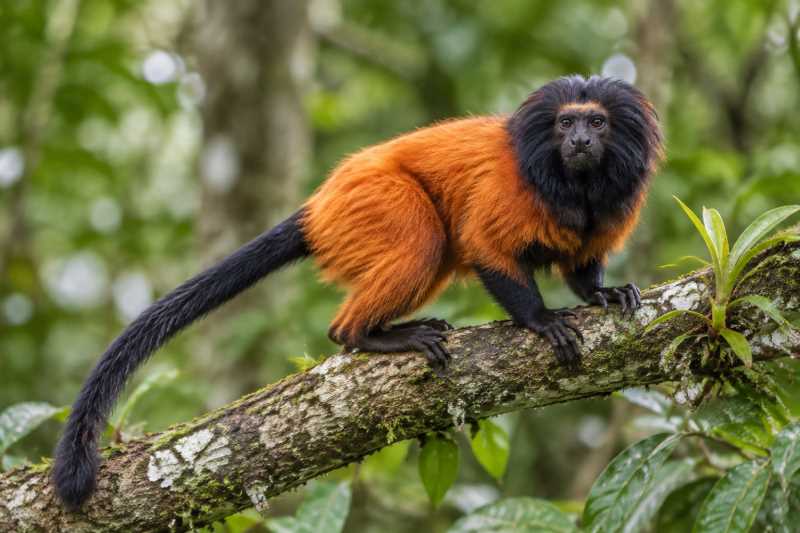
The Black-faced Lion Tamarin is a small primate with a distinctive appearance. Adults typically weigh between 500 to 700 grams and measure around 25 to 33 centimeters in body length, excluding the tail, which can add an additional 32 to 40 centimeters. As its name suggests, the tamarin’s most notable feature is its dark, black facial fur, which contrasts sharply with its vibrant golden-yellow body fur. This striking coloration serves as a natural camouflage in the dense forest canopy.
The tamarin has a long mane that resembles a lion’s, giving it the "lion tamarin" moniker. Its expressive, large eyes are adapted to its arboreal lifestyle, allowing for acute vision in the forest’s dappled light. The species also boasts sharp claws instead of nails, aiding in gripping tree branches as it navigates the canopy.
Range and Habitat
The Black-faced Lion Tamarin is endemic to a small geographic region in Brazil, specifically the Atlantic coastal forests and nearby island habitats in the states of Paraná and São Paulo. Its range is limited, primarily found on Superagüi Island and a few adjacent forested areas on the mainland. This restricted distribution makes it one of the most geographically isolated primate species.
The tamarin inhabits lowland tropical rainforests, mangroves, and occasionally secondary forests. These environments provide the dense canopy and rich biodiversity needed for the tamarin’s survival, offering plenty of food resources and protection from predators. However, habitat fragmentation and deforestation pose significant threats to their continued existence.
Behavior and Diet
Black-faced Lion Tamarins are diurnal and arboreal, spending most of their lives in the forest canopy. They are social animals, typically living in family groups of 2 to 8 individuals. These groups consist of a monogamous breeding pair and their offspring. Social structures are hierarchical, with the dominant pair leading the group in foraging and territorial defense.
Their diet is omnivorous, primarily consisting of fruits, flowers, nectar, insects, and small vertebrates. They play a crucial role in their ecosystem as seed dispersers, aiding in the regeneration of their forest habitat. Tamarins have a selective feeding pattern, often choosing ripe fruits and favoring certain tree species, which influences the group’s movement and foraging behavior.
Identification Tips (Field Recognition Cues)
Identifying the Black-faced Lion Tamarin in the wild can be a rewarding experience for wildlife enthusiasts and researchers. Here are some tips to recognize this unique species:
- Facial Features: Look for the distinct black fur covering the face, which sets it apart from other lion tamarin species.
- Body Coloration: The golden-yellow fur is vivid and contrasts with the darker face, mane, and limbs.
- Social Behavior: Observing group dynamics can help; these tamarins are often seen in small, cohesive family groups.
- Vocalizations: Listen for their characteristic high-pitched calls, which they use to communicate within the group and to establish territory.
- Habitat: They are typically found in dense, lowland rainforests and mangrove areas within their limited geographic range.
Conservation Status (With Threats and Protections)
The Black-faced Lion Tamarin is classified as Critically Endangered by the International Union for Conservation of Nature (IUCN). This status is due to its highly restricted range and the ongoing threats to its habitat. Major threats include deforestation for agriculture, urban development, and illegal logging, which lead to habitat fragmentation and loss.
Conservation efforts are underway to protect this species. The establishment of protected areas, such as the Superagüi National Park, provides a sanctuary for the tamarins. Conservation organizations are also working on habitat restoration projects and community education programs to raise awareness about the tamarin’s plight.
Captive breeding programs have been initiated to bolster wild populations and maintain genetic diversity. These programs, combined with reforestation and legal protection measures, offer hope for the species’ long-term survival.
Frequently Asked Questions
- What are the main threats to the Black-faced Lion Tamarin?
The primary threats include habitat loss due to deforestation, agriculture expansion, and urbanization. These activities lead to habitat fragmentation, which isolates tamarin populations and reduces genetic diversity.
- How do Black-faced Lion Tamarins contribute to their ecosystem?
These tamarins play a vital role as seed dispersers. By consuming fruits and excreting seeds, they aid in forest regeneration and maintain the ecological balance within their habitat.
- What conservation measures are in place to protect Black-faced Lion Tamarins?
Conservation measures include establishing protected areas, captive breeding programs, and community education initiatives. These efforts aim to preserve the tamarins’ natural habitat and increase population numbers.
- Can Black-faced Lion Tamarins be found in zoos?
Yes, some zoos participate in captive breeding programs for Black-faced Lion Tamarins. These programs help maintain a genetically viable population and raise awareness about the species’ conservation needs.
- Are Black-faced Lion Tamarins social animals?
Yes, they are highly social, living in family groups led by a dominant breeding pair. Their social structure is essential for group cohesion and survival in the wild.
Related posts