Introduction
The Biak Glider, scientifically known as Petaurus biacensis, is a fascinating nocturnal marsupial native to the islands of Biak and Supiori in Indonesia. This small, agile glider is a member of the family Petauridae, which includes other gliders and possums. As part of the rich biodiversity of the region, the Biak Glider has evolved unique adaptations that enable it to thrive in its specific habitat. Understanding the biology and ecology of the Biak Glider is essential for its conservation, especially as it faces numerous environmental threats.
Physical Description
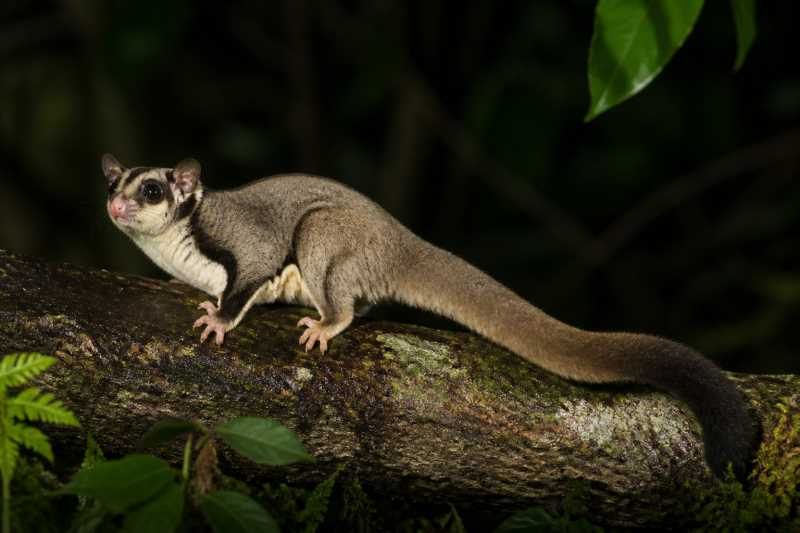
Biak Gliders are small, with a body length ranging from 19 to 23 centimeters, while their tail adds an additional 24 to 30 centimeters. They are distinguished by their soft, dense fur, which is typically gray with a pale belly, and dark stripes running from their nose to the middle of their back. The species is equipped with a patagium, a membrane stretching from their wrists to their ankles, which allows for their remarkable gliding ability. This adaptation is essential for navigating the dense forests they inhabit. Their large, expressive eyes aid in nocturnal vision, and their sharp claws are well-suited for climbing.
Range and Habitat
The Biak Glider is endemic to the islands of Biak and Supiori in Indonesia, where it inhabits tropical and subtropical forests. These gliders prefer primary and secondary growth forests, which provide ample canopy cover for gliding and foraging. The dense canopy also offers protection from predators. The unique geography and climate of these islands create a rich ecosystem that supports a diverse array of flora and fauna, with the Biak Glider being an integral part of this ecological community.
Behavior and Diet
Biak Gliders are primarily nocturnal and arboreal, spending most of their lives in trees. They are social creatures, often living in small family groups. Their social structure is vital for raising young and for mutual grooming, which strengthens social bonds. The diet of Biak Gliders consists mainly of nectar, fruit, and insects. They have a sweet tooth, often seeking out flowers and the sugary sap of certain trees. This diet plays a crucial role in their ecosystem, as they are important pollinators and seed dispersers.
Identification Tips (Field Recognition Cues)
Identifying the Biak Glider in the wild can be challenging due to its elusive nature and nocturnal habits. However, several key features can aid in their identification:
- Size and Shape: Look for a small, squirrel-sized mammal with a long bushy tail.
- Coloration: Note the gray fur with a paler belly and distinctive dark dorsal stripe.
- Patagium: Spot the gliding membrane, which may be visible when the animal is in motion.
- Behavior: Observe any gliding action from tree to tree, often during dusk and dawn.
- Vocalizations: Listen for their distinctive, soft chattering calls, which are often used for communication within family groups.
Conservation Status (With Threats and Protections)
The Biak Glider is currently listed as Near Threatened on the IUCN Red List. The primary threats to the species are habitat loss due to logging and land conversion for agriculture. The introduction of invasive species also poses a significant threat by predating on the gliders and competing for food resources. Conservation efforts are focused on habitat preservation and restoration. Protected areas have been established, but enforcement of conservation laws is essential to prevent illegal logging and land clearing. Public awareness campaigns are also critical to highlight the importance of preserving these unique mammals and their habitats.
Frequently Asked Questions
1. What is the primary diet of the Biak Glider? Biak Gliders primarily feed on nectar, fruit, and insects. They are significant pollinators and seed dispersers within their ecosystem.
2. How does the Biak Glider use its gliding ability? The Biak Glider uses its patagium to glide between trees, which helps it forage for food and escape predators. This ability is essential for their survival in dense forest canopies.
3. What are the main threats to the Biak Glider? The main threats include habitat loss due to deforestation and land conversion, as well as competition and predation from invasive species.
4. How can one identify a Biak Glider in the wild? Key identification cues include their size, distinctive coloration, gliding membrane, and vocalizations. They are most active during dusk and dawn.
5. Why is the Biak Glider important to its ecosystem? As pollinators and seed dispersers, Biak Gliders play a crucial role in maintaining the health and diversity of their forest habitats.
Related posts