Introduction
Anderson’s Tuco-tuco, scientifically known as Ctenomys andersoni, is a fascinating subterranean rodent endemic to South America. Named after the esteemed American mammalogist Sydney Anderson, this species draws interest due to its unique adaptations to a life predominantly underground. As part of the Ctenomyidae family, Anderson’s Tuco-tuco shares several traits with other members of the genus Ctenomys, yet it possesses distinctive features that merit attention both from scientists and nature enthusiasts.
Tuco-tucos are named for the ‘tuc-tuc’ sound they produce, which is likely a form of communication among individuals. This particular species, like others in its family, is a solitary animal that spends most of its life in the intricate burrow systems it constructs. Understanding the ecology and biology of Anderson’s Tuco-tuco is crucial for its conservation, especially as habitat destruction poses an increasing threat to its survival.
Physical Description
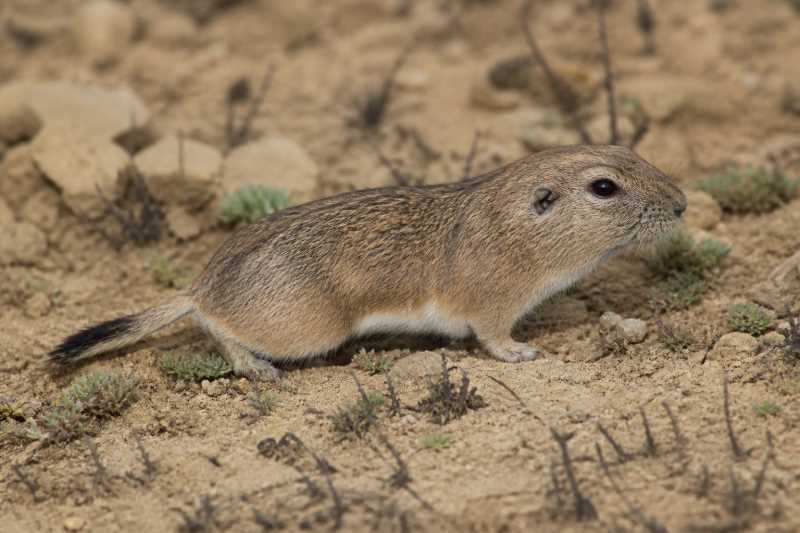
Anderson’s Tuco-tuco is a medium-sized rodent characterized by a robust body adapted for a fossorial lifestyle. Adults typically measure between 20 to 25 centimeters in length, with a tail that adds an additional 6 to 10 centimeters. Their weight ranges from 150 to 250 grams, making them relatively light for their size.
The species exhibits a cylindrical body shape, which is advantageous for moving through tunnels. Their fur is dense and soft, providing insulation in the often cool underground environment. The coloration is generally a blend of gray and brown, allowing for effective camouflage against the soil. The head is rounded, with small, inconspicuous eyes and ears, adaptations that reduce soil intrusion while burrowing.
One of the most striking features of Anderson’s Tuco-tuco is its large, powerful incisors, which protrude from the mouth. These teeth are essential for digging and gnawing through tough roots and tubers. The limbs are short but muscular, with well-developed claws that aid in excavation.
Range and Habitat
Anderson’s Tuco-tuco is found in a limited range within the high-altitude regions of Bolivia and parts of northern Argentina. This species prefers arid to semi-arid environments, often occupying grasslands and scrublands where the soil is soft enough for burrowing but firm enough to prevent tunnel collapse.
These rodents are typically found at elevations ranging from 2,000 to 3,500 meters above sea level. The habitat choice is influenced by the availability of food sources and the suitability of the soil for constructing extensive burrow systems. These burrows provide shelter from predators and extreme weather conditions, as well as a microhabitat for storing food.
Behavior and Diet
Anderson’s Tuco-tuco is a solitary and territorial animal, with individuals maintaining exclusive territories that they vigorously defend from intruders. The burrow system of a single tuco-tuco can be quite extensive, featuring multiple tunnels and chambers for nesting, food storage, and waste disposal.
Communication is primarily through vocalizations, with the characteristic ‘tuc-tuc’ sounds serving as a means to warn off potential intruders or attract mates. These vocalizations are crucial in the dark, subterranean world the tuco-tucos inhabit.
The diet of Anderson’s Tuco-tuco is herbivorous, consisting mainly of roots, tubers, and grasses. Their strong incisors are perfectly adapted for gnawing through these tough plant materials. In areas with scarce vegetation, they may also feed on seeds and bark.
Identification Tips (field recognition cues)
Identifying Anderson’s Tuco-tuco in the field can be challenging due to their subterranean lifestyle. However, there are several cues that can aid in recognition:
- Burrow Entrances: Look for fresh mounds of soil and tunnel entrances, which are indicative of tuco-tuco activity.
- Vocalizations: Listen for the distinctive ‘tuc-tuc’ sounds, especially during dawn and dusk when they are most active.
- Physical Appearance: If spotted above ground, note the tuco-tuco’s stocky body, small eyes and ears, and prominent incisors.
- Habitat: Their presence is more likely in regions with soft, sandy soils and sparse vegetation in high-altitude areas.
Conservation Status (with threats and protections)
Anderson’s Tuco-tuco is currently classified as Near Threatened by the International Union for Conservation of Nature (IUCN). The primary threats to the species include habitat destruction due to agricultural expansion, mining activities, and infrastructure development.
The alteration of land use not only reduces the available habitat but also fragments populations, making it difficult for individuals to find mates and maintain genetic diversity. Additionally, the use of pesticides and other chemicals in agriculture poses a direct threat to their health and food sources.
Conservation efforts for Anderson’s Tuco-tuco include habitat protection and the establishment of conservation areas. Raising awareness about the ecological role of these rodents can also help garner support for their protection. Research into their population dynamics and ecology is essential to inform conservation strategies.
Frequently Asked Questions
1. What adaptations does Anderson’s Tuco-tuco have for underground living?
Anderson’s Tuco-tuco exhibits several adaptations for subterranean life, including a cylindrical body shape, short limbs with strong claws for digging, and large incisors for gnawing through roots and soil. Their small eyes and ears help minimize the entry of soil particles.
2. How does Anderson’s Tuco-tuco communicate with others?
Communication is primarily through vocalizations. The ‘tuc-tuc’ sounds are used to warn intruders, attract mates, and maintain territory boundaries. These vocal signals are crucial in the darkness of their burrows.
3. What is the diet of Anderson’s Tuco-tuco?
The diet consists mainly of roots, tubers, and grasses. In areas where vegetation is scarce, they may also consume seeds and bark. Their strong incisors are adapted for processing these tough plant materials.
4. Why is Anderson’s Tuco-tuco considered Near Threatened?
The species is classified as Near Threatened due to habitat destruction from agricultural expansion, mining, and infrastructure development. These activities reduce and fragment their habitat, posing significant risks to their survival.
5. Where can Anderson’s Tuco-tuco be found?
This species is found in high-altitude regions of Bolivia and northern Argentina, particularly in arid and semi-arid grasslands and scrublands at elevations between 2,000 and 3,500 meters above sea level.
Related posts