The Nikon NIKKOR Z 100-400mm VR S: A Bird Enthusiast’s Perspective
Birdwatching demands patience, precision, and the right gear to capture fleeting moments of avian beauty. For bird enthusiasts, investing in a lens that offers versatility, clarity, and reliability is crucial. The Nikon NIKKOR Z 100-400mm f/4.5-5.6 VR S lens stands out as a formidable option, promising to deliver on all these fronts. This article delves into both the strengths and weaknesses of this lens, offering an in-depth look at how it performs in the field of bird photography.
Exceptional Build and Ergonomics
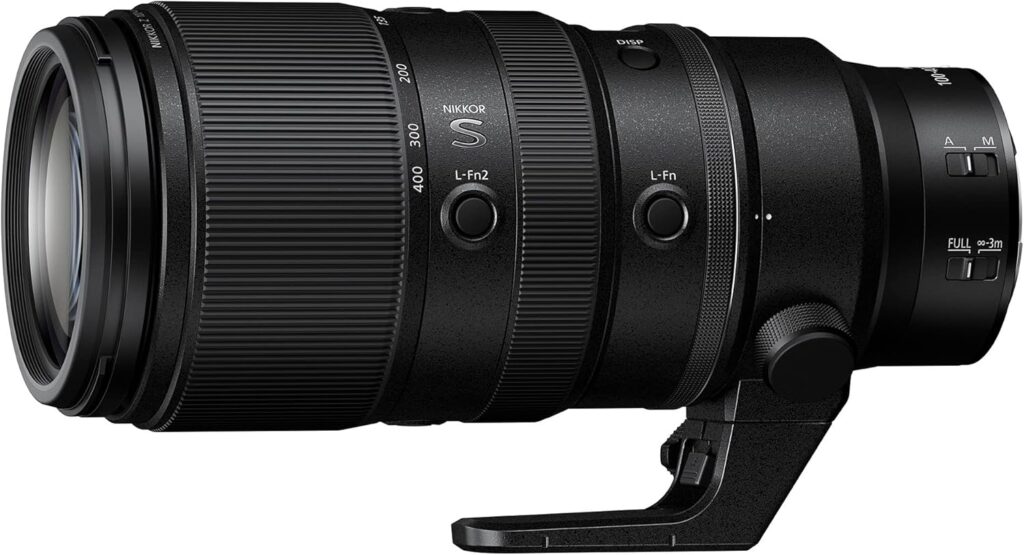
The first impression you get when handling the Nikon NIKKOR Z 100-400mm VR S is its robust build quality. Constructed with a combination of metal and high-grade polycarbonate, this lens is designed to withstand the rigors of outdoor use, which is essential for bird photographers who often find themselves in challenging environments. Its weather-sealed design provides added protection against dust and moisture, allowing photographers to shoot in various weather conditions without fear of damaging their equipment.
The lens is also ergonomically designed, with a well-balanced feel that sits comfortably in hand, even for extended shooting sessions. The zoom ring is smooth and precise, offering just the right amount of resistance, which is particularly important when quickly adjusting focal lengths to track fast-moving birds.
Image Quality
Image quality is where the Nikon NIKKOR Z 100-400mm VR S truly shines. The lens features a sophisticated optical design with a combination of extra-low dispersion (ED) and super ED elements, which effectively minimize chromatic aberration and color fringing. The result is crisp, high-resolution images with excellent color fidelity and contrast.
Bird photographers will appreciate the lens’s ability to maintain image quality across its focal range. Whether capturing a close-up portrait of a perched bird or snapping a distant flying species, the lens delivers sharp details and well-defined textures. The Nano Crystal Coat and ARNEO Coat further enhance image clarity by reducing ghosting and flare, ensuring that even backlit subjects are rendered with clarity.
Focusing Performance
Speed and accuracy of autofocus are critical for bird photography, and the NIKKOR Z 100-400mm VR S does not disappoint. Equipped with a stepping motor (STM), the autofocus system is both fast and silent. This is particularly advantageous when photographing skittish birds that might be startled by noisy focusing mechanisms.
The lens also features a customizable function button on the barrel, allowing photographers to quickly access their preferred settings without taking their eyes off the viewfinder. Additionally, the focus limiter switch can be engaged to restrict the focus range, thereby speeding up autofocus acquisition in certain scenarios.
Vibration Reduction
Nikon’s Vibration Reduction (VR) technology is a game-changer for handheld shooting. With up to 5.5 stops of stabilization, the NIKKOR Z 100-400mm VR S allows bird photographers to capture sharp images even at slower shutter speeds. This feature is especially beneficial in low-light conditions or when using the lens at its maximum focal length, where camera shake is more pronounced.
Portability and Versatility
At approximately 1435 grams, the NIKKOR Z 100-400mm VR S is not the lightest lens in its class, but it strikes a reasonable balance between portability and performance. For birders who prioritize versatility, this lens offers a convenient focal range that eliminates the need to carry multiple lenses in the field.
The lens’s versatility extends beyond bird photography, making it a valuable tool for capturing wildlife, sports, and even portraits. This adaptability is a significant advantage for photographers looking to maximize the utility of their gear.
Limitations and Considerations
Despite its many strengths, the NIKKOR Z 100-400mm VR S is not without its drawbacks. The lens’s maximum aperture of f/4.5-5.6 may be limiting in low-light situations, requiring photographers to increase ISO settings or use slower shutter speeds to achieve proper exposure. This can lead to increased noise in images, particularly when shooting with older camera models.
Moreover, while the lens offers impressive stabilization, its performance heavily relies on the photographer’s ability to hold steady, especially at longer focal lengths. For those who frequently shoot in dim conditions, investing in a tripod or monopod may be necessary to achieve consistently sharp results.
Conclusion
The Nikon NIKKOR Z 100-400mm VR S is a compelling choice for bird enthusiasts seeking a reliable and high-performance telephoto lens. Its robust construction, excellent image quality, and fast autofocus make it well-suited for capturing the beauty and behavior of birds in their natural habitats. While it may face some limitations in low-light conditions and portability, its overall versatility and performance make it a worthy investment for serious bird photographers.
In conclusion, the NIKKOR Z 100-400mm VR S is an excellent addition to the toolkit of any bird enthusiast, offering the features and capabilities needed to elevate one’s bird photography to new heights.
Related posts