
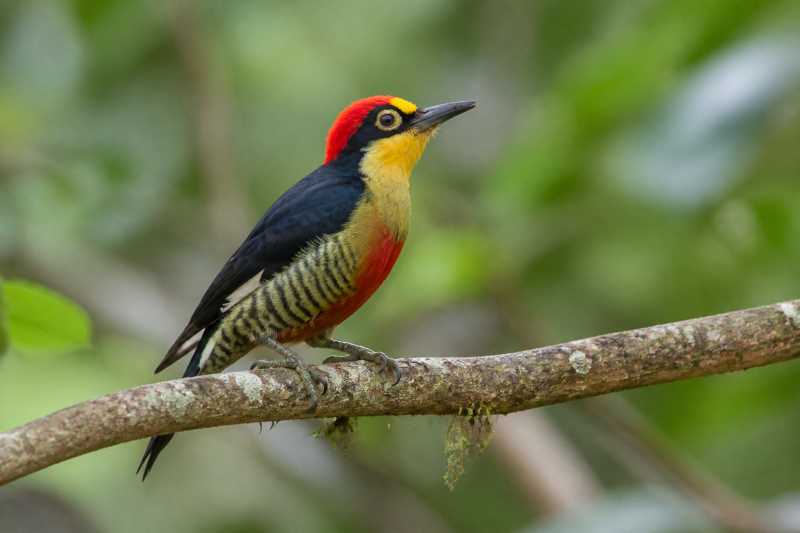
The Vibrant Yellow-fronted Woodpecker: A Marvel of the Avian World
The Yellow-fronted Woodpecker, scientifically known as Melanerpes flavifrons, is a remarkable bird species that captures the fascination of ornithologists and bird enthusiasts alike. Known for its striking appearance and intriguing behavior, this woodpecker is a testament to the diverse avian life found in the Neotropical regions of South America.
Distribution and Habitat
The Yellow-fronted Woodpecker is predominantly found in the Atlantic Forest biome, which spans across eastern Brazil, Paraguay, and northeastern Argentina. This biome is characterized by its lush, humid forests, which provide an ideal environment for this woodpecker. The bird is also seen in secondary forests and wooded savannas, demonstrating its adaptability to various forested habitats.
These woodpeckers are generally arboreal, spending most of their time in the upper canopy of trees. They prefer areas with dense foliage, which not only offer abundant food resources but also provide shelter and nesting opportunities. The preservation of its habitat is crucial as the Atlantic Forest is one of the most endangered biomes, with a significant portion already deforested or fragmented.
Physical Characteristics
The Yellow-fronted Woodpecker is easily identifiable by its vibrant plumage. It sports a bright yellow forehead and throat, contrasting with a deep red crown and nape. The rest of the head and upperparts are predominantly black, while the underparts exhibit a striking combination of yellow and red. Males and females display slight sexual dimorphism, with males typically having more extensive red coloration on the head.
This medium-sized woodpecker averages around 20 centimeters in length, with a wingspan that complements its agile flight. Its robust bill, typical of woodpeckers, is perfectly adapted for drilling into wood, allowing it to forage for insects and larvae beneath the bark.
Behavior and Diet
Yellow-fronted Woodpeckers are highly social birds, often seen foraging in small family groups or mixed-species flocks. This social behavior is advantageous as it increases their foraging efficiency and provides safety in numbers from potential predators.
Their diet primarily consists of insects, particularly ants and beetle larvae, which they skillfully extract from tree bark. Additionally, they are known to consume fruits and berries, making them important seed dispersers in their ecosystem. This omnivorous diet allows them to thrive in various forest conditions and maintain a balanced ecological role.
Breeding and Nesting
The breeding season for the Yellow-fronted Woodpecker typically aligns with the rainy season, which varies across its geographical range. During this period, males engage in elaborate courtship displays that include drumming, calling, and aerial maneuvers to attract mates.
Nesting occurs in tree cavities, which the woodpeckers excavate themselves. This choice of nesting site provides protection from predators and harsh weather. Both parents participate in incubating the eggs and feeding the chicks, showcasing a strong pair bond and cooperative breeding strategy. The chicks fledge after about a month but remain dependent on the parents for several weeks.
Conservation Status
Currently, the Yellow-fronted Woodpecker is classified as a species of Least Concern by the International Union for Conservation of Nature (IUCN). However, the continued degradation of the Atlantic Forest poses a significant threat to its habitat. Conservation efforts are essential to ensure the survival of this vibrant woodpecker and the myriad of other species that share its habitat.
Efforts to protect and restore the Atlantic Forest include establishing protected areas, promoting sustainable land use practices, and engaging local communities in conservation initiatives. These measures are vital to preserving the biodiversity of one of the world’s most unique ecosystems.
Conclusion
The Yellow-fronted Woodpecker is a vivid exemplar of the rich biodiversity found within the Atlantic Forest. Its striking appearance, social behavior, and ecological role make it a subject of interest for both scientific study and birdwatching enthusiasts. As with many species dependent on threatened habitats, its future hinges on effective conservation efforts aimed at preserving the delicate balance of its natural environment.
By raising awareness and supporting conservation initiatives, we can help ensure that the Yellow-fronted Woodpecker continues to thrive, bringing its splash of color and vitality to the forests of South America for generations to come.
Related posts


