The Enigmatic White-winged Flufftail: A Conservation Priority
The White-winged Flufftail (Sarothrura ayresi) is an enigmatic and elusive bird species that has captivated ornithologists and conservationists alike. With its distinct appearance and limited distribution, this bird is not only a subject of scientific interest but also a conservation priority. This article delves into the unique characteristics, habitat, and conservation challenges associated with the White-winged Flufftail.
Unique Characteristics
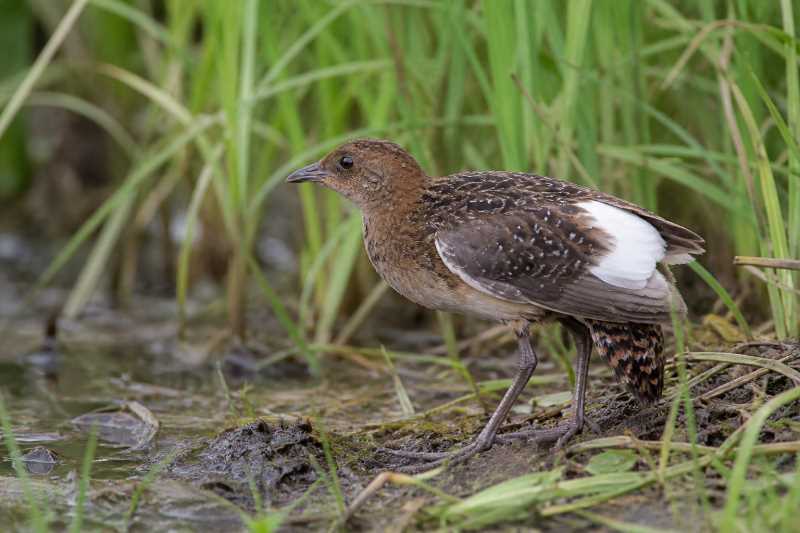
The White-winged Flufftail is a small, secretive bird belonging to the family Sarothruridae. It is characterized by its striking plumage, which includes dark brown to black feathers interspersed with white on its wings, giving it its name. The bird has a short tail and a compact body, adapted for its secretive lifestyle in marshy and wetland habitats.
One of the most intriguing aspects of the White-winged Flufftail is its elusive nature. It is primarily crepuscular, meaning it is most active during dawn and dusk. This behavior, coupled with its habitat preferences, makes it a challenging species to observe and study in the wild.
Habitat and Distribution
The White-winged Flufftail is native to sub-Saharan Africa, with its primary habitats being marshes and wetlands. It has been recorded in several countries, including Ethiopia, South Africa, Zimbabwe, and Zambia. However, its presence is highly localized, and it is considered a rare species across its range.
The bird’s preferred habitats are montane and high-altitude wetlands, where it forages for insects and small invertebrates. These habitats are characterized by dense vegetation and waterlogged conditions, providing the perfect cover for this secretive bird.
Conservation Status and Threats
The White-winged Flufftail is listed as Critically Endangered by the International Union for Conservation of Nature (IUCN). The primary threats to its survival are habitat loss and degradation, driven by agricultural expansion, urban development, and climate change.
Wetlands, the primary habitat of the White-winged Flufftail, are among the most threatened ecosystems globally. In many parts of Africa, wetlands are drained for agricultural use or altered to accommodate urban growth. This habitat loss significantly impacts the species, reducing the available breeding and foraging areas.
Additionally, climate change poses a significant threat by altering precipitation patterns and water availability in wetlands, further degrading the habitats critical to the survival of this species.
Conservation Efforts
Recognizing the critical status of the White-winged Flufftail, several conservation initiatives have been launched to protect and preserve its remaining habitats. These efforts involve international cooperation among conservation organizations, governments, and local communities.
One notable initiative is the establishment of protected areas and reserves that encompass key wetland habitats. In South Africa, for instance, the Middelpunt Wetland Trust has been instrumental in safeguarding important breeding sites for the White-winged Flufftail. These protected areas help mitigate the impact of habitat loss and provide safe havens for the species.
Furthermore, research and monitoring programs are crucial in understanding the ecology and behavior of the White-winged Flufftail. By studying its habits, breeding patterns, and population dynamics, conservationists can develop targeted strategies to enhance its survival prospects.
Community Involvement and Education
Community involvement is vital for the success of conservation efforts. Engaging local communities through education and awareness campaigns helps promote sustainable land-use practices that benefit both the environment and the people who depend on it.
Educational programs aimed at local schools and communities emphasize the importance of wetlands and the unique species they support, including the White-winged Flufftail. By fostering a sense of stewardship, these programs encourage communities to participate actively in conservation initiatives.
Conclusion
The White-winged Flufftail is a remarkable bird species that serves as a symbol of the challenges and triumphs of conservation efforts in Africa. Its survival is intricately linked to the health of wetlands, highlighting the need for concerted action to protect these vital ecosystems.
Conservationists, governments, and communities must continue to work together to ensure the preservation of the White-winged Flufftail and its habitat. By doing so, we not only safeguard a unique species but also contribute to the broader goal of biodiversity conservation on our planet.
References
- BirdLife International. (2023). Sarothrura ayresi. The IUCN Red List of Threatened Species 2023.
- Middelpunt Wetland Trust. (2023). Conservation Efforts in South Africa.
- Wetlands International. (2023). The Importance of Wetlands for Biodiversity.
Meta Title
"White-winged Flufftail: Conservation Challenges"
Meta Description
"Explore the conservation challenges facing the elusive White-winged Flufftail, a critically endangered bird species native to Africa’s threatened wetlands."
Related posts