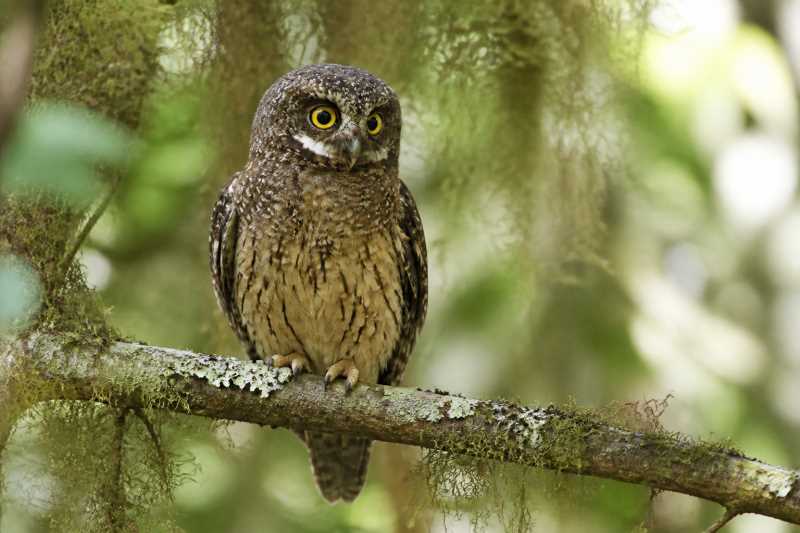
The Enigmatic White-throated Screech Owl: A Silent Sentinel of the Andes
The White-throated Screech Owl (Megascops albogularis) is a captivating avian species that inhabits the dense montane forests of the Andes. Despite its elusive nature, this owl has intrigued ornithologists and bird enthusiasts alike, thanks to its distinctive vocalizations and striking appearance. In this article, we delve into the fascinating world of the White-throated Screech Owl, exploring its habitat, behavior, and conservation status.
Habitat and Distribution
The White-throated Screech Owl is primarily found in the Andean regions of South America, with its range extending across countries such as Colombia, Ecuador, Peru, Bolivia, and Venezuela. It thrives in cloud forests, a type of montane rainforest characterized by high humidity and persistent mist. These habitats, typically located at elevations between 1,500 and 3,500 meters, provide the perfect environment for this species, offering abundant food sources and dense foliage for camouflage.
The owl’s preference for such specific habitats makes it a reliable indicator of the health of these ecosystems. Cloud forests are among the most biodiverse ecosystems on the planet, yet they are also highly vulnerable to climate change and deforestation. The presence of the White-throated Screech Owl in these areas underscores the importance of conserving these unique environments.
Physical Characteristics
The White-throated Screech Owl is a medium-sized owl, measuring approximately 23 to 28 centimeters in length. It exhibits sexual dimorphism, with females generally being larger than males. One of its most distinctive features is its white throat, which contrasts sharply with its otherwise brown and rufous plumage. This coloration provides excellent camouflage against the bark and foliage of its forest habitat.
The owl’s large, forward-facing eyes are adapted for nocturnal hunting, allowing it to spot prey in low-light conditions. Its tufts, or "ears," are not actually ears but feather extensions that may help in communication or camouflage by breaking up the outline of its head. These adaptations make the White-throated Screech Owl a formidable predator in its environment.
Behavior and Diet
White-throated Screech Owls are primarily nocturnal, hunting from dusk to dawn. Their diet consists mainly of small mammals, insects, and occasionally other birds. They are opportunistic feeders, adjusting their diet based on prey availability, which is essential for survival in the variable cloud forest ecosystem.
One of the most fascinating aspects of the White-throated Screech Owl is its vocalizations. Known for its eerie, trilling calls, the owl uses its voice not only to communicate with potential mates but also to establish territory. This vocal prowess is particularly important during the breeding season, which typically occurs from March to June.
These owls are monogamous, forming long-term pair bonds. They nest in tree cavities or abandoned nests of other birds, laying two to four eggs per clutch. Both parents participate in raising the young, with the male primarily responsible for hunting while the female incubates the eggs and cares for the chicks.
Conservation Status and Threats
Currently, the White-throated Screech Owl is classified as a species of "Least Concern" by the International Union for Conservation of Nature (IUCN). However, this status does not imply that the species is free from threats. Habitat loss due to deforestation and agricultural expansion poses significant risks. Climate change also threatens cloud forests, altering the delicate balance of these ecosystems and potentially impacting the owl’s habitat.
Conservation efforts are crucial to ensuring the survival of the White-throated Screech Owl. Protecting large tracts of cloud forest habitat through the establishment of national parks and reserves is one strategy. Additionally, community-based conservation programs that involve local populations in sustainable land management practices can help mitigate the impact of human activities on these fragile ecosystems.
Conclusion
The White-throated Screech Owl is more than just an enigmatic nocturnal bird; it is a symbol of the rich biodiversity and ecological importance of the Andean cloud forests. By understanding and protecting this species, we also safeguard the myriad of life forms that share its habitat. As climate change and human activities continue to threaten these vital ecosystems, the conservation of the White-throated Screech Owl becomes an urgent priority for preserving the natural heritage of the Andes for future generations.
Related posts