The White-Headed Vulture: A Majestic Sentinel of the African Skies
In the vast, sprawling savannas and woodlands of sub-Saharan Africa, a unique and distinguished avian species soars the skies—the White-headed Vulture (Trigonoceps occipitalis). Characterized by its striking appearance and crucial ecological role, this bird of prey is both a symbol of nature’s beauty and a poignant reminder of the challenges faced by wildlife in modern times.
An Overview of the White-Headed Vulture
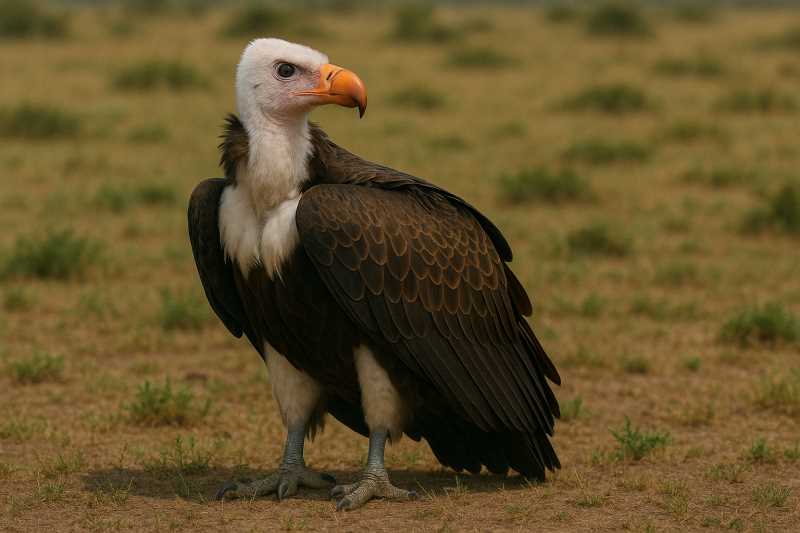
The White-headed Vulture is an impressive bird with a wingspan reaching up to 2.3 meters and a body length of about 80 centimeters. Its name is derived from its distinctive white-feathered head, which contrasts sharply with its dark brown, almost black, body feathers. The species is also notable for its bare, pinkish skin on the face and neck, which reduces feather wear and tear and helps in thermoregulation.
These vultures are primarily found in open savannas, grasslands, and occasionally in semi-arid regions across Africa, from Senegal and Gambia in the west to Ethiopia, Kenya, and Tanzania in the east, and down to South Africa. The habitat preference of the White-headed Vulture is largely dictated by the availability of carrion, as they are obligate scavengers.
Ecological Role and Behavior
White-headed Vultures play a pivotal role in maintaining the health of their ecosystems. As scavengers, they are nature’s clean-up crew, feeding on carcasses of dead animals and preventing the spread of diseases that could arise from decaying matter. This function is critical in maintaining the balance of nature and ensuring the health of other wildlife and even humans.
These vultures are typically solitary or found in pairs, unlike other vulture species that often form large groups. Their powerful beaks are adapted to tear through tough hides and access the nutritious marrow within bones, often making them the first to arrive at a fresh carcass. They share their habitats with other vulture species, often competing for food, but their efficiency in locating and consuming carrion gives them an edge.
Conservation Status and Challenges
Unfortunately, the White-headed Vulture is currently listed as Critically Endangered on the IUCN Red List of Threatened Species. The population has experienced a rapid decline over the past few decades, attributed to several anthropogenic factors. Habitat loss due to agricultural expansion, poisoning, and collisions with energy infrastructure, such as power lines, have significantly impacted their numbers.
One of the most pressing threats to their survival is poisoning, often unintentional. Farmers, trying to protect their livestock from predators, use poison bait, which inadvertently kills vultures that feed on the poisoned carcasses. Additionally, vulture body parts are sometimes used in traditional medicine, further exacerbating their decline.
Conservation Efforts
Efforts to conserve the White-headed Vulture are ongoing, with various organizations working tirelessly to protect this species. Conservation strategies include habitat protection, anti-poisoning campaigns, and community education initiatives to raise awareness about the importance of vultures.
Protected areas and national parks serve as crucial sanctuaries for these birds, but more is needed to ensure their survival. Collaborations between governments, conservation organizations, and local communities are essential in creating policies that protect vultures and their habitats. Moreover, research and monitoring programs are vital for understanding population dynamics and threats, enabling the development of effective conservation strategies.
The Future of the White-Headed Vulture
The plight of the White-headed Vulture is a stark reminder of the broader challenges facing biodiversity conservation. The survival of this species is intricately linked to the health of ecosystems and the actions of humanity. As awareness grows and conservation actions intensify, there is hope for the resurgence of this majestic bird in Africa’s skies.
To ensure a future where the White-headed Vulture continues to thrive, it is imperative to address the root causes of its decline. This includes enhancing legal protections, promoting sustainable land-use practices, and fostering coexistence between humans and wildlife. By doing so, we not only safeguard this iconic species but also contribute to the overall health of our planet.
Conclusion
The White-headed Vulture is more than just a bird; it is a symbol of the delicate balance of life in the ecosystems it inhabits. Protecting this species is not only a moral obligation but a necessity for the preservation of biodiversity. As we look to the future, let us commit to actions that will ensure the skies of Africa remain graced by the presence of the White-headed Vulture for generations to come.
This is one of the species covered in our book Vultures and Condors Of The World which is part of our Kings Birds of the world series, and one of the Kings Guides.

Related posts