The White-fronted Bee-eater: A Jewel of African Skies
The avian world is teeming with a rich tapestry of colors, sounds, and behaviors, yet few species captivate the imagination quite like the White-fronted Bee-eater (Merops bullockoides). This vibrantly colored bird, native to sub-Saharan Africa, is not only a visual delight but also an ecological asset, playing a significant role in its ecosystem. In this article, we delve into the life of this remarkable bird, exploring its habitat, behaviors, and conservation status.
Habitat and Distribution
The White-fronted Bee-eater is primarily found in the savannas, woodlands, and grasslands of eastern and southern Africa. Countries such as Kenya, Tanzania, Zambia, Zimbabwe, and Botswana are home to these birds, where they thrive in open landscapes that provide ample opportunities for hunting. The presence of water bodies is particularly important, as these areas attract insects, the primary food source for bee-eaters.
These birds are also known to adapt to disturbed habitats, such as agricultural lands, provided there is sufficient insect prey and nesting sites. Their adaptability to various environments, however, does not negate the importance of preserving their natural habitats to ensure their sustained presence.
Physical Characteristics
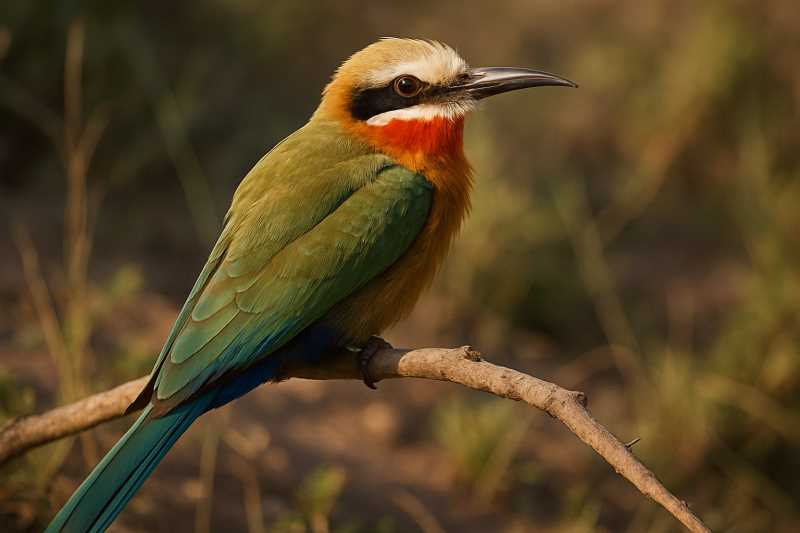
The White-fronted Bee-eater is a medium-sized bird, measuring about 23-28 cm in length and weighing around 25-35 grams. Its striking plumage is a feast for the eyes, with a combination of green, blue, white, and red colors. The most distinctive feature is its white forehead and throat, contrasting sharply with the bright red throat patch. The rest of the body is predominantly green, with a blue underbelly and a long, pointed tail.
The bill of the White-fronted Bee-eater is long and slightly decurved, an adaptation perfect for catching flying insects. Their sharp eyesight allows them to spot prey from a distance, making them adept hunters.
Diet and Hunting Techniques
As their name suggests, bee-eaters have a penchant for bees and other flying insects. Their diet mainly consists of bees, wasps, ants, and beetles. The birds are known for their aerial acrobatics, capturing insects mid-flight with precision and grace.
One fascinating aspect of their feeding behavior is their ability to handle stinging insects. Before consuming a bee or wasp, the bee-eater will skillfully remove the sting by repeatedly hitting the insect against a hard surface. This ensures that they can safely enjoy their meal without the risk of being stung.
Social Structure and Breeding
White-fronted Bee-eaters are highly social birds, often found in large colonies. These colonies can consist of several hundred individuals, and they exhibit complex social interactions. They engage in cooperative breeding, where non-breeding individuals, often offspring from previous seasons, help care for the young. This cooperative behavior increases the survival rate of the chicks and strengthens the social bonds within the colony.
Breeding typically occurs during the rainy season when food is plentiful. The birds nest in burrows, which they excavate in sandy riverbanks or cliffs. Both males and females take part in digging these burrows, which can be up to two meters long. A clutch usually consists of 2-5 eggs, incubated by both parents and occasionally by helpers.
Vocalizations
Communication among White-fronted Bee-eaters is a symphony of calls and songs. They are known for their distinctive and melodious calls, which are used to maintain contact within the flock, signal alarm, or coordinate group activities. Their vocalizations are also crucial during the breeding season, as they strengthen pair bonds and facilitate cooperative breeding.
Conservation Status
The International Union for Conservation of Nature (IUCN) lists the White-fronted Bee-eater as a species of Least Concern, indicating that they are currently not at immediate risk of extinction. However, like many wildlife species, they face threats from habitat destruction, climate change, and pesticide use, which can impact their insect prey availability.
Efforts to conserve these birds focus on habitat preservation and maintaining the ecological balance necessary for their survival. Protecting riverbanks and savanna landscapes is essential, as these areas are crucial for their nesting and feeding.
Conclusion
The White-fronted Bee-eater is a testament to nature’s beauty and complexity. Its vibrant colors, intricate social structures, and ecological significance make it a subject of fascination for ornithologists and bird enthusiasts alike. By understanding and preserving their natural habitats, we can ensure that future generations will continue to marvel at these jewels of the African skies.
As we continue to learn more about the White-fronted Bee-eater, it reminds us of the intricate connections within ecosystems and the importance of biodiversity. Protecting such species is not just about conserving a single bird but about maintaining the health and vitality of our planet’s natural systems.
In summary, the White-fronted Bee-eater is more than just a beautiful bird; it is a vital component of the ecological tapestry, deserving of our attention and conservation efforts.
Related posts