The Majestic Wattled Crane: A Conservation Imperative
The Wattled Crane (Grus carunculata), with its striking appearance and imposing stature, is one of Africa’s most iconic avian species. Revered for its elegance and grace, the Wattled Crane is not only a symbol of the African wetlands but also a critical indicator of the health of these ecosystems. This article delves into the fascinating world of the Wattled Crane, exploring its habitat, behavior, and the urgent conservation efforts required to prevent its extinction.
Habitat and Distribution
The Wattled Crane is predominantly found in sub-Saharan Africa, with its range extending across countries such as Zambia, Botswana, Zimbabwe, and South Africa. Its preferred habitat includes wetlands, floodplains, and moist grasslands, where it thrives on a diet primarily consisting of aquatic plants, seeds, and small invertebrates.
Wetlands are the lifeblood of the Wattled Crane’s existence, providing not only food but also nesting sites. The crane’s reliance on these habitats underscores the importance of preserving wetland ecosystems, which face increasing threats from human activities such as agriculture, urban development, and climate change.
Physical Characteristics and Behavior
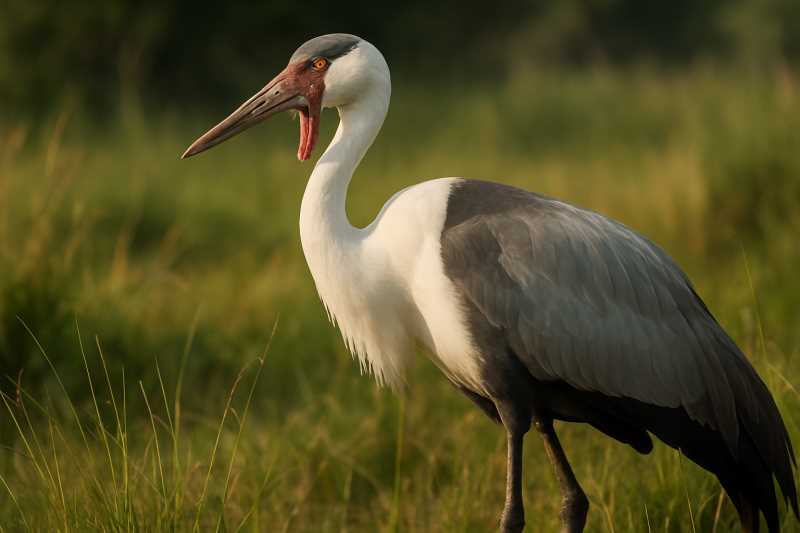
The Wattled Crane is the largest crane species in Africa, standing at an impressive height of up to 175 cm (68.9 inches) with a wingspan of approximately 230 cm (90.6 inches). Its most distinguishing feature is the wattle—a flap of skin that hangs from its throat, which can change color depending on the crane’s emotional state or arousal level.
These cranes are known for their elaborate courtship displays, which include synchronized dancing, bowing, and jumping. Such behaviors not only strengthen pair bonds but also play a crucial role in the breeding process. Wattled Cranes are monogamous and form long-lasting pair bonds, often returning to the same nesting sites year after year.
Breeding and Nesting
Breeding takes place during the wet season, when food is abundant, and conditions are favorable for raising young. The cranes construct their nests in shallow water, using reeds and other aquatic vegetation. Typically, a clutch consists of one or two eggs, although it is rare for more than one chick to survive to fledging due to sibling competition and predation.
The long incubation period of around 33 to 36 days and the extended fledging period means that Wattled Cranes have a low reproductive rate. This slow breeding cycle exacerbates their vulnerability to external threats, making conservation efforts even more critical.
Conservation Status and Threats
The Wattled Crane is classified as “Vulnerable” on the IUCN Red List of Threatened Species, with an estimated population of fewer than 8,000 individuals remaining in the wild. The primary threats to their survival include habitat destruction, human disturbances, and climate change.
Wetland drainage for agriculture, pollution, and infrastructure development poses significant risks to the crane’s habitat. Additionally, human encroachment and disturbances during the breeding season can lead to nest abandonment and reduced reproductive success.
Climate change further exacerbates these challenges by altering rainfall patterns and water availability, disrupting the delicate balance of wetland ecosystems. As a result, the future of the Wattled Crane is intricately linked to the health and preservation of African wetlands.
Conservation Efforts
Numerous conservation organizations and governmental bodies are actively working to protect the Wattled Crane and its habitat. Key strategies include:
1. **Habitat Protection and Restoration:** Efforts are underway to safeguard existing wetlands and restore degraded areas. This includes legal protection, community engagement, and sustainable land management practices.
2. **Research and Monitoring:** Continuous research is essential to understand the ecology and behavior of Wattled Cranes. Monitoring programs help track population trends and assess the effectiveness of conservation interventions.
3. **Community Involvement:** Engaging local communities in conservation efforts is crucial. Initiatives that promote sustainable livelihoods and raise awareness about the importance of wetlands can foster a sense of ownership and stewardship among local populations.
4. **Policy Advocacy:** Advocating for policies that prioritize wetland conservation and address the root causes of habitat loss is vital for long-term success.
5. **International Cooperation:** Given the transboundary nature of many wetland ecosystems, international collaboration is essential to ensure comprehensive conservation strategies.
Conclusion
The plight of the Wattled Crane serves as a poignant reminder of the interconnectedness of species and ecosystems. As one of Africa’s most charismatic birds, the Wattled Crane embodies both the beauty and fragility of its wetland habitat. Concerted efforts to protect and restore these vital ecosystems are not only crucial for the survival of the Wattled Crane but also for the myriad other species that depend on them.
In the face of growing environmental challenges, the Wattled Crane stands as a symbol of hope and resilience. By working together to preserve its habitat, we can ensure that future generations will continue to marvel at the sight of these magnificent birds gracing Africa’s skies.
This is one of the species covered in our book Cranes Of The World which is part of our Kings Birds of the world series, and one of the Kings Guides.

Related posts