########################################################################################################################################################## Vaux’s Swift: A Remarkable Aerial Acrobat of the Skies
In the skies of North America, a small yet extraordinary bird captures the fascination of birdwatchers and ornithologists alike—Vaux’s Swift (Chaetura vauxi). Named after the American scientist William Vaux, this species of swift is known for its incredible agility and endurance in flight. From its unique nesting habits to its remarkable migratory patterns, Vaux’s Swift is a testament to the wonders of avian life.
Description and Identification
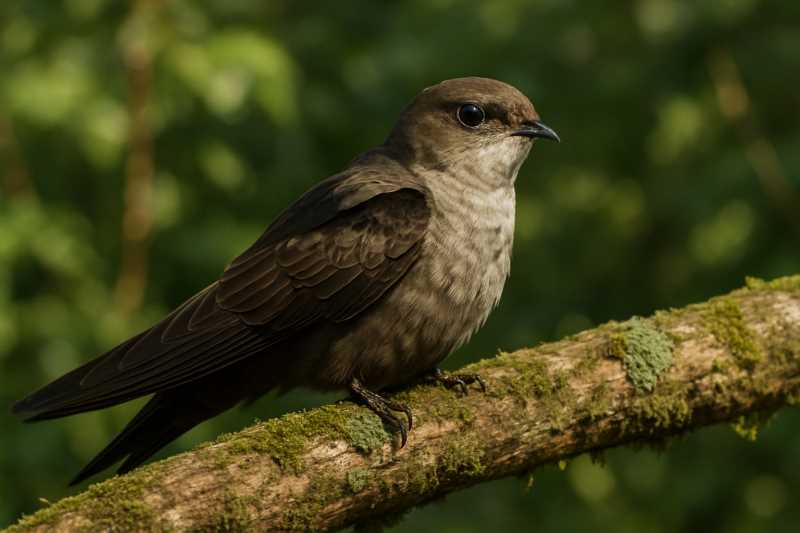
Vaux’s Swift is a small bird, measuring about 4.5 inches long with a wingspan of approximately 12 inches. Its plumage is generally sooty gray, with a slightly paler throat and underparts. The bird’s slender body, long wings, and short, stubby tail are characteristic of swifts, allowing them to maneuver with exceptional agility. Unlike swallows, swifts have a more erratic flight pattern, often described as a rapid, zigzagging movement.
This species can be distinguished from the similar Chimney Swift by its smaller size and lighter coloration, although the two are often confused due to their overlapping ranges and similar behaviors.
Habitat and Range
Vaux’s Swift breeds from southern Alaska and western Canada through the western United States to central Mexico. During the breeding season, they favor old-growth forests with large hollow trees, where they typically nest. They are particularly fond of coniferous forests but can also be found in mixed woodlands and, occasionally, urban areas with suitable nesting structures.
In the non-breeding season, Vaux’s Swift migrates to Central and South America, traveling in flocks that can number in the thousands. Their migration is a spectacle of coordination, showcasing their incredible endurance and navigational skills.
Breeding and Nesting Behavior
The breeding season for Vaux’s Swift begins in late spring, with pairs often returning to the same nesting sites year after year. They are cavity nesters, typically choosing large, hollow trees or snags. In urban areas, they may nest in chimneys or other man-made structures. The nest itself is made of twigs and other plant materials, bonded together with the swift’s saliva.
Vaux’s Swifts are known for their social nesting behavior, often forming loose colonies. Both parents share the responsibility of incubating the eggs and feeding the young. Once hatched, the chicks grow rapidly, fledging in about 3-4 weeks.
Diet and Foraging
As insectivores, Vaux’s Swifts feed exclusively on flying insects, which they capture in mid-air during their acrobatic flight. Their diet includes a variety of insects such as flies, ants, wasps, and beetles, making them important for controlling insect populations. They often forage in groups, especially during migration, taking advantage of thermals and updrafts to conserve energy while searching for food.
Conservation Status
Currently, Vaux’s Swift is listed as a species of least concern by the International Union for Conservation of Nature (IUCN). However, their reliance on old-growth forests for nesting makes them vulnerable to habitat loss. The logging of these forests and the decline of suitable nesting sites pose significant challenges to their populations.
Conservation efforts are underway to protect the habitats of Vaux’s Swift, with a focus on preserving old-growth forests and promoting the maintenance of suitable urban nesting sites. Public awareness campaigns and habitat restoration projects are crucial in ensuring the survival of this remarkable bird.
Cultural Significance and Human Interaction
Vaux’s Swift holds a special place in the hearts of bird enthusiasts and communities within its range. In places like Portland, Oregon, the communal roosting of Vaux’s Swifts in chimneys during migration has become a celebrated natural event, drawing crowds of spectators each year.
These gatherings provide a unique opportunity for public education and engagement with bird conservation issues. Through such interactions, people are encouraged to take an active role in preserving the ecosystems that support Vaux’s Swift and other wildlife.
Conclusion
Vaux’s Swift is more than just a bird; it is a symbol of the intricate balance of ecosystems and the interdependence of species. Its presence in the skies is a reminder of the wonders of nature and the importance of conservation. By protecting the habitats that sustain Vaux’s Swift, we ensure the continuity of not only this remarkable species but also the many other life forms that share its environment.
As we look to the future, the story of Vaux’s Swift inspires hope and action in the ongoing efforts to preserve our natural world. Its aerial acrobatics and migratory journeys continue to captivate and educate, reminding us of the beauty and complexity of avian life.
Related posts