Usambara Thrush: An Enigmatic Songbird of Eastern Africa
The Usambara Thrush (Turdus roehli) is a captivating bird species endemic to the mountainous regions of Eastern Africa. Known for its melodious song and elusive nature, this thrush holds a special place in the rich biodiversity of the Usambara and Uluguru Mountains in Tanzania. Despite its limited geographical range, the Usambara Thrush plays a significant role in the ecological balance of its habitat.
Taxonomy and Identification
The Usambara Thrush belongs to the family Turdidae, which encompasses a variety of thrush species known for their distinctive songs and often colorful appearances. First described by the German ornithologist Anton Reichenow in 1908, the species is scientifically named in honor of his colleague, Gustav Roehl, who collected the type specimen.
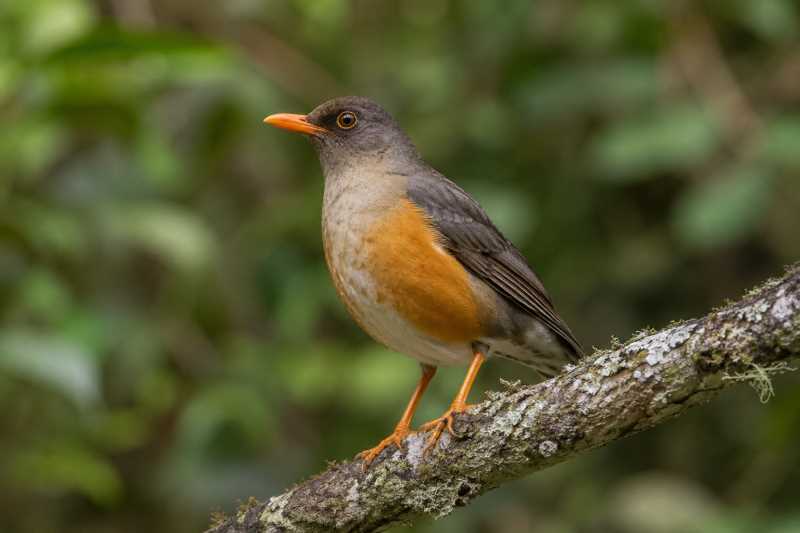
Characterized by its medium size, the Usambara Thrush measures approximately 22-24 cm in length. Its plumage is primarily dark brown, with a paler underbelly and a distinctive white throat patch bordered by black streaks. The bird’s beak is yellow, contrasting with its dark eyes and adding to its striking appearance. The Usambara Thrush is often confused with the African Thrush (Turdus pelios), but careful observation reveals the former’s unique throat pattern and song.
Habitat and Distribution
The Usambara Thrush is endemic to the Eastern Arc Mountains, a chain of ancient mountains in Tanzania renowned for their high levels of biodiversity and endemism. These birds are typically found in montane and submontane forests, favoring dense undergrowth and forest edges where they can forage for food while remaining hidden from predators.
The species is particularly associated with the Usambara Mountains, which are divided into two main ranges: the West Usambara and East Usambara. These mountains are part of the Eastern Arc Mountains and are recognized as a biodiversity hotspot due to their numerous endemic species and unique ecosystems. The Usambara Thrush also inhabits the Uluguru Mountains, further south, contributing to the ecological richness of these regions.
Behavior and Ecology
The Usambara Thrush is a largely solitary bird, although it may be observed in pairs during the breeding season. Its diet consists mainly of insects, earthworms, and small fruits, which it gleans from the forest floor and low vegetation. This thrush is known for its distinctive, melodious song, which is often heard during the early morning and late afternoon.
Breeding behavior in the Usambara Thrush is not extensively documented; however, it is believed to follow a similar pattern to other Turdus species. Nesting typically occurs in dense foliage, with the female constructing a cup-shaped nest from twigs, leaves, and mud. Clutch size is generally small, with the female incubating the eggs and both parents involved in feeding the chicks.
Conservation Status
The Usambara Thrush is classified as Near Threatened on the IUCN Red List due to its restricted range and the ongoing threats to its habitat. The primary threat facing this species is habitat destruction, driven by agricultural expansion, logging, and human settlement. The Eastern Arc Mountains, including the Usambara and Uluguru ranges, have experienced significant deforestation in recent decades, leading to habitat fragmentation and loss.
Conservation efforts in the region have focused on protecting the remaining forest areas and promoting sustainable land-use practices. Several protected areas have been established, including the Amani Nature Reserve and the Uluguru Nature Reserve, which provide critical habitat for the Usambara Thrush and other endemic species. Continued conservation initiatives are essential to ensure the survival of this enigmatic bird and the biodiversity of its habitat.
Importance and Future Directions
The Usambara Thrush, like many endemic species, serves as an indicator of the health of its ecosystem. Its presence signifies the well-being of the forest habitat and the interconnected web of life it supports. Protecting the Usambara Thrush thus contributes to the broader conservation goals of preserving biodiversity and maintaining ecological integrity in the Eastern Arc Mountains.
Future research on the Usambara Thrush should focus on detailed studies of its breeding biology, population dynamics, and ecological requirements. Such information is crucial for developing effective conservation strategies and understanding the impacts of environmental changes on this species.
In conclusion, the Usambara Thrush is a remarkable bird that underscores the ecological importance of the Eastern Arc Mountains. By prioritizing its conservation and addressing the threats to its habitat, we can safeguard a unique component of East Africa’s natural heritage for future generations to appreciate and study.
Related posts