The Sombre Kingfisher: A Jewel of the Moluccas
The Sombre Kingfisher (Todiramphus funebris), an elusive and enigmatic avian species, is a captivating sight for bird enthusiasts and ornithologists alike. Found exclusively on the island of Halmahera in Indonesia’s North Maluku province, this bird is a testament to the unique biodiversity of the region. Its name, derived from its subdued plumage, belies the vibrant life it leads amidst the dense forests of its homeland.
Taxonomy and Description
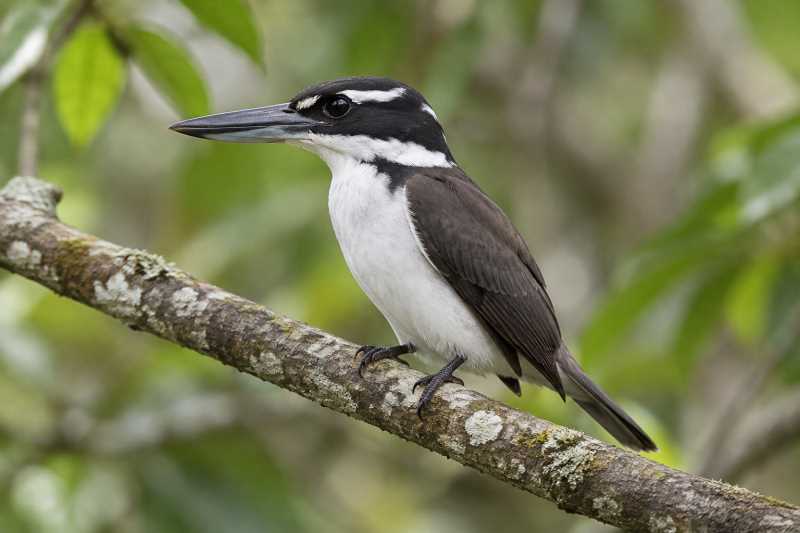
Belonging to the family Alcedinidae, the Sombre Kingfisher is a medium-sized bird, measuring approximately 23–25 centimeters in length. Unlike its more colorful relatives, the Sombre Kingfisher dons a more muted appearance. It is characterized by its dark blue upperparts, contrasting with a paler, white underbelly. The head is adorned with a distinct black mask that extends from the beak across the eyes, enhancing its stealthy demeanor.
The species’ scientific name, Todiramphus funebris, underscores its somber appearance, with "funebris" translating to "funereal" in Latin. Despite its subdued coloration, the bird is an intriguing subject of study due to its rarity and the limited knowledge about its behavior and ecology.
Habitat and Distribution
The Sombre Kingfisher is endemic to Halmahera, one of the largest islands in the Maluku archipelago. This region, characterized by lush tropical rainforests, provides the ideal habitat for the species. The kingfisher is typically found in lowland forests, where it resides in dense foliage, often near streams or rivers.
Unfortunately, the natural habitat of the Sombre Kingfisher is under threat from deforestation, driven by logging activities and agricultural expansion. This has led to a significant reduction in its range, making conservation efforts crucial to its survival.
Behavior and Diet
The Sombre Kingfisher is known for its solitary and territorial behavior. It is primarily an insectivorous bird, with its diet consisting of insects, small reptiles, and occasionally fish. The bird’s hunting strategy involves perching quietly on branches, scanning for prey before making swift, precise dives to capture its target.
Breeding habits of the Sombre Kingfisher are not well documented, but like many kingfishers, it is presumed to nest in tree cavities or termite mounds. Observations suggest that both parents are involved in nurturing their young, a common trait among kingfishers.
Conservation Status
The International Union for Conservation of Nature (IUCN) has classified the Sombre Kingfisher as Near Threatened. The primary threat to its existence is habitat loss due to deforestation. As its habitat continues to shrink, so does the population of this already scarce species.
Conservation initiatives are vital to protect the Sombre Kingfisher and its habitat. Efforts are being made to preserve the remaining forests of Halmahera and to raise awareness about the importance of the region’s biodiversity. Ecotourism is also being promoted as a sustainable way to support conservation while providing economic benefits to local communities.
The Importance of Conservation
The Sombre Kingfisher is more than just a bird; it is an indicator of the health of its ecosystem. Protecting this species means safeguarding the rich biodiversity of Halmahera, which supports countless other organisms. The conservation of such species is crucial not only for maintaining ecological balance but also for understanding the complex interconnections within tropical ecosystems.
Moreover, the Sombre Kingfisher holds cultural significance for the indigenous peoples of Halmahera, who view the bird as a symbol of their natural heritage. Preserving this species also means preserving the cultural identity and traditions of these communities.
Conclusion
The Sombre Kingfisher is a remarkable species that highlights the unique biodiversity of the Moluccas. Its survival is intricately linked to the preservation of its natural habitat. As threats to its existence continue, concerted conservation efforts are essential to ensure that future generations can witness the beauty of this elusive bird.
In conclusion, the Sombre Kingfisher serves as a powerful reminder of the urgent need to protect our planet’s endangered species. By valuing and preserving such creatures, we not only honor their existence but also enrich our own understanding of the natural world.
Through increased awareness, habitat protection, and sustainable practices, we can help secure a future for the Sombre Kingfisher and the myriad of life that shares its home.
Related posts