The Enigmatic Salvadori’s Teal: A Glimpse into the Life of a Rare Waterfowl
Salvadori’s Teal (Salvadorina waigiuensis) is a remarkable and elusive species of waterfowl endemic to the lush, mountainous regions of New Guinea. Named after the Italian ornithologist Tommaso Salvadori, this rare bird presents a fascinating subject of study due to its unique ecological adaptations and conservation challenges. In this article, we delve into the biology, habitat, and conservation status of Salvadori’s Teal, shedding light on the efforts required to preserve this enigmatic species.
Biological Characteristics
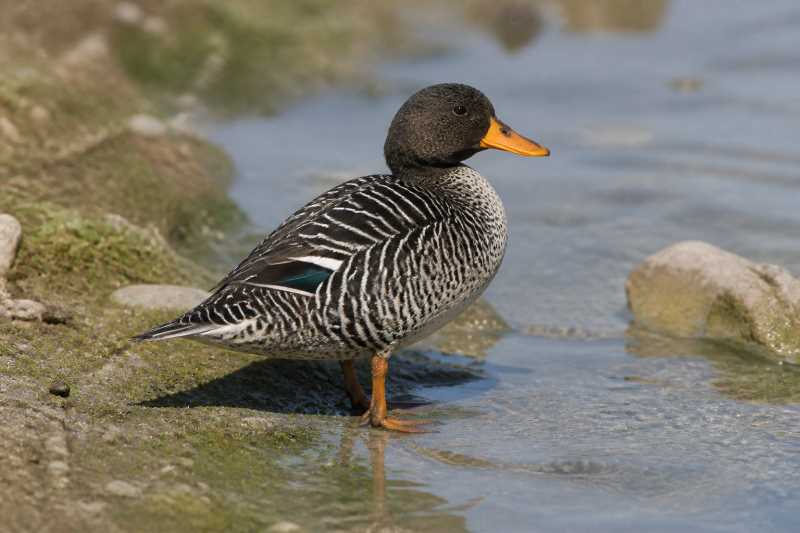
Salvadori’s Teal is a medium-sized duck, with a body length ranging from 38 to 43 centimeters. It boasts a distinctive appearance, characterized by its olive-brown plumage, which provides excellent camouflage against the forested and riparian environments it inhabits. The teal’s wings exhibit a striking green speculum, adding a splash of color to its otherwise earth-toned feathers. Both sexes appear similar, with minor variations in plumage intensity, while juveniles tend to have duller coloring.
This species is primarily nocturnal, a trait that sets it apart from many other duck species. During the day, Salvadori’s Teal often remains hidden among dense vegetation or rest in secluded areas, becoming more active and vocal during the night. Its diet consists mainly of aquatic invertebrates, small fish, and plant matter, foraged from fast-flowing streams and rivers.
Habitat and Distribution
Salvadori’s Teal is endemic to New Guinea, predominantly occupying montane regions at elevations ranging from 500 to 3,200 meters. The bird favors fast-flowing rivers and streams with rocky substrates, surrounded by dense tropical forests. Such habitats provide the necessary resources and cover for feeding, nesting, and protection from predators.
The distribution of Salvadori’s Teal is limited, with sightings reported from a few key areas on the island, including the Vogelkop Peninsula and the Central Highlands. Due to its secretive nature and the challenging terrain of its habitat, comprehensive population surveys remain difficult, contributing to gaps in knowledge about its exact distribution and abundance.
Conservation Status and Threats
Salvadori’s Teal is currently classified as Near Threatened by the International Union for Conservation of Nature (IUCN). The species faces several threats that jeopardize its survival, primarily habitat destruction and degradation. Logging, agricultural expansion, and infrastructure development, such as road construction, encroach upon its natural habitat, leading to fragmentation and increased human disturbance.
Additionally, climate change poses a long-term threat by altering the hydrology of the streams and rivers that Salvadori’s Teal relies on. Changes in precipitation patterns and increased frequency of extreme weather events can lead to habitat loss and reduced availability of food resources.
Hunting pressure, although not as prevalent as habitat-related threats, also poses a risk. In some regions, local communities may hunt the birds for their meat. However, the inaccessibility of their preferred habitats somewhat limits this practice.
Conservation Efforts
Conservation efforts for Salvadori’s Teal require a multifaceted approach, focusing on habitat protection, research, and community engagement. Establishing and effectively managing protected areas within its range is crucial. Such areas can safeguard critical habitats from logging and other forms of development.
Research initiatives aimed at better understanding the species’ ecology, behavior, and population dynamics are equally important. This requires collaboration between local and international conservation organizations, researchers, and governments to conduct comprehensive surveys and monitoring programs.
Engaging local communities in conservation efforts is vital. By promoting awareness and understanding of the ecological role and the plight of Salvadori’s Teal, communities can become allies in its preservation. Sustainable development practices that balance human needs with environmental conservation can be promoted, ensuring that local livelihoods are not compromised.
In conclusion, Salvadori’s Teal represents a unique component of New Guinea’s biodiversity, with its elusive nature and specialized habitat requirements capturing the imagination of ornithologists and conservationists alike. Protecting this rare species necessitates a concerted effort to address habitat-related threats, enhance our understanding through research, and foster community involvement. By doing so, we can hope to secure a future for Salvadori’s Teal and maintain the ecological integrity of New Guinea’s montane regions.
Related posts