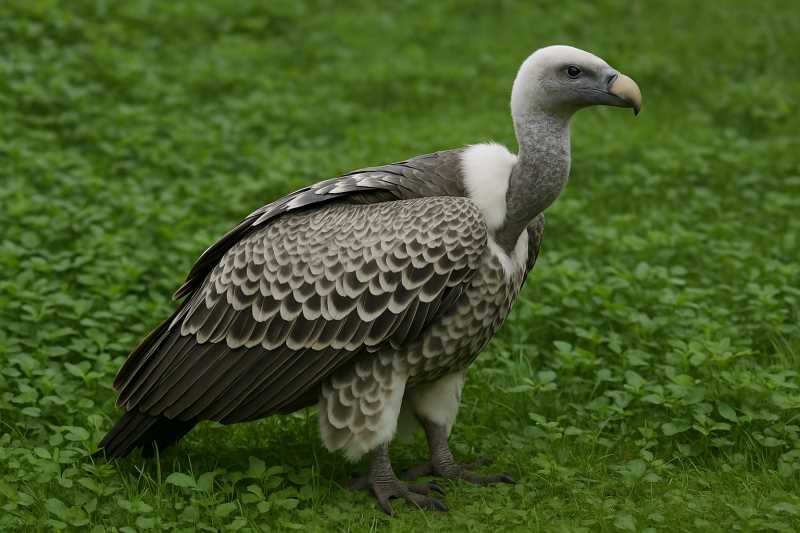
Rüppell’s Vulture (Gyps rueppelli), named after the German explorer and zoologist Eduard Rüppell, is a majestic bird of prey that graces the skies of Africa. Renowned for its exceptional flying capabilities and vital ecological role, this vulture species is both fascinating and crucial to the health of its native ecosystems. This article delves into the unique characteristics, behaviors, and conservation challenges facing Rüppell’s Vulture, offering insights into why this bird is a symbol of resilience in the African wilderness.
Physical Characteristics and Adaptations
Rüppell’s Vulture is a large bird, with a wingspan reaching up to 2.6 meters (8.5 feet) and a body length of about 1 meter (3.3 feet). Its plumage is predominantly mottled brown, with a distinctive white underbelly and a whitish ruff around the neck. These birds are built for soaring high altitudes, with long, broad wings that enable them to glide effortlessly on thermal air currents.
One of the most remarkable adaptations of Rüppell’s Vulture is its ability to fly at extremely high altitudes. In fact, it holds the record for the highest confirmed bird flight, at an astonishing 11,300 meters (37,000 feet) above sea level, recorded when one collided with a commercial aircraft over West Africa. This altitude capability is facilitated by a specialized hemoglobin structure that allows efficient oxygen uptake even in thin air.
Ecological Role and Behavior
Rüppell’s Vultures are primarily scavengers, playing a crucial role in their ecosystem by consuming carrion and preventing the spread of diseases. They are often seen in large groups, soaring over the savannas in search of carcasses. Their keen eyesight enables them to spot food from great distances, and they often follow other scavenger species to locate meals.
These vultures are highly social birds, nesting in colonies on cliffs and steep rocky outcrops. The breeding season typically coincides with the dry season, and pairs are known to be monogamous, often mating for life. Nests are constructed from sticks and lined with grass, where the female lays a single egg that both parents incubate.
Conservation Status and Threats
Despite their ecological importance, Rüppell’s Vultures are facing numerous threats that have led to a concerning decline in their population. The International Union for Conservation of Nature (IUCN) has classified this species as Critically Endangered. Key threats include habitat loss, poisoning, and collisions with power lines.
One of the most significant threats is poisoning, often a result of human-wildlife conflict. Farmers sometimes lace carcasses with poison to kill predators like lions and hyenas, inadvertently killing vultures that feed on the poisoned flesh. Additionally, the rise in illegal wildlife trade has seen vultures targeted for traditional medicine practices and belief-based use.
Conservation Efforts
Efforts to conserve Rüppell’s Vulture are underway across their range. Conservationists are working to mitigate human-wildlife conflict, educate communities about the ecological benefits of vultures, and implement safe carcass disposal practices. Organizations are also advocating for the protection of key habitats and the establishment of vulture-safe zones around power lines and other high-risk areas.
Captive breeding programs and rehabilitation centers are being developed to support population recovery, while satellite tracking and research are providing valuable data on vulture movements and behaviors. International cooperation is crucial, as the migratory nature of these birds often takes them across national borders.
Conclusion
Rüppell’s Vulture is a testament to the delicate balance of nature and the interconnectedness of ecosystems. As scavengers, they perform essential services that maintain the health of the environment. Protecting these magnificent birds is not only about preserving a species but also about safeguarding the broader ecological networks that support life in the African savannas.
By raising awareness and fostering collaboration between governments, conservation organizations, and local communities, there is hope that Rüppell’s Vulture will continue to soar in the African skies for generations to come. Their survival is a reflection of our commitment to biodiversity and the natural world, serving as a reminder of the intricate beauty and complexity of life on Earth.
This is one of the species covered in our book Vultures and Condors Of The World which is part of our Kings Birds of the world series, and one of the Kings Guides.

Related posts