The Round-tailed Manakin: A Jewel of the South American Forests
Introduction
The Round-tailed Manakin (Ceratopipra chloromeros) is a fascinating avian species that adds vibrant life to the lush forests of South America. Known for its striking appearance and unique courtship displays, this bird has intrigued ornithologists and bird watchers alike. Originating from the rich ecosystems of Peru, Bolivia, and Brazil, the Round-tailed Manakin is a testament to the biodiversity of the Neotropical regions.
Taxonomy and Classification
Belonging to the family Pipridae, the Round-tailed Manakin is closely related to other species within the genus Ceratopipra. This genus is known for its brightly colored males and lesser-known, more cryptic females. The Round-tailed Manakin was first described scientifically in the mid-19th century, and since then, it has been a subject of extensive taxonomic studies.
Physical Characteristics
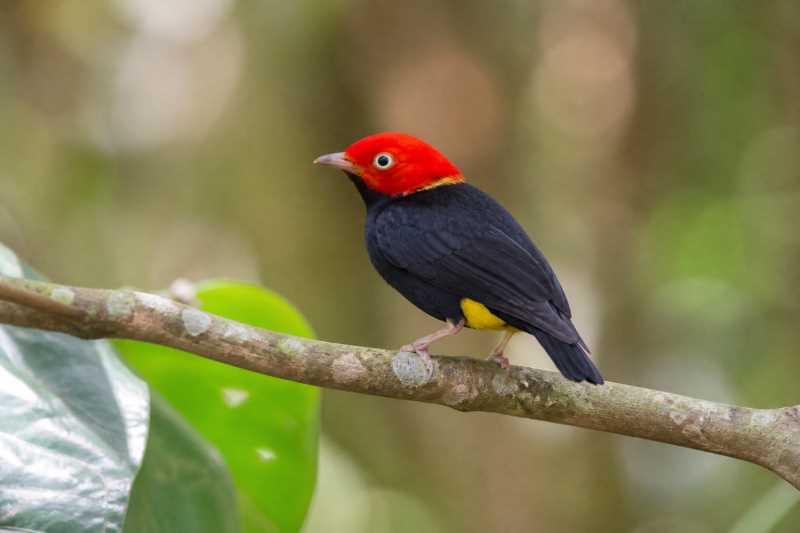
The male Round-tailed Manakin is particularly striking with its vivid plumage. It boasts a brilliant red crown, contrasting with its otherwise black body. The species gets its name from the distinctive round tail feathers, which are more pronounced in males. Females, on the other hand, are more subdued in coloration, with olive-green feathers that provide excellent camouflage against the forest canopy.
Habitat and Distribution
Round-tailed Manakins inhabit tropical and subtropical moist lowland forests. They are found across a range of altitudes but prefer the dense understory of mature forests. Their distribution is mainly concentrated in the Amazon Basin, which provides the ideal habitat with its humid climate and abundant food sources.
Behavior and Diet
These manakins are known for their frugivorous diet, primarily feasting on a variety of fruits. Their feeding habits play a significant role in seed dispersal, contributing to the health and regeneration of their forest habitats. Additionally, Round-tailed Manakins are occasionally known to consume insects, particularly during the breeding season when their nutritional needs increase.
Reproductive Behavior
One of the most fascinating aspects of the Round-tailed Manakin is its courtship display. Males perform elaborate dances and calls to attract females, often gathering in communal lekking sites. These displays involve acrobatic movements and vocalizations that are both a visual and auditory spectacle. The success of these displays often determines mating opportunities, making them a critical aspect of the species’ reproductive strategy.
Conservation Status
Currently, the Round-tailed Manakin is listed as a species of Least Concern by the International Union for Conservation of Nature (IUCN). However, ongoing threats such as habitat destruction and fragmentation could pose risks to their populations. Conservation efforts are essential to preserve their natural habitats and ensure the species’ long-term survival.
Ecological Importance
As key players in their ecosystems, Round-tailed Manakins contribute significantly to forest dynamics. Their role in seed dispersal helps maintain plant diversity and forest structure. Moreover, their presence indicates a healthy, functioning ecosystem, highlighting the importance of conservation efforts to protect these vibrant birds and their habitats.
Research and Studies
Numerous studies have focused on the Round-tailed Manakin, offering insights into its behavior, ecology, and genetics. Research has revealed the complexities of their mating systems and the evolutionary pressures that shape their vibrant displays. Ongoing studies aim to understand the impacts of environmental changes on their populations and to develop effective conservation strategies.
Conclusion
The Round-tailed Manakin stands as a symbol of the rich biodiversity found in South America’s tropical forests. Its vibrant plumage and intriguing behaviors continue to captivate those fortunate enough to observe it in the wild. Protecting this species and its habitat is crucial for maintaining the ecological balance and biodiversity of the regions they inhabit.
References
- Snow, D. W. (2004). Family Pipridae (Manakins). In: del Hoyo, J., Elliott, A., & Christie, D. (Eds.), Handbook of the Birds of the World. Vol. 9. Cotingas to Pipits and Wagtails. Lynx Edicions.
- Ridgely, R. S., & Tudor, G. (2009). Field Guide to the Songbirds of South America: The Passerines. University of Texas Press.
- BirdLife International. (2021). Ceratopipra chloromeros. The IUCN Red List of Threatened Species 2021.
Meta Title
"Round-tailed Manakin: Forest Jewel of South America"
Meta Description
"Explore the vibrant life of the Round-tailed Manakin, a key species in South America’s forests, known for its unique displays and ecological importance."
Related posts