The Greater Adjutant: A Majestic Yet Endangered Bird
Among the world’s most striking and endangered birds is the Greater Adjutant (Leptoptilos dubius), a member of the stork family that commands attention with its imposing stature and distinctive appearance. Standing over five feet tall with a wingspan reaching up to eight feet, this bird is a remarkable sight, yet its numbers are dwindling, making conservation efforts increasingly pressing.
Distribution and Habitat
Historically, the Greater Adjutant was found across South and Southeast Asia. However, its distribution has significantly contracted, and now only two small breeding populations remain: one in Assam, India, and the other in Cambodia. The bird prefers wetland habitats, including marshes, riverbanks, and the edges of lakes, but it is also commonly found scavenging in urban garbage dumps, which has become a crucial, albeit unhealthy, food resource due to habitat loss.
Physical Characteristics
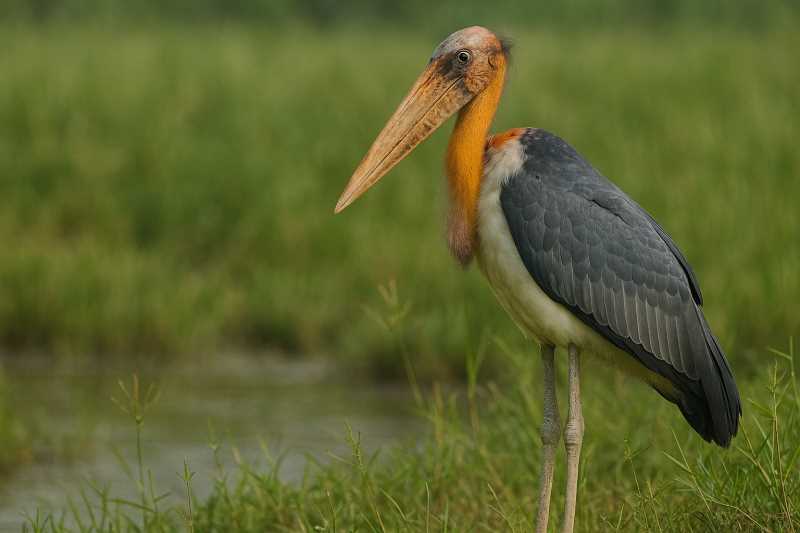
The Greater Adjutant is easily identifiable by its bald head and neck, which sport a pinkish hue that contrasts with its dark plumage. Its massive bill and drooping neck pouch are reminiscent of vultures, highlighting its scavenger lifestyle. The bird’s long, slender legs further enhance its ability to wade through wetlands in search of food.
Diet and Feeding Behavior
An opportunistic feeder, the Greater Adjutant primarily scavenges, often consuming carrion and waste. This diet has led to its reputation as a “clean-up crew” in its native ecosystems. However, it also preys on small vertebrates and invertebrates. Its presence in urban dumps poses health risks, as these areas often contain toxic waste materials.
Conservation Status and Threats
The International Union for Conservation of Nature (IUCN) classifies the Greater Adjutant as “Endangered,” with estimates suggesting fewer than 1,000 mature individuals remain in the wild. The primary threats to its survival include habitat destruction, pollution, and human encroachment. The drainage of wetlands for agriculture and urban development has significantly reduced suitable habitats, while pollution, particularly in urban areas, poses additional risks.
Conservation Efforts and Challenges
Conservationists have implemented various strategies to protect and revive Greater Adjutant populations. In Assam, India, local communities have become pivotal in conservation efforts. Initiatives led by grassroots organizations, such as the Hargila Army, have focused on raising awareness, protecting nesting sites, and involving local women in conservation activities. These efforts have resulted in increased breeding success and community support.
In Cambodia, conservationists work to protect critical habitats and reduce human-wildlife conflict. Education and community engagement are key components, ensuring that local populations understand the importance of preserving this species.
Despite these efforts, challenges remain. The bird’s reliance on human refuse sites for food is unsustainable and poses long-term health risks. Additionally, the destruction of wetlands continues to threaten the Greater Adjutant’s natural habitat.
The Global Significance of Conservation
The conservation of the Greater Adjutant is significant not only for biodiversity but also for the broader ecological implications. As a scavenger, the bird plays a crucial role in maintaining ecosystem health by disposing of carrion and organic waste, thus preventing the spread of disease. Its decline could disrupt these natural processes, leading to unforeseen ecological consequences.
Moreover, the Greater Adjutant serves as an indicator species, reflecting the health of the ecosystems it inhabits. Its conservation can lead to broader environmental benefits, including the preservation of wetlands and the myriad species that depend on these habitats.
Future Directions and Hope
Looking forward, a multifaceted approach will be essential for the continued survival of the Greater Adjutant. Strengthening international collaboration, enhancing habitat protection, and promoting sustainable development in areas surrounding key habitats are vital steps. Additionally, continued community engagement and education will empower local populations to take ownership of conservation efforts.
Research into alternative food sources and habitat restoration can also provide viable solutions to reduce the bird’s dependence on harmful environments. With sustained effort, the Greater Adjutant can serve as a success story in biodiversity conservation, demonstrating the impact of collective action in preserving our planet’s natural heritage.
In conclusion, the Greater Adjutant is more than just an endangered bird; it is a symbol of the challenges and triumphs of conservation. By working together, we can ensure that future generations will have the opportunity to witness this majestic bird in its natural habitat.
This is one of the species covered in one of the books in our Kings Birds of the world series, Storks Of The World.

Related posts