The Red-crested Korhaan: A Jewel of the African Savanna
The African savanna is a vibrant tapestry of life, hosting an array of species that contribute to its dynamic ecosystem. Among these, the Red-crested Korhaan (Lophotis ruficrista) stands out as a remarkable avian inhabitant, captivating birdwatchers and ornithologists alike with its unique behaviors and striking appearance. This article delves into the fascinating world of the Red-crested Korhaan, exploring its habitat, behavior, and the challenges it faces in the wild.
Habitat and Distribution
The Red-crested Korhaan is primarily found across the southern regions of Africa, including countries such as South Africa, Namibia, Botswana, and Zimbabwe. It favors open woodlands, savannas, and grasslands, environments that provide both cover and ample feeding opportunities. Its preference for these habitats is tied to its diet and breeding strategies, which rely heavily on the abundance of insects and seeds found in these areas.
This bird’s range is generally dictated by the availability of suitable terrain, often avoiding densely forested areas or overly arid regions. The Red-crested Korhaan’s adaptability to various savanna ecosystems highlights its ecological versatility, allowing it to thrive in both protected reserves and areas that intersect with human activity.
Physical Characteristics
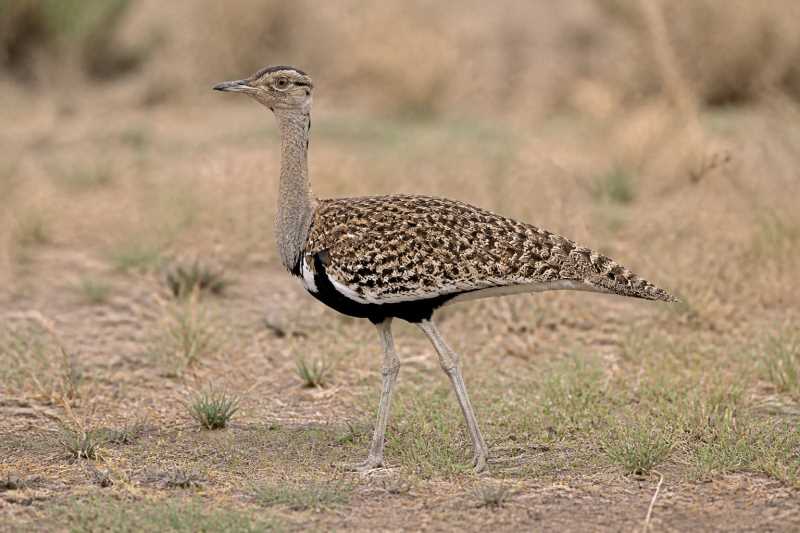
The Red-crested Korhaan is a medium-sized bird, with males typically measuring around 50 centimeters in length. It is renowned for its striking plumage, particularly the prominent red crest that adorns the male’s head during the breeding season. This crest is not only a visual cue for attracting mates but also a symbol of the bird’s health and vitality.
The bird’s body is covered in a blend of brown, black, and white feathers, providing excellent camouflage against the savanna backdrop. This cryptic coloration is essential for avoiding predators, as it allows the bird to blend seamlessly into its surroundings when foraging on the ground.
Behavior and Diet
One of the most fascinating aspects of the Red-crested Korhaan is its courtship display, which is a spectacle of both sight and sound. During the breeding season, males perform an elaborate display flight, ascending rapidly into the air before plummeting back to the ground with a series of loud, resonant calls. This dramatic display is designed to attract females and establish dominance over other males.
The diet of the Red-crested Korhaan is predominantly insectivorous, feeding on a wide variety of insects, including grasshoppers, beetles, and termites. However, it is also known to consume seeds and small reptiles, showcasing its opportunistic feeding habits. This varied diet ensures that the Red-crested Korhaan can sustain itself throughout the year, even when certain food sources become scarce.
Breeding and Reproduction
Breeding occurs during the rainy season when food is most plentiful, allowing the chicks the best chance of survival. The Red-crested Korhaan is a ground-nesting bird, with the female constructing a simple nest in a shallow scrape, often lined with leaves or grass. She typically lays two to three eggs, which are incubated for about 22 days.
After hatching, the chicks are precocial, meaning they are relatively mature and mobile shortly after birth. This adaptation is crucial for their survival, as it allows them to quickly follow their mother to feeding sites and escape potential threats. The female takes on the primary role of rearing the young, guiding them to food and teaching them essential survival skills.
Conservation Status and Threats
Currently, the Red-crested Korhaan is listed as "Least Concern" by the International Union for Conservation of Nature (IUCN). However, like many species, it faces ongoing threats that could impact its populations in the future. Habitat destruction, primarily due to agricultural expansion and human settlement, poses the most significant threat. Additionally, climate change and increased frequency of droughts could alter the savanna ecosystems that the korhaan depends on.
Conservation efforts are essential to ensure the long-term survival of the Red-crested Korhaan. Protected areas and reserves play a crucial role in safeguarding their habitats, while community-based conservation initiatives can help mitigate the impact of human activities.
Conclusion
The Red-crested Korhaan is a testament to the rich biodiversity of the African savanna. Its striking appearance and fascinating behaviors make it a subject of interest for both scientific study and ecotourism. By understanding and addressing the challenges it faces, we can contribute to the preservation of this remarkable bird and the ecosystems it inhabits. As we continue to explore and appreciate the natural world, the Red-crested Korhaan serves as a reminder of the intricate balance that sustains life on our planet.
Related posts