Northern Sooty Woodpecker: An Enigmatic Avian Marvel
The Northern Sooty Woodpecker, scientifically known as Mulleripicus funebris, is a captivating species that captivates bird enthusiasts and ornithologists alike. This bird, renowned for its distinctive appearance and unique behaviors, occupies a special niche in the biodiversity of the Philippines. As a member of the Picidae family, it shares certain characteristics with its woodpecker relatives, yet it stands out due to its remarkable adaptations and habitat preferences.
Taxonomy and Distribution
The Northern Sooty Woodpecker belongs to the genus Mulleripicus, which comprises large woodpeckers native to Southeast Asia. M. funebris is endemic to the Philippines, with its range primarily restricted to the northern part of the archipelago. It inhabits the islands of Luzon, Mindoro, and several smaller islets, favoring lowland and montane forests where it can find ample food and shelter.
Physical Characteristics
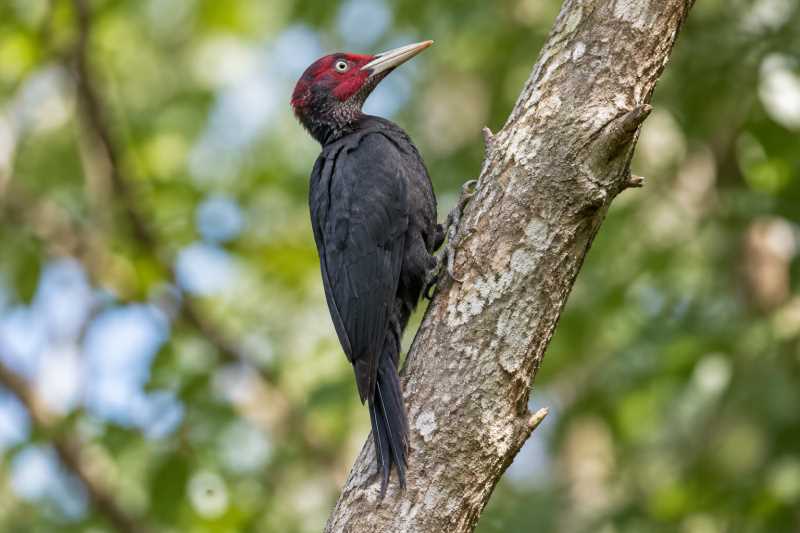
The Northern Sooty Woodpecker is a robust bird, measuring approximately 30 to 36 centimeters in length. Its plumage is predominantly black, which gives it the ‘sooty’ moniker. This dark coloration provides excellent camouflage against the tree trunks where it spends much of its time. The bird’s beak is long and chisel-like, a perfect adaptation for its specialized feeding habits.
One of the most striking features of this woodpecker is its red crown, which is more pronounced in males. This vibrant splash of color is not only a distinguishing characteristic but also plays a role in courtship and territorial displays. The bird’s feet are zygodactyl, with two toes facing forward and two backward, an arrangement that aids in gripping tree bark while climbing.
Behavior and Ecology
The Northern Sooty Woodpecker is primarily insectivorous, feeding on ants, beetles, and larvae found beneath the bark of trees. It uses its powerful beak to drill into wood, creating cavities that expose its prey. In addition to its role in pest control, this behavior is crucial for the ecology of its habitat, as it helps in the aeration of tree trunks and promotes the decay process that is vital for forest health.
These woodpeckers are also known for their loud drumming, a behavior used to communicate with potential mates and defend their territory. The drumming, combined with their vocal calls, creates a distinct soundscape in their forest environment. Moreover, the Northern Sooty Woodpecker exhibits monogamous pair bonds, with both parents involved in raising their young.
Habitat and Conservation
The preferred habitat of the Northern Sooty Woodpecker includes primary and secondary forests, where it finds mature trees necessary for foraging and nesting. However, deforestation and habitat fragmentation pose significant threats to its survival. As the forests of the Philippines continue to be logged and converted for agriculture and urban development, the woodpecker’s natural habitat diminishes.
According to the International Union for Conservation of Nature (IUCN), the Northern Sooty Woodpecker is currently listed as Near Threatened. Conservation efforts are crucial to preserve this species, focusing on habitat protection and reforestation projects. Environmental organizations and local communities are working together to create awareness and implement sustainable practices that can help mitigate the impact of human activities on these birds.
Cultural Significance
In the regions where it is found, the Northern Sooty Woodpecker holds cultural significance. It is often featured in local folklore and is considered a symbol of resilience and adaptability. Efforts to conserve this bird are intertwined with preserving the cultural heritage of the indigenous communities that share its habitat.
Research and Future Directions
Continued research is essential to fully understand the ecology and behavior of the Northern Sooty Woodpecker. Studies focusing on its breeding patterns, feeding ecology, and habitat requirements can provide valuable insights that inform conservation strategies. Additionally, citizen science initiatives, where birdwatchers contribute to data collection, can enhance our knowledge and raise awareness about the importance of this species.
In conclusion, the Northern Sooty Woodpecker is a fascinating bird that embodies the beauty and complexity of the Philippine forests. Protecting this species is not only crucial for maintaining biodiversity but also for preserving the ecological balance and cultural richness of the regions it inhabits. Collective efforts in research, conservation, and education are vital to ensure that future generations can continue to marvel at this enigmatic avian marvel.
Related posts