Introduction
The Moluccan Brush Cuckoo, scientifically known as Cacomantis aeruginosus, is a captivating bird species native to the Maluku Islands, an archipelago in eastern Indonesia. This bird, a member of the Cuculidae family, is a remarkable representative of the diverse avian life found in this region. With its distinctive calls and intriguing behaviors, the Moluccan Brush Cuckoo offers a fascinating subject for ornithologists and bird enthusiasts alike.
Taxonomy and Classification
The Moluccan Brush Cuckoo belongs to the genus Cacomantis, which comprises several other species of cuckoos found throughout Asia and Australasia. Its specific epithet, "aeruginosus," refers to the bird’s rust-colored or bronze-like plumage, which is a distinguishing feature among its relatives. The cuckoo family, Cuculidae, is known for its diverse range of species, many of which exhibit brood parasitism—a reproductive strategy where they lay their eggs in the nests of other birds.
Physical Description
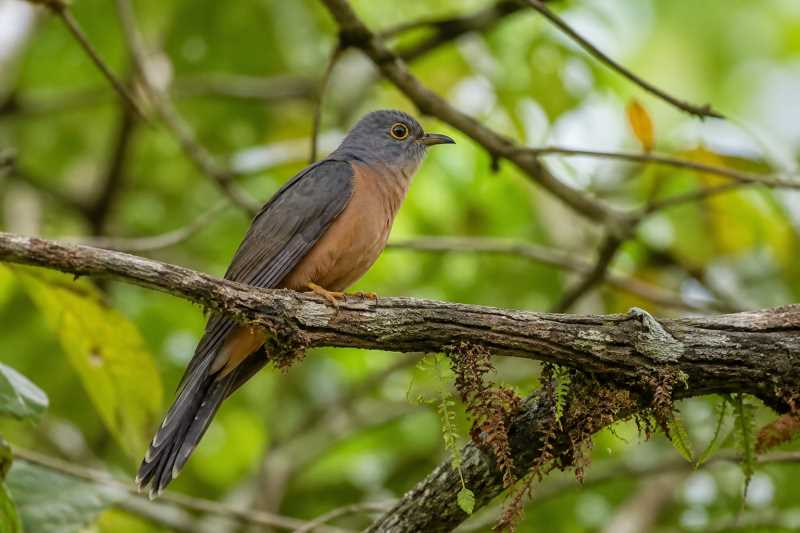
The Moluccan Brush Cuckoo is a medium-sized bird, measuring approximately 22 to 26 centimeters in length. Its plumage features a rich blend of colors, primarily consisting of shades of brown and gray with a characteristic bronze or coppery sheen. The underparts are usually paler, providing a striking contrast to the darker upper body. The bird’s eyes are surrounded by a ring of bare skin, which can vary in color from yellow to red, further enhancing its distinctive appearance.
The cuckoo’s wings are well-adapted for flight, enabling it to maneuver skillfully through the dense forest canopies where it resides. Its tail is long and rounded, aiding in balance and agility as it navigates its arboreal habitat.
Habitat and Distribution
The Moluccan Brush Cuckoo is endemic to the Maluku Islands, specifically inhabiting the lowland and montane forests of these islands. It prefers dense, humid environments where it can find both cover and food. The islands’ tropical climate, characterized by high humidity and consistent rainfall, provides an ideal setting for this species.
Its distribution is largely restricted to the islands of Halmahera, Seram, Buru, and several smaller surrounding islets. Within these areas, the cuckoo can be found from sea level up to elevations of about 1,500 meters, although it is more commonly observed at lower altitudes.
Behavior and Ecology
The Moluccan Brush Cuckoo is known for its elusive behavior, often remaining hidden within the dense foliage of the forest. It is primarily a solitary bird, although pairs may be seen during the breeding season. Its diet consists mainly of insects and small invertebrates, which it forages for among the leaves and branches of trees.
One of the most intriguing aspects of the Moluccan Brush Cuckoo’s behavior is its vocalizations. The bird produces a series of melodious and repetitive calls, which are used for communication and territorial defense. These calls are often heard echoing through the forests, providing a critical means of identification for birdwatchers who may find visual sightings challenging due to the bird’s secretive nature.
Reproduction and Life Cycle
Like many cuckoo species, the Moluccan Brush Cuckoo is a brood parasite. This means it lays its eggs in the nests of other bird species, leaving the unwitting hosts to incubate and rear its young. The cuckoo’s eggs often resemble those of the host species, reducing the likelihood of detection and rejection by the host.
Upon hatching, the cuckoo chick may exhibit aggressive behavior towards the host’s offspring, often pushing them out of the nest to monopolize the food supply provided by the unsuspecting foster parents. This parasitic strategy allows the Moluccan Brush Cuckoo to invest more energy in producing eggs and less in parental care.
Conservation Status and Threats
As of the latest assessments, the Moluccan Brush Cuckoo is not listed as a threatened species. However, like many island-dwelling birds, it faces potential risks from habitat loss and degradation. The deforestation of the Maluku Islands, driven by logging and agricultural expansion, poses a significant threat to the habitats of many endemic species, including the Moluccan Brush Cuckoo.
Conservation efforts must focus on preserving the remaining tracts of native forest and mitigating the impacts of human activities. Sustainable land-use practices and the establishment of protected areas are crucial for the long-term survival of this and other endemic species.
Cultural Significance
Birds play an important role in the cultural heritage of the Maluku Islands, where they are often featured in folklore and traditional practices. The Moluccan Brush Cuckoo, with its distinctive calls and behaviors, is no exception. Understanding and appreciating the ecological and cultural value of this species can enhance conservation efforts and foster a deeper connection between local communities and their natural environment.
Conclusion
The Moluccan Brush Cuckoo stands as a symbol of the unique biodiversity found in the Maluku Islands. Its fascinating behaviors, coupled with the challenges it faces, underscore the importance of conservation and research efforts in this region. Protecting the habitats of the Moluccan Brush Cuckoo and other endemic species is essential for maintaining the ecological balance and preserving the rich natural heritage of these islands.
Through continued study and conservation initiatives, we can ensure that the Moluccan Brush Cuckoo remains an integral part of the Maluku Islands’ ecosystem for future generations to appreciate and enjoy.
Related posts