Introduction
The Malagasy Palm Swift, Cypsiurus gracilis, is a small swift in the family Apodidae. Formerly treated as part of the African Palm Swift, it is now recognised as a separate species based on differences in vocalisations, plumage and tail structure. It occurs mainly in Madagascar and the Comoros, where it is closely associated with palms and other open, warm habitats.
Physical Description
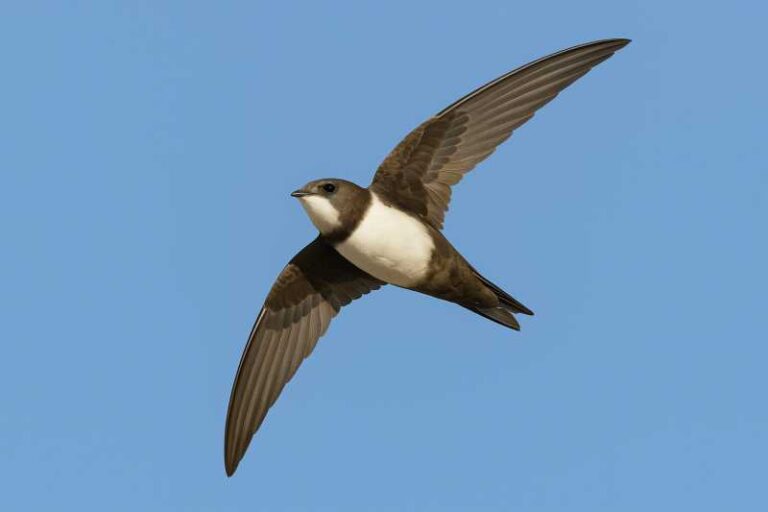
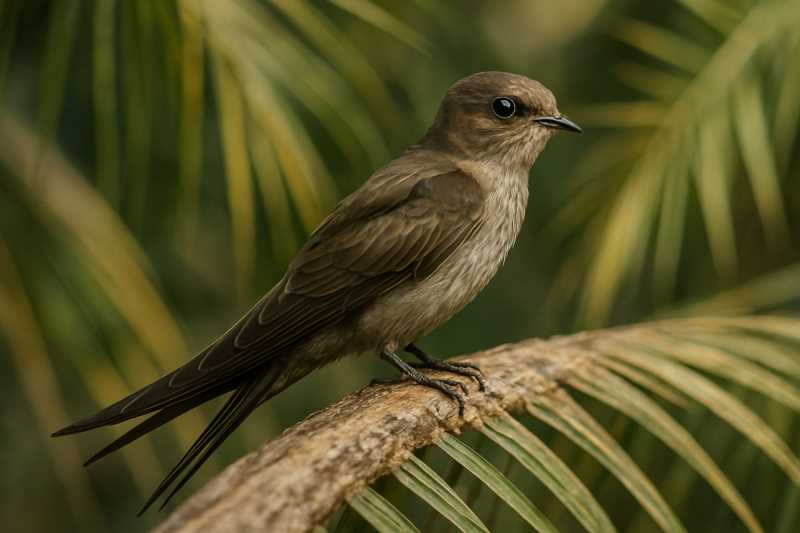
The Malagasy Palm Swift is a slender, streamlined bird with long, narrow, swept-back wings and a deeply forked tail. It is generally about 13 to 16 centimetres long, although published measurements vary. The plumage is mostly greyish or muted brown, with paler underparts.
Compared with the African Palm Swift, it has heavier dark markings on the throat and upper breast, a paler belly and shorter tail extensions. The sexes are not known to show strong external differences. Juveniles are likely to appear duller and may have less developed tail streamers, but detailed age-related descriptions are limited.
Range and Habitat
The Malagasy Palm Swift is a resident of Madagascar and the Comoros. In Madagascar, it is widespread and locally common, particularly in lowland areas and open secondary vegetation. It is associated with cultivated and native palms, palm savanna, lightly wooded country, villages and other disturbed habitats where suitable nesting palms are available.
The species is not considered migratory. Although it may be seen around forest edges and in some upland localities, it is generally more closely associated with lowland and open habitats than with intact montane forest. Its dependence on palms for nesting makes the availability of suitable palm stands an important local consideration.
Where to See This Species
Marojejy National Park, Sava Region, Madagascar
The Malagasy Palm Swift is included in the bird list for Marojejy National Park. It may be encountered flying over villages, forest margins and open areas around the park, particularly where palms and other suitable feeding habitats occur. Sightings may also be possible along access routes and around settlements outside the forest interior.
Nearby accommodation: Andapa is the main gateway settlement, with guest houses, small hotels and other visitor accommodation used by people visiting Marojejy.
Amber Mountain National Park, Diana Region, Madagascar
The species is documented in bird checklists for Amber Mountain. Look for it over open clearings, park margins, palms and settled areas around the northern highlands. Its fast, buoyant flight can make it easier to detect in open airspace than within dense forest.
Nearby accommodation: Joffreville is the practical gateway village, with lodges, guest houses and small hotels serving visitors to the park.
Masoala National Park, Sava Region, Madagascar
The Malagasy Palm Swift is recorded for Masoala National Park. The best prospects are likely to be around coastal clearings, villages, gardens, forest edges and other places where palms occur, rather than in closed rainforest alone. It may be seen feeding over open areas near the park’s settlements and access points.
Nearby accommodation: Maroantsetra is the principal gateway to the Masoala region, with hotels, guest houses, lodges and other visitor accommodation.
Behaviour and Diet
The Malagasy Palm Swift spends much of its time in flight, using rapid, agile movements to pursue flying insects. Its diet is insectivorous and includes small airborne insects, although the available species-level information does not support a detailed breakdown of prey types.
It may forage alone, in pairs or in small groups, and can gather where flying insects are concentrated. The species is closely tied to palms for nesting, and palm leaves provide the characteristic support used by palm swifts. Detailed information about clutch size, incubation and breeding timing in the Malagasy Palm Swift remains limited, so specific claims about the number of eggs or the length of the breeding season should be treated cautiously.
Identification Tips
- Look for a small, pale brown or grey-brown swift with a slim body, long swept-back wings and a deeply forked tail.
- Watch the bird’s fast, erratic flight over palms, villages, clearings and open woodland.
- The tail may appear pointed when closed, but the deep fork becomes more obvious when the bird turns or brakes.
- The Malagasy Palm Swift is generally paler below, with stronger dark markings on the throat and upper breast than the African Palm Swift.
- In Madagascar, do not confuse it with larger, darker swifts such as the Malagasy Black Swift. The palm swift is more strongly associated with palms and has a particularly slender silhouette with a long forked tail.
Conservation Status
The Malagasy Palm Swift is listed as Least Concern on the IUCN Red List. The population has not been quantified, but it is considered widespread, common in much of its range and stable according to the current assessment.
The species is associated with cultivated palms and secondary vegetation, which may help it persist in modified landscapes. Nevertheless, the loss of native vegetation, removal of nesting palms and broader habitat degradation remain potential local pressures. Protecting palm-rich habitats and maintaining connected areas of natural and semi-natural vegetation are appropriate conservation measures.
Frequently Asked Questions
Where does the Malagasy Palm Swift live?
It occurs mainly in Madagascar and the Comoros. In Madagascar, it is found in lowland and open habitats, including palm stands, secondary vegetation, forest margins, villages and lightly wooded areas.
Is the Malagasy Palm Swift migratory?
No. It is considered a resident species rather than a migrant, although individuals may move locally in response to food availability and suitable habitat.
What does the Malagasy Palm Swift eat?
It feeds on small flying insects caught in the air. Like other swifts, it is adapted for aerial foraging and spends much of its active time flying.
How can the Malagasy Palm Swift be identified?
Look for a small, slender swift with long swept-back wings, a deeply forked tail, muted brown or grey-brown plumage and relatively pale underparts. It is often seen flying around palms and open areas.
Does the Malagasy Palm Swift nest in palm trees?
Yes. Palm swifts are closely associated with palms for nesting, and the Malagasy Palm Swift uses palm foliage as part of its nesting habitat. Detailed breeding information for this species is still limited.
What is the conservation status of the Malagasy Palm Swift?
The species is currently assessed as Least Concern. Its range is large and its population is thought to be stable, although local habitat loss and the removal of suitable palms may affect some populations.
References
- BirdLife International and IUCN Red List of Threatened Species
- Bulletin of the British Ornithologists’ Club
- Marojejy National Park
Related posts