The Little Woodpecker: A Detailed Insight into Veniliornis passerinus
The Little Woodpecker, scientifically known as Veniliornis passerinus, is a fascinating avian species renowned for its vibrant appearance and unique behaviors. Found predominantly in the forests of South America, this bird is a testament to nature’s ability to adapt and thrive in diverse environments. This article delves into the various aspects of the Little Woodpecker, including its habitat, physical characteristics, behavior, diet, and conservation status.
Habitat and Distribution
The Little Woodpecker is native to the tropical and subtropical forests of South America, with a range that extends across Brazil, Paraguay, and Argentina. These birds prefer environments that provide ample tree cover, as they rely heavily on trees for nesting and feeding. They are commonly found in both primary and secondary forests, demonstrating their adaptability to varying degrees of habitat degradation. Despite being primarily forest dwellers, Little Woodpeckers have also been observed in wooded savannas and urban areas with sufficient tree cover.
Physical Characteristics
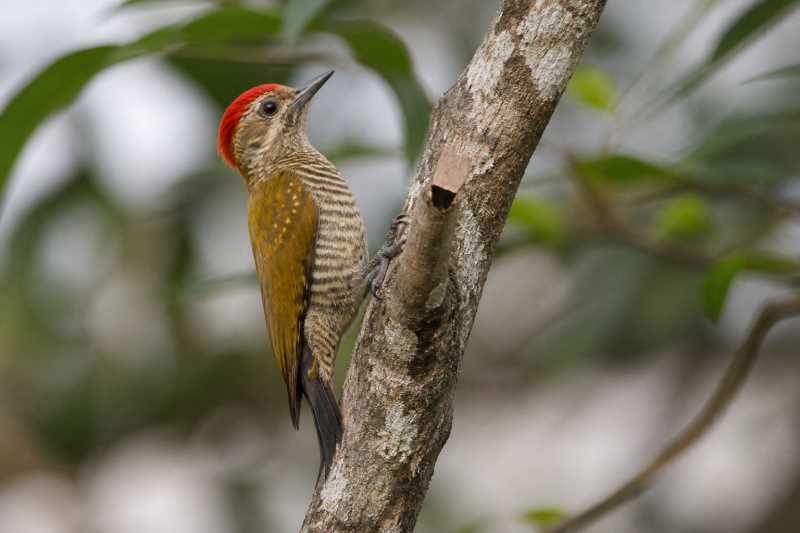
Veniliornis passerinus is a small woodpecker species, measuring approximately 15 to 18 centimeters in length and weighing around 30 to 40 grams. The bird’s plumage is predominantly olive-brown, with a distinctive pattern of white barring on the wings and tail. The underparts are lighter, often displaying a pale yellow or whitish hue. Males can be distinguished from females by the presence of a red crown, a feature that is absent in females. This sexual dimorphism is common among many woodpecker species and plays a role in mate attraction.
Behavior and Social Structure
Little Woodpeckers are diurnal birds, spending most of their active hours foraging for food. They are known for their characteristic drumming behavior, which involves rapid pecking on tree trunks to communicate with other woodpeckers and establish territories. This drumming also helps them locate insects beneath the bark. Despite their territorial nature, Little Woodpeckers are generally solitary or found in pairs. During the breeding season, however, they may form small family groups.
Diet and Foraging
The diet of the Little Woodpecker primarily consists of insects and other invertebrates, which they extract from tree bark using their specialized beaks. They are adept at foraging on tree trunks and branches, often using their tails for support as they navigate vertically on trees. In addition to insects, they may also consume fruits and seeds, particularly in areas where insect availability is low. This opportunistic feeding behavior allows them to adapt to seasonal variations in food supply.
Reproduction and Lifespan
Breeding season for Little Woodpeckers typically occurs during the rainy months when food is abundant. The species is monogamous, with pairs forming long-term bonds. Both males and females participate in nest excavation, choosing sites within dead trees or branches. The nesting cavity is lined with wood chips, providing a soft bed for the eggs. A typical clutch consists of 2 to 4 white eggs, which are incubated by both parents. The chicks are altricial, meaning they are born blind and helpless, requiring extensive parental care until they fledge.
Conservation Status
Currently, the Little Woodpecker is classified as a species of Least Concern by the International Union for Conservation of Nature (IUCN). This status reflects their relatively stable population across a wide geographical range. However, like many forest-dependent species, they are vulnerable to habitat loss due to deforestation and land conversion for agriculture. Conservation efforts aimed at preserving forest habitats are crucial for ensuring the long-term survival of this species.
Conclusion
The Little Woodpecker is a remarkable example of avian adaptation, thriving in diverse environments across South America. Its ability to exploit a variety of food sources and habitats underscores the importance of preserving natural ecosystems. By understanding and appreciating the unique characteristics and behaviors of Veniliornis passerinus, we can foster greater awareness and support for conservation initiatives that protect these and other vital forest inhabitants.
References
- BirdLife International. (2023). Species factsheet: Veniliornis passerinus.
- del Hoyo, J., Elliott, A., & Sargatal, J. (1992). Handbook of the Birds of the World. Vol. 7.
- Winkler, H., Christie, D.A., & Nurney, D. (1995). Woodpeckers: A Guide to the Woodpeckers of the World.
Further Reading
For more information on woodpeckers and their ecology, readers are encouraged to explore resources available through ornithological societies and conservation organizations dedicated to avian studies.
Related posts