The Mallee Emu-wren: A Profile of Conservation and Resilience
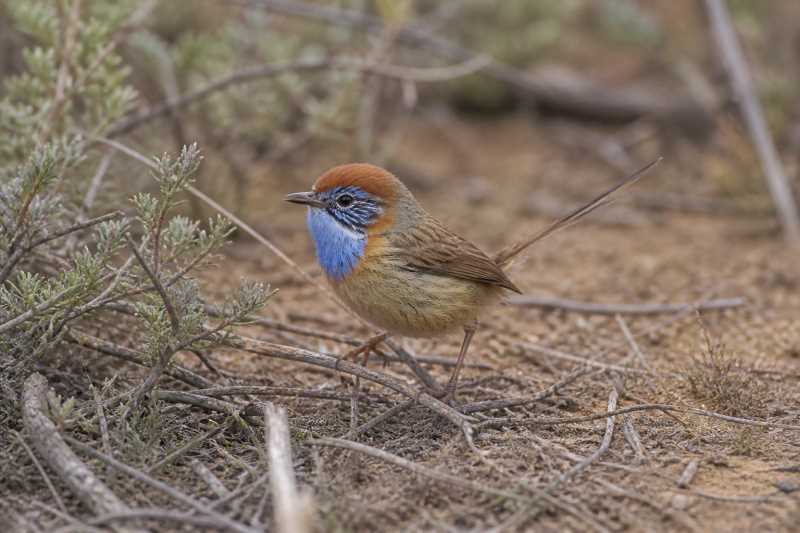
The Mallee Emu-wren (Stipiturus mallee) is a captivating species of bird endemic to Australia. This tiny bird, with its distinctive long, filamentous tail feathers reminiscent of an emu’s plumage, is a unique member of the Maluridae family. Found primarily in the mallee shrublands of southeastern Australia, the Mallee Emu-wren is not only a marvel of avian adaptation but also a species of significant conservation concern due to its vulnerable status.
Physical Description
The Mallee Emu-wren is a diminutive bird, measuring approximately 16.5 cm in length, with nearly half of that length comprised of its ornate tail feathers. Weighing in at just 5-6 grams, its light brown body is complemented by a pale underbelly and a striking blue facial patch that provides a splash of color against the subdued hues of its environment. Males and females are similar in appearance, although females tend to have slightly less prominent blue markings.
Habitat and Distribution
The preferred habitat of the Mallee Emu-wren is the dense, low-growing vegetation found within mallee ecosystems. These habitats are characterized by multi-stemmed eucalyptus trees interspersed with a diverse understory of shrubs, grasses, and herbs. The bird’s range is restricted primarily to the Murray Mallee region in northwestern Victoria and eastern South Australia. The fragmented nature of these habitats, exacerbated by human activities such as agriculture and urban development, poses a significant threat to the species’ survival.
Behavior and Diet
Mallee Emu-wrens are known for their secretive nature, often remaining hidden within the dense vegetation of their habitat. They are typically found in pairs or small family groups and are sedentary, rarely venturing far from their established territory. Their diet consists predominantly of small insects and invertebrates, which they forage for among the leaf litter and undergrowth. This dietary preference plays an essential role in the ecosystem, as they help control insect populations and contribute to the health of their habitat.
Breeding and Reproduction
Breeding activity for the Mallee Emu-wren peaks between August and November. During this time, pairs construct dome-shaped nests made from grasses and other plant materials, usually well-concealed within dense shrubbery. The female typically lays 2-3 eggs per clutch, which she incubates for about two weeks. Both parents are involved in feeding and caring for the chicks, which fledge approximately 10-12 days after hatching. The species’ reproductive success is closely tied to the availability of suitable habitat, emphasizing the importance of conservation efforts.
Conservation Status and Threats
The Mallee Emu-wren is currently listed as Vulnerable on the IUCN Red List, with habitat loss and degradation identified as the primary threats to its survival. The conversion of mallee habitats for agricultural purposes, coupled with the impacts of climate change, such as increased frequency and intensity of bushfires, pose significant challenges. Furthermore, the species’ fragmented distribution makes it particularly susceptible to local extinctions.
Conservation initiatives are underway to address these challenges. These include habitat restoration projects, fire management strategies, and public awareness campaigns aimed at highlighting the importance of preserving mallee ecosystems. Collaborative efforts between government agencies, conservation organizations, and local communities are crucial to ensuring the long-term survival of the Mallee Emu-wren.
The Role of Research and Monitoring
Ongoing research and monitoring are vital components of the conservation strategy for the Mallee Emu-wren. Studies focusing on the bird’s ecology, behavior, and genetics provide valuable insights into its needs and inform evidence-based conservation actions. Citizen science initiatives also play a role in gathering data, with birdwatchers and local volunteers contributing to the understanding of population trends and habitat use.
The Future of the Mallee Emu-wren
The future of the Mallee Emu-wren depends on sustained conservation efforts and a commitment to protecting its unique habitat. As a flagship species for the mallee ecosystem, its conservation not only benefits the Emu-wren but also the myriad of other species that share its environment. Through continued research, habitat protection, and community engagement, there is hope that the Mallee Emu-wren will remain a vibrant and integral part of Australia’s natural heritage.
Conclusion
The Mallee Emu-wren is a testament to the resilience and adaptability of wildlife in the face of adversity. Its conservation is a shared responsibility, requiring cooperation and dedication from all sectors of society. By safeguarding the delicate balance of the mallee ecosystems, we can ensure that future generations will have the opportunity to marvel at this remarkable bird.
Protecting the Mallee Emu-wren is not just about conserving a single species; it is about preserving the rich tapestry of life that these unique landscapes support. Through collective action and a shared vision for the future, we can make a meaningful difference in the fight against biodiversity loss.
Related posts