The Leaden Antwren: A Hidden Gem of the Amazonian Understory
In the verdant expanses of the Amazon rainforest, where biodiversity thrives in a symphony of life, the Leaden Antwren (Myrmotherula assimilis) occupies a unique niche. This small passerine bird, belonging to the Thamnophilidae family, is a testament to the intricate web of species that make the Amazon one of the most ecologically significant regions on the planet. In this article, we explore the Leaden Antwren’s habitat, behavior, and significance within its ecosystem, providing an in-depth look at this often-overlooked avian resident.
Habitat and Distribution
The Leaden Antwren is predominantly found in the Amazon Basin, with its range extending across several South American countries, including Brazil, Colombia, Ecuador, Peru, and Bolivia. It thrives in the humid, lowland rainforests typically below 500 meters in elevation. These birds are particularly associated with the forest understory, where they navigate through the dense foliage with remarkable agility.
The Amazon rainforest is known for its layered structure, and the understory represents a crucial habitat for many species. For the Leaden Antwren, this environment provides abundant resources, such as insects and spiders, which constitute the bulk of their diet. The dense vegetation offers protection from predators and harsh weather conditions, making it an ideal dwelling for these small birds.
Physical Characteristics
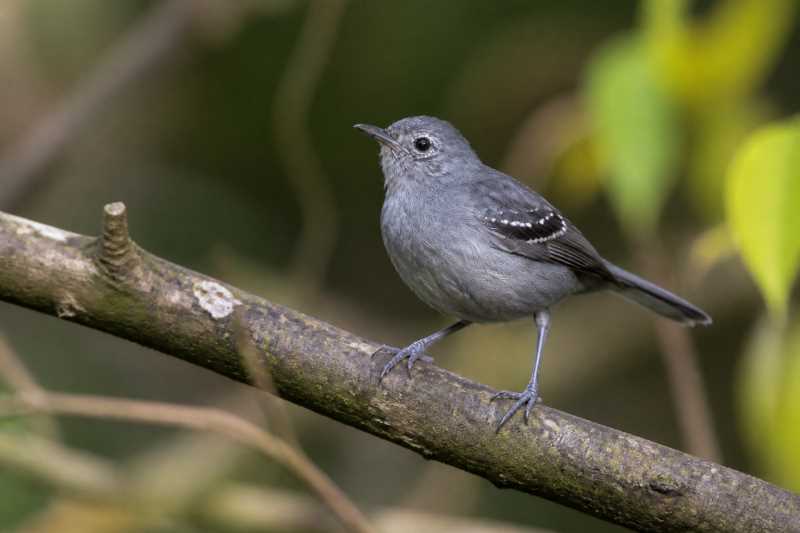
Measuring approximately 9 to 11 centimeters in length and weighing between 7 to 10 grams, the Leaden Antwren is a diminutive bird with distinctive features. The plumage of the male is predominantly leaden gray, hence its name, with subtle black markings on the wings and tail. The female, while similar in size, sports a more muted coloration with brownish tones, providing excellent camouflage against the forest backdrop.
Their small size and muted coloration enable them to blend seamlessly into the understory, a key adaptation that aids in avoiding predators. Their beak is slender and slightly curved, perfectly adapted for gleaning insects from leaves and bark.
Behavior and Ecology
Leaden Antwrens are known for their active foraging behavior. They often participate in mixed-species flocks, a common strategy among understory birds in the Amazon. By joining forces with other species, they increase their foraging efficiency and reduce the risk of predation. These flocks typically consist of various insectivorous birds, each occupying a slightly different ecological niche, minimizing direct competition while maximizing resource utilization.
The diet of the Leaden Antwren is primarily insectivorous, focusing on ants, beetles, and other small arthropods. Their foraging technique involves short, quick flights and agile movements through the foliage, using their keen eyesight to spot prey.
Leaden Antwrens are monogamous, and during the breeding season, pairs engage in cooperative nesting. The nest, a small cup-shaped structure, is often placed in the fork of a tree or shrub, well-hidden amidst the foliage. Both parents participate in incubation and feeding of the chicks, showcasing a strong pair bond and cooperative breeding behavior.
Conservation Status and Challenges
Despite residing in one of the world’s most biodiverse regions, the Leaden Antwren faces several conservation challenges. Habitat destruction due to deforestation poses a significant threat to their populations. The Amazon rainforest is under constant pressure from logging, agriculture, and infrastructure development, leading to habitat fragmentation and loss.
Climate change also presents a looming threat, potentially altering the delicate balance of the rainforest ecosystem. Changes in temperature and precipitation patterns can affect the availability of food resources and suitable nesting sites, putting additional stress on Leaden Antwren populations.
Currently, the Leaden Antwren is listed as a species of Least Concern by the International Union for Conservation of Nature (IUCN). However, ongoing habitat destruction could jeopardize their status if not addressed through effective conservation measures.
Importance in the Ecosystem
As insectivores, Leaden Antwrens play a critical role in controlling insect populations within the rainforest. Their foraging activities help maintain a balanced ecosystem, preventing outbreaks of herbivorous insects that could damage vegetation. Their participation in mixed-species flocks also exemplifies the complex interdependence among Amazonian bird species, contributing to the overall biodiversity and health of the rainforest.
The Leaden Antwren, like many other understory birds, serves as an indicator species for the health of the Amazon ecosystem. Changes in their population dynamics can reflect broader environmental shifts, making them valuable subjects for ecological research and conservation monitoring.
Conclusion
The Leaden Antwren, with its understated beauty and ecological importance, highlights the intricate tapestry of life within the Amazon rainforest. Protecting their habitat is not only crucial for their survival but also for maintaining the ecological integrity of one of the planet’s most vital natural resources. As researchers and conservationists continue to study and protect these birds, understanding and preserving the Leaden Antwren and its habitat will remain a priority in the broader effort to conserve the Amazon rainforest.
In conclusion, the Leaden Antwren is a small yet significant component of the Amazonian ecosystem, embodying the delicate balance and rich biodiversity that define this extraordinary region. Efforts to conserve their habitat will benefit countless other species, underscoring the interconnectedness of life in the rainforest.
Related posts