Knob-billed Fruit Dove: A Rare Gem of the Avian World
In the lush, verdant rainforests of the Solomon Islands, amidst the cacophony of chirping insects and rustling leaves, resides a bird so unique and elusive that it captivates ornithologists and bird watchers alike—the Knob-billed Fruit Dove (Ptilinopus insolitus). This rare avian species, with its distinctive features and critical ecological role, underscores the diversity and complexity of tropical ecosystems.
An Overview of the Knob-billed Fruit Dove
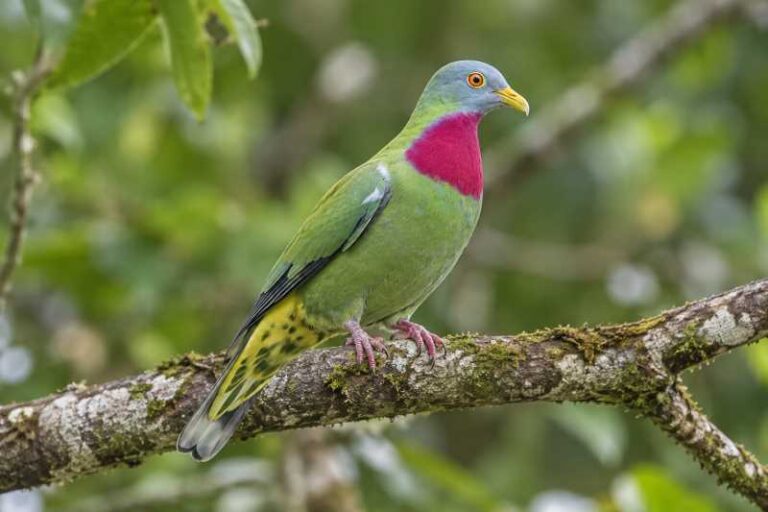
The Knob-billed Fruit Dove, first described in 1882 by Italian zoologist Tommaso Salvadori, is a member of the Columbidae family. Its scientific name, *Ptilinopus insolitus*, aptly reflects its unusual appearance and habits. The most striking feature of this bird is the prominent fleshy knob on its beak, a characteristic from which its common name is derived. This feature, combined with its vivid plumage, makes the Knob-billed Fruit Dove a subject of fascination and study.
Adult Knob-billed Fruit Doves measure approximately 22 to 24 centimeters in length and weigh around 90 to 120 grams. The plumage is predominantly green, providing excellent camouflage against the leafy backdrop of its habitat. This green is interspersed with patches of vibrant yellow and red, particularly around the crown and chest, giving the bird an almost regal appearance. The eyes are a striking orange-red, adding to the bird’s distinctive look.
Habitat and Distribution
The Knob-billed Fruit Dove is endemic to the Solomon Islands, primarily found on the islands of Choiseul, Bougainville, and Guadalcanal. Its preferred habitat is lowland and montane forests, where it can be found at elevations ranging from sea level to 1,200 meters. These birds are particularly fond of dense, humid environments where fruit-bearing trees are abundant.
Due to its limited range, the Knob-billed Fruit Dove is considered a near-threatened species. Deforestation, human encroachment, and climate change are significant threats to its habitat. As such, conservation efforts are critical to ensure the survival of this unique species.
Diet and Behavior
As its name suggests, the Knob-billed Fruit Dove primarily feeds on fruits. It plays a crucial ecological role as a seed disperser, aiding in the propagation of various tree species within its habitat. By consuming fruits and excreting the seeds far from the parent tree, these doves help maintain the health and diversity of their forest ecosystems.
The feeding habits of the Knob-billed Fruit Dove are fascinating. These birds are often seen foraging in the upper canopy, using their agility and strength to pluck fruits from branches. Their diet mainly consists of figs, berries, and other small fruits, but they are known to consume flowers and leaves on occasion.
In terms of behavior, the Knob-billed Fruit Dove is relatively shy and elusive. It tends to stay hidden within the dense foliage, making it a challenge to observe in the wild. However, during the breeding season, which typically occurs from October to February, these birds become more vocal and active. Their calls, a series of soft coos and whistles, can be heard echoing through the forest, signaling the start of courtship and nesting activities.
Reproduction and Lifespan
The breeding habits of the Knob-billed Fruit Dove are not extensively documented, but it is known that they build simple nests made of twigs and leaves, usually situated high in the trees to protect against predators. The female typically lays a single egg, which both parents take turns incubating for about 20 to 25 days.
Once hatched, the chick is cared for by both parents and fledges after approximately three weeks. The juvenile doves bear a resemblance to the adults but with duller plumage, which gradually brightens as they mature. The lifespan of the Knob-billed Fruit Dove in the wild is estimated to be around 8 to 10 years, although this can vary depending on environmental conditions and predation pressures.
Conservation Efforts
The Knob-billed Fruit Dove’s status as a near-threatened species has prompted various conservation initiatives. Efforts are being made to preserve its natural habitat through protected areas and sustainable land management practices. Additionally, local and international organizations are working to raise awareness about the importance of conserving this species and its habitat.
Captive breeding programs are also being considered as a means to bolster population numbers, although maintaining genetic diversity and natural behaviors in captivity poses challenges.
Conclusion
The Knob-billed Fruit Dove is a testament to the remarkable biodiversity found in the Solomon Islands. Its unique appearance, behavior, and ecological role make it a species worth protecting. As efforts continue to conserve its habitat and reverse population declines, this enigmatic bird serves as a reminder of the delicate balance within tropical ecosystems and the ongoing need for conservation action.
By understanding and appreciating the Knob-billed Fruit Dove, we not only contribute to its survival but also to the preservation of the rich biodiversity of our planet.
Related posts