Hemprich’s Hornbill: A Majestic Bird of the African Skies
The Hemprich’s Hornbill (Lophoceros hemprichii) is a captivating bird species belonging to the family Bucerotidae. Known for its striking appearance and unique behaviors, this hornbill is native to the arid and semi-arid regions of Northeast Africa, particularly Ethiopia, Eritrea, and parts of Somalia and Sudan. Its charismatic nature and ecological significance make it a subject of interest for ornithologists and bird enthusiasts alike.
Physical Characteristics
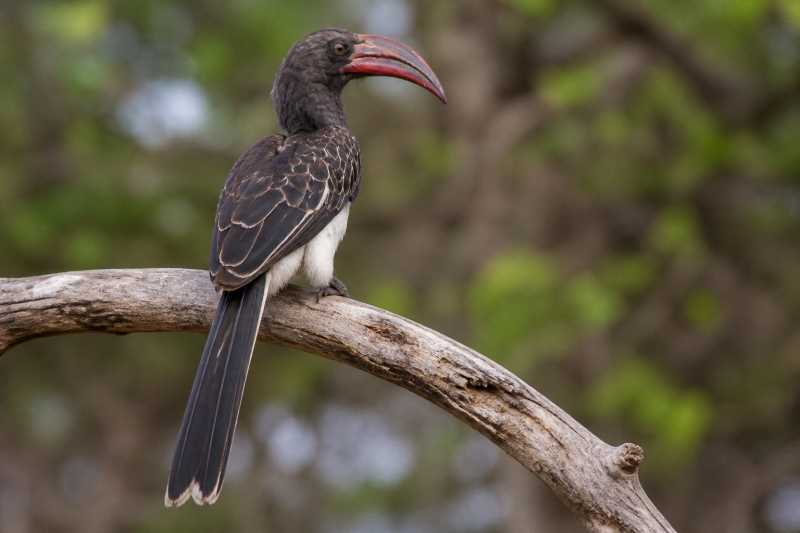
Hemprich’s Hornbill is a medium-sized bird, measuring approximately 50-60 cm in length. Its plumage is predominantly black, contrasting sharply with its striking white belly and tail feathers. The bird’s most distinguishing feature is its large, curved bill, which is yellow with a prominent casque on top. This casque is more pronounced in males, serving as a secondary sexual characteristic that is believed to play a role in mating displays and territorial disputes.
The eyes of Hemprich’s Hornbill are surrounded by a patch of bare skin, which is blue in males and pinkish in females. This bare skin, along with the bird’s striking casque, adds to its distinctive appearance. The species’ robust body and broad wings are well-adapted for its arboreal lifestyle, allowing it to maneuver through the complex forest canopy with ease.
Habitat and Distribution
Hemprich’s Hornbill inhabits the dry savannas, open woodlands, and mountainous regions of Northeast Africa. It shows a preference for areas with abundant large trees, which provide nesting sites and foraging opportunities. These hornbills are often seen in pairs or small family groups, although they may form larger flocks outside of the breeding season.
Their distribution is primarily concentrated in Ethiopia, Eritrea, and parts of Somalia and Sudan. Despite their relatively limited range, Hemprich’s Hornbills are adaptable birds that can thrive in a variety of habitats, from lowland savannas to highland forests.
Behavior and Diet
Hemprich’s Hornbill is diurnal, spending most of its day foraging for food. Its diet is omnivorous, consisting of fruits, seeds, insects, and small vertebrates. The bird’s strong bill is perfectly adapted for cracking open hard-shelled fruits and snatching prey from the ground or foliage.
During the breeding season, which typically occurs during the rainy months, these hornbills engage in elaborate courtship displays. Males present food to females as part of the courtship ritual, a behavior known as courtship feeding. This not only strengthens pair bonds but also demonstrates the male’s ability to provide for the family.
Hemprich’s Hornbills are cavity nesters, utilizing natural tree hollows to raise their young. The female seals herself inside the nest cavity, leaving only a small slit through which the male passes food. This unusual nesting strategy provides protection against predators and harsh weather conditions. Once the chicks are sufficiently developed, the female breaks out of the cavity, and the family forages together until the young are independent.
Conservation Status
Currently, Hemprich’s Hornbill is classified as "Least Concern" by the International Union for Conservation of Nature (IUCN). This status reflects its relatively stable population and adaptability to different habitats. However, like many other bird species, it faces threats from habitat destruction and fragmentation due to human activities such as agriculture, logging, and urbanization.
Conservation efforts aimed at preserving the natural habitats of Hemprich’s Hornbill are crucial for maintaining its populations. Protecting large tracts of forest and woodland, promoting sustainable land-use practices, and raising awareness about the ecological importance of these birds are all vital components of ensuring their long-term survival.
Ecological Significance
Hemprich’s Hornbill plays a significant role in its ecosystem as both a seed disperser and a predator. By consuming fruits and dispersing seeds through their droppings, these hornbills contribute to the regeneration of plant communities in their habitat. This mutualistic relationship between the hornbill and the forest plants is essential for maintaining biodiversity and ecosystem health.
Moreover, by preying on insects and small animals, Hemprich’s Hornbill helps control pest populations, thereby contributing to the ecological balance. Its presence is an indicator of a healthy ecosystem, highlighting the interconnectedness of species within its habitat.
Conclusion
Hemprich’s Hornbill is a remarkable bird that captivates with its striking appearance and fascinating behaviors. Its adaptability and ecological significance underscore the importance of conserving its natural habitats. By understanding and appreciating the vital role of Hemprich’s Hornbill in its ecosystem, we can work towards ensuring the preservation of this majestic bird and the rich biodiversity of Northeast Africa.
As we continue to study and observe these birds, they remind us of the intricate web of life that sustains our planet. Protecting Hemprich’s Hornbill is not just about saving a single species; it is about preserving the ecological heritage of an entire region, ensuring that future generations can enjoy the beauty and diversity of the natural world.
Related posts