The Mountain Peacock-Pheasant: A Jewel of the Montane Forests
The Mountain Peacock-Pheasant (Polyplectron inopinatum) is a spectacularly adorned bird, renowned for its striking plumage and elusive nature. This species, endemic to the montane forests of the Titiwangsa Range in Peninsular Malaysia, captivates ornithologists and bird enthusiasts alike with its vibrant appearance and complex behaviors. This article delves into the fascinating world of the Mountain Peacock-Pheasant, exploring its habitat, behavior, conservation status, and the challenges it faces in the modern world.
Habitat and Distribution
The Mountain Peacock-Pheasant resides in the montane forests of the central and northern parts of the Malay Peninsula, typically at elevations ranging from 800 to 1,800 meters. These forests, characterized by dense undergrowth and a moist, cool climate, provide the perfect sanctuary for this shy and secretive bird. The species’ preference for such specific altitudinal zones makes it highly vulnerable to habitat disturbances, which are becoming increasingly common.
Distinctive Appearance
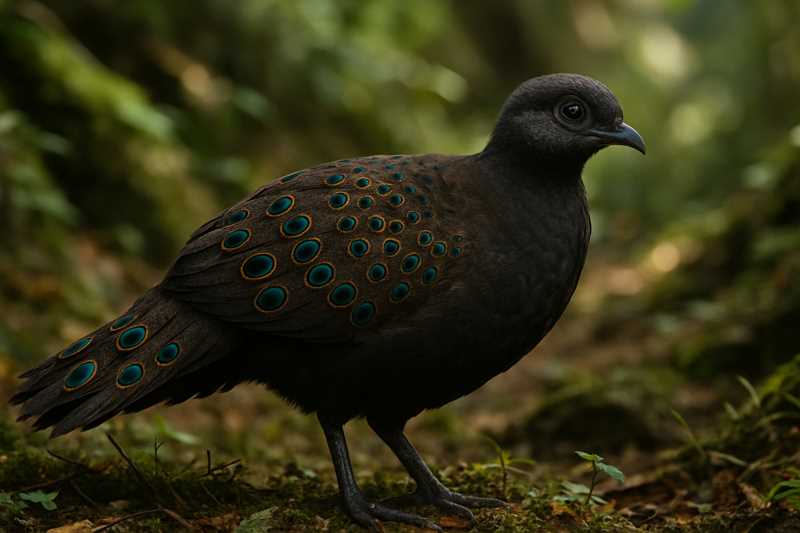
One cannot discuss the Mountain Peacock-Pheasant without highlighting its breathtaking plumage. The male of the species is particularly striking, featuring a rich, dark brown body adorned with iridescent blue and green eye-spots on its tail feathers, reminiscent of a peacock’s train. These eye-spots are not only visually stunning but serve a crucial role in courtship displays. The female is less flamboyant, with a more muted brown coloration, which provides effective camouflage against the forest floor.
Behavior and Ecology
Mountain Peacock-Pheasants are primarily ground-dwelling birds, spending much of their time foraging for food among the leaf litter. Their diet consists mainly of seeds, insects, and small invertebrates, which they skillfully uncover with their strong feet. Despite their terrestrial habits, these birds are capable of short bursts of flight when threatened.
Their reproductive behavior is equally fascinating. Males perform elaborate courtship displays to attract females, showcasing their ornate tail feathers and engaging in ritualized dances. Once paired, the female typically lays two to three eggs in a simple ground nest. Both parents are involved in rearing the young, a relatively rare trait among pheasants.
Conservation Status
The Mountain Peacock-Pheasant is currently listed as Near Threatened by the International Union for Conservation of Nature (IUCN). The primary threat to its survival is habitat loss due to deforestation and land conversion for agriculture. Logging activities and the expansion of human settlements further exacerbate these pressures, encroaching on the bird’s natural habitat.
Efforts to conserve the Mountain Peacock-Pheasant are underway, with several protected areas established within its range. These conservation initiatives aim to preserve critical habitats and promote sustainable land-use practices. Additionally, ecotourism centered around birdwatching is providing economic incentives to local communities to engage in conservation efforts.
The Role of Research and Education
Ongoing research is crucial for the effective conservation of the Mountain Peacock-Pheasant. Studies focusing on its ecology, population dynamics, and genetic diversity are essential for understanding the species’ needs and formulating effective management strategies. Furthermore, education and awareness campaigns are vital in garnering public support and fostering a sense of stewardship among local communities.
Conclusion
The Mountain Peacock-Pheasant stands as a testament to the rich biodiversity of Malaysia’s montane forests. Its stunning beauty and intriguing behavior make it a species worthy of admiration and protection. As we strive to conserve this remarkable bird, it is imperative that we address the broader environmental challenges threatening its habitat. By combining scientific research, community engagement, and sustainable development, we can ensure that the Mountain Peacock-Pheasant continues to thrive in its natural home for generations to come.
Related posts