Hartlaub’s Bustard: A Remarkable Bird of the African Savanna
Hartlaub’s Bustard, scientifically known as Lissotis hartlaubii, is an intriguing bird species found primarily in the grasslands and savannas of East Africa. This bird is named after the German ornithologist Gustav Hartlaub, who significantly contributed to the study of African avifauna in the 19th century. The species is a member of the Otididae family, commonly known as bustards, which are large, ground-dwelling birds known for their striking appearances and elusive behavior.
Physical Characteristics and Behavior
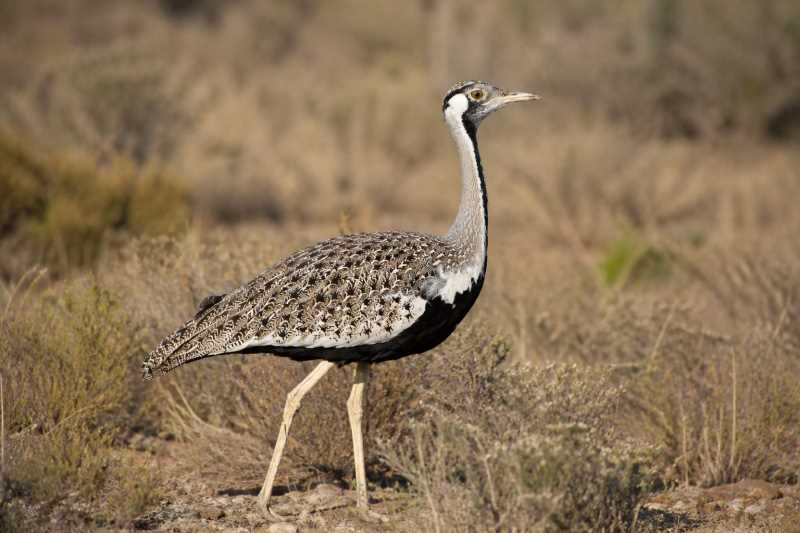
Hartlaub’s Bustard is a medium-sized bird, typically weighing around 1.5 to 2 kilograms and measuring approximately 60 to 70 centimeters in length. Males are generally larger than females, exhibiting slight sexual dimorphism. The bird’s plumage is a blend of browns and grays, providing excellent camouflage against the dry, grassy environments it inhabits. The male Hartlaub’s Bustard is noted for its striking black and white patterns on the throat and neck, which play a vital role in courtship displays.
One of the most fascinating aspects of Hartlaub’s Bustard is its behavior during the breeding season. Males engage in elaborate displays to attract females, employing a combination of vocalizations, physical displays, and aerial stunts. These displays often involve puffing up their throats, strutting with exaggerated movements, and producing booming calls that resonate across the savanna.
Habitat and Distribution
Hartlaub’s Bustard is predominantly found in the East African countries of Kenya, Tanzania, and Uganda. It favors open grasslands, savannas, and lightly wooded areas, where it can blend seamlessly into the landscape. These environments provide ample food resources and nesting sites, crucial for the bird’s survival.
The species is highly adapted to its habitat, relying on its excellent camouflage to avoid predators. Being ground dwellers, Hartlaub’s Bustards are often seen walking through the grasses in search of food, which primarily consists of insects, small reptiles, and plant matter. Their diet is opportunistic, allowing them to thrive in various conditions, depending on the availability of food.
Reproduction and Lifespan
The breeding season for Hartlaub’s Bustard varies depending on the location and environmental conditions. In East Africa, it typically coincides with the rainy season, when food is abundant. During this time, males perform their unique courtship displays to attract females. Once a pair is formed, the female is responsible for building the nest, which is a simple scrape on the ground, often concealed by tall grasses.
The female lays one to three eggs, which she incubates for about three weeks. During this period, the male plays a minimal role in parental care, focusing instead on defending the territory from rival males. Once the chicks hatch, they are precocial, meaning they are relatively mature and mobile from birth. The female leads them to foraging sites, teaching them how to find food and avoid predators. The chicks grow rapidly and are capable of short flights within a few weeks.
Conservation Status and Threats
Currently, Hartlaub’s Bustard is classified as a species of "Least Concern" by the International Union for Conservation of Nature (IUCN). However, like many other grassland species, it faces several threats that could impact its population in the future. Habitat loss due to agricultural expansion and human settlement is a significant concern, as it leads to the fragmentation of their natural habitats.
Moreover, climate change poses a long-term threat to the ecosystems on which these birds depend. Changes in rainfall patterns can affect the availability of food and nesting sites, potentially leading to population declines. Conservation efforts are essential to monitor these threats and implement strategies to mitigate their impact, ensuring the survival of Hartlaub’s Bustard in the wild.
Conclusion
Hartlaub’s Bustard is a remarkable bird that embodies the beauty and complexity of the African savanna. Its unique behaviors, adaptability, and striking appearance make it a fascinating subject of study for ornithologists and bird enthusiasts alike. While it is not currently at high risk of extinction, continued conservation efforts are crucial to safeguard its habitat and address the challenges posed by environmental changes.
By raising awareness about Hartlaub’s Bustard and its ecological significance, we can contribute to the preservation of this species and the rich biodiversity of the African grasslands. As stewards of the natural world, it is our responsibility to ensure that future generations have the opportunity to witness the awe-inspiring displays and hear the resonant calls of Hartlaub’s Bustard in the wild.
Related posts