Graylag Goose: A Comprehensive Overview
The Graylag Goose (Anser anser) is a fascinating and resilient bird species that holds the distinction of being one of the most widespread and recognizable geese in the world. Known for its adaptability and distinctive appearance, the Graylag Goose has become a subject of interest for ornithologists and bird enthusiasts alike. This article delves into the characteristics, habitat, and behavior of the Graylag Goose, highlighting its significance in both natural ecosystems and human history.
Physical Characteristics
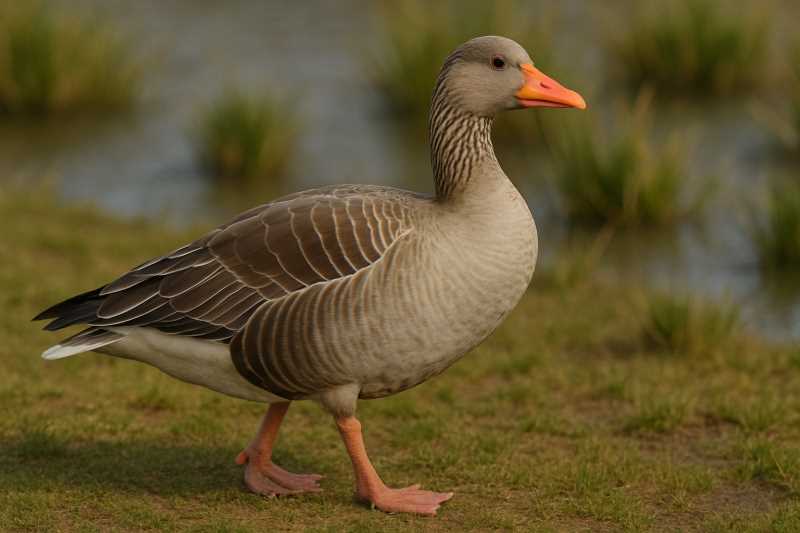
The Graylag Goose is a large bird, typically measuring between 74 to 84 centimeters in length, with a wingspan of approximately 147 to 180 centimeters. Its weight ranges from 2.3 to 4.1 kilograms, making it one of the heftier members of the goose family. The plumage of the Graylag Goose is predominantly gray, with a lighter belly and darker back. Its orange beak and pink legs provide a striking contrast to its otherwise muted coloration. During the breeding season, the goose’s plumage may take on a more buffy or brownish tint, aiding in camouflage.
Distribution and Habitat
The Graylag Goose is native to Europe and Asia, with its range extending from the British Isles and Scandinavia in the west to China and Mongolia in the east. It is a migratory species, with populations in the northern parts of its range migrating southward during the winter months. Preferred habitats include wetlands, marshes, and lakes, where they can find ample food and nesting sites. In recent years, Graylag Geese have also been observed in urban areas, adapting to human-modified landscapes such as parks and golf courses.
Diet and Feeding Behavior
Graylag Geese are primarily herbivorous, feeding on a variety of plant materials such as grasses, roots, and aquatic vegetation. They are known to graze in agricultural fields, particularly during migration periods, where they may feed on crops like cereal grains and legumes. This feeding behavior has occasionally brought them into conflict with farmers, leading to management efforts to balance agricultural interests with wildlife conservation.
Breeding and Reproduction
The breeding season for the Graylag Goose typically begins in late March or early April. Pairs form long-lasting bonds, often mating for life. Nests are constructed on the ground, usually near water, using vegetation and down feathers. A typical clutch consists of four to six eggs, which are incubated by the female for about 28 to 30 days. Goslings are precocial, meaning they are relatively mature and mobile shortly after hatching, and they rely on both parents for protection and guidance during the early stages of life.
Behavior and Social Structure
Graylag Geese are highly social birds, often forming large flocks outside the breeding season. These flocks provide protection against predators and increase foraging efficiency. Communication within flocks is facilitated by a range of vocalizations, including honks, grunts, and hisses. The social structure of these flocks can be complex, with family groups often staying together within larger aggregations.
Conservation Status and Human Interaction
The Graylag Goose is currently listed as a species of Least Concern by the International Union for Conservation of Nature (IUCN), thanks to its large and stable population. However, habitat loss and hunting pressure in certain regions pose ongoing challenges. Conservation efforts focus on habitat preservation and sustainable management practices, particularly in areas where human-wildlife conflicts arise.
Historically, the Graylag Goose holds cultural significance in various societies. It is believed to be the ancestor of most domestic goose breeds, and it has featured prominently in folklore and symbolism. In some cultures, the goose is associated with fertility and prosperity, reflecting its importance to human communities over centuries.
Conclusion
The Graylag Goose is a remarkable species that exemplifies adaptability and resilience. Its widespread distribution and successful coexistence with humans underscore its ecological significance and cultural impact. By understanding and preserving the habitats and conditions that support Graylag Goose populations, we ensure the continued survival of this iconic bird for future generations.
Related posts