
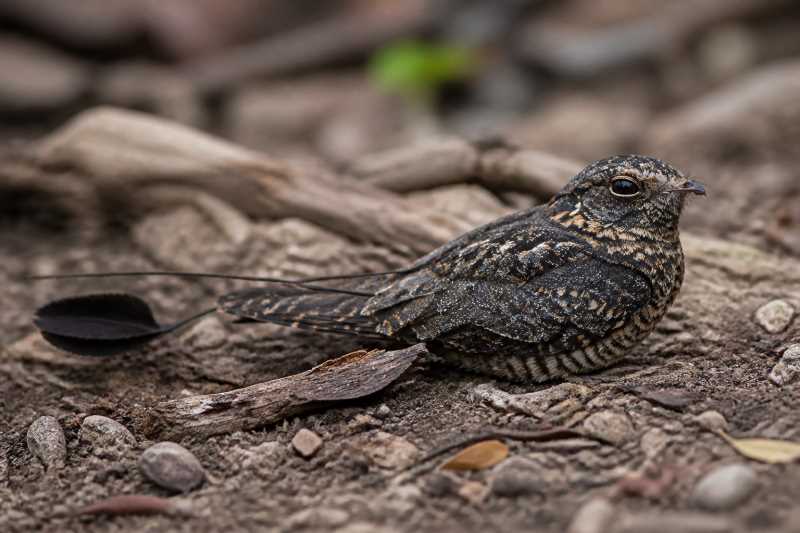
The Enigmatic Standard-winged Nightjar: A Journey into the Life of Caprimulgus longipennis
The Standard-winged Nightjar (Caprimulgus longipennis) is a fascinating species that evokes intrigue and admiration among ornithologists and bird enthusiasts alike. Known for its distinctive wing ornaments and nocturnal habits, this bird offers a captivating glimpse into the adaptability and uniqueness of avian life.
Habitat and Distribution
Native to the African continent, the Standard-winged Nightjar can be found across a wide range of environments, from the savannas of West Africa to the woodlands of East Africa. Its distribution spans countries such as Senegal, Sudan, and Ethiopia, showcasing its adaptability to diverse ecosystems. This species prefers open habitats where it can easily blend into the ground during the day, thanks to its cryptic plumage that offers excellent camouflage against predators.
Physical Characteristics
One of the most striking features of the male Standard-winged Nightjar is its elongated wing feathers, which appear during the breeding season. These feathers, which can extend up to 38 centimeters in length, are not only a spectacle but also serve as a display mechanism to attract females. The rest of the bird’s plumage is a mix of browns, blacks, and grays, providing effective concealment in its natural habitat. The females, on the other hand, lack these ornate wing features and are generally smaller.
Behavior and Diet
As a nocturnal species, the Standard-winged Nightjar is most active during the twilight hours of dusk and dawn. It is during these times that the bird embarks on its nightly forays in search of food. Its diet primarily consists of insects, with a particular preference for moths and beetles, which it captures in flight using its wide, gaping mouth.
The nightjar’s flight is characterized by swift, agile maneuvers, allowing it to adeptly navigate through the night sky. Despite its seemingly erratic flight patterns, the bird is a proficient hunter, using both its keen eyesight and acute sense of hearing to locate prey.
Breeding and Reproduction
The breeding season for the Standard-winged Nightjar occurs during the dry months, a strategic choice that coincides with the abundance of insects. Males engage in elaborate courtship displays to attract females, showcasing their impressive wing ornaments in a series of aerial acrobatics. Once a pair has formed, the female selects a nesting site on the ground where she lays one or two eggs.
The eggs are incubated by the female, who relies heavily on her camouflage to avoid detection by predators. The young hatch after about three weeks and are precocial, meaning they are relatively mature and mobile from birth. Despite this early independence, the chicks remain with their mother for protection and guidance until they can fend for themselves.
Conservation Status
Currently, the Standard-winged Nightjar is classified as a species of Least Concern by the International Union for Conservation of Nature (IUCN). Its widespread distribution and stable population numbers contribute to this status. However, like many wildlife species, it faces threats from habitat loss due to agricultural expansion and deforestation.
Cultural and Ecological Significance
The Standard-winged Nightjar holds a special place in the cultural folklore of many African communities, often associated with mysticism and the supernatural due to its nocturnal lifestyle and elusive nature. Ecologically, nightjars play a crucial role in controlling insect populations, thereby maintaining a balanced ecosystem.
Conclusion
The Standard-winged Nightjar is a remarkable example of nature’s ingenuity. Its unique adaptations and behaviors make it a subject of fascination and study. As we continue to learn more about this enigmatic bird, it serves as a reminder of the diversity and complexity of life on Earth, urging us to preserve the habitats that sustain such incredible species.
In summary, the Standard-winged Nightjar is not only a marvel of adaptation but also a vital component of its ecosystem, deserving of continued observation and conservation efforts.
Related posts


